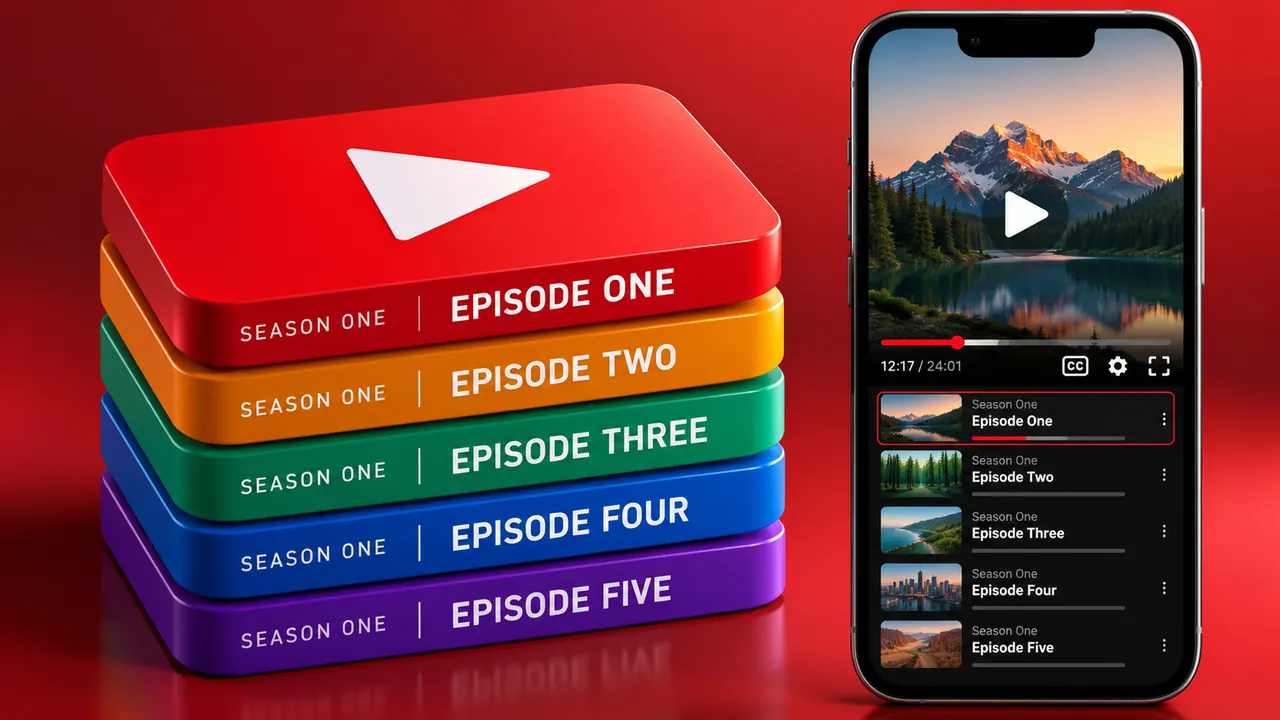
At Made on YouTube on September 23, YouTube announced Shorts Series, letting creators group Shorts into seasons and episodes — an explicit bet on the microdrama format. That's a structural advantage for anyone running serialized AI narrative instead of one-off clips, because binge behavior is what drives RPM in the $6–$21 bands. Also shipped: Gemini-powered conversational editing for Shorts, dynamic thumbnails, and A/B testing across up to three cuts of the same video.
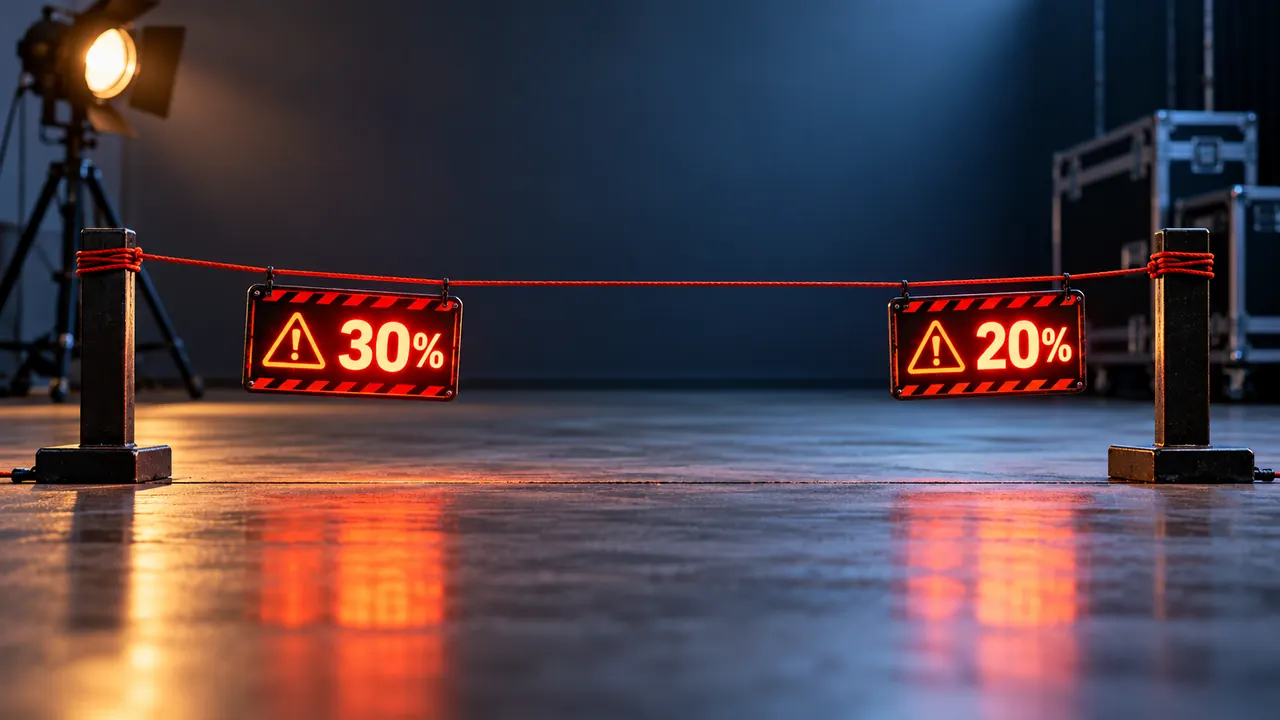
YouTube's "inauthentic content" enforcement has hardened into thresholds operators can actually design around: videos where commentary is under 30% of runtime trigger review, and five or more videos sharing the same visual template with under 20% script variation can get bulk-demonetized. TikTok's Creativity Program accepts AI content only with the native AI-generated label applied pre-post — skip it and you risk removal plus program suspension. Shorts monetization still gates at 1,000 subs plus 10M Shorts views or 4,000 watch hours.
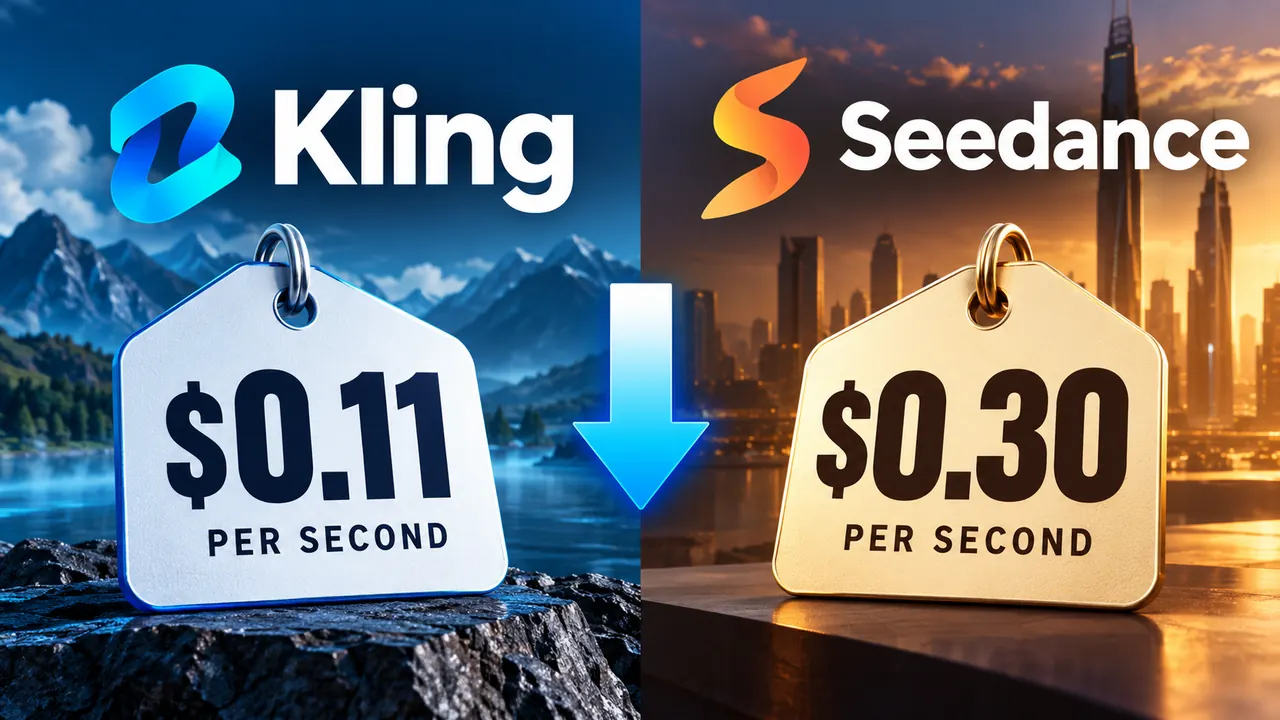
Hard cost numbers: Kling 3.0 Pro runs $0.112/sec audio-off and $0.168/sec audio-on; Seedance 2.0 standard sits at $0.3034/sec for text-to-video, with a fast tier at $0.2419. A 10-second Kling Pro clip with audio lands at $1.68 versus $3.03 on Seedance standard. Kling subs start at $6.99/month but credits expire; Seedance starts at $30.10 and rolls unused tokens over.
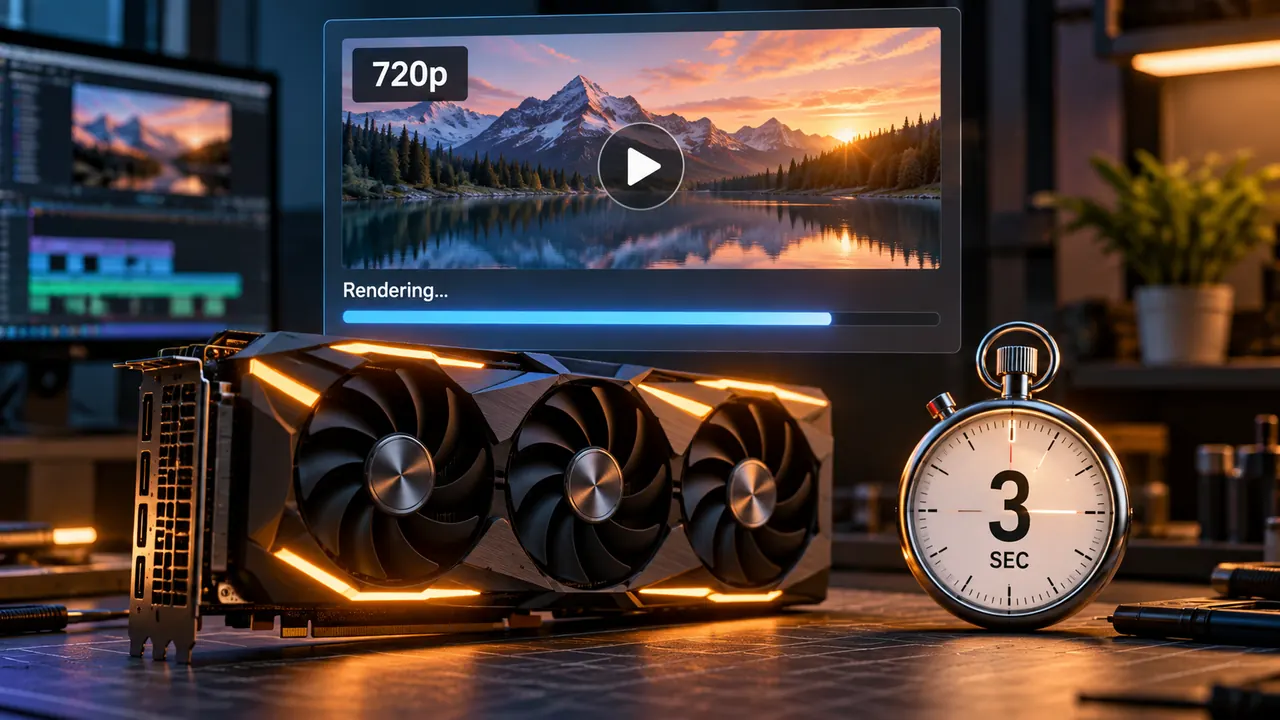
The open-weight LTX-2.5 release is benchmarking 720p five-second clips in roughly 3 seconds and 1080p five-second clips in about 6 seconds on an RTX 5090 32GB. An 8-second image-to-video pass on the BF16 model with GPU offloading takes about 80 seconds. FP8 quantization cuts VRAM demand up to 40%, putting the whole thing inside 5090-class hardware — and it's already integrated in ComfyUI.
Wan 2.7 landed first/last-frame control, 9-grid multi-image reference input, instruction-based video editing, and a 5,000-character prompt ceiling — meaningful for character consistency across an episodic series. Wan 3.0 is targeted mid-2026 with reported specs of 60B params, native 4K, and 30-second continuous single-pass generation. Treat the 3.0 specs as unconfirmed until weights drop.
Global micro-drama revenue is tracking toward $14 billion in 2026 on 850M+ quarterly downloads, with ReelShort holding roughly 29% share and around $1.05B in revenue. AI-simulated-human production runs under ~$28K per title on a 1–3 day cycle versus ~$208K and weeks-to-months for live action. The catch: reporting says AI cut production cost 90% but crushed unit margins, leaving most AI projects in a low-margin, high-traffic-cost loop.
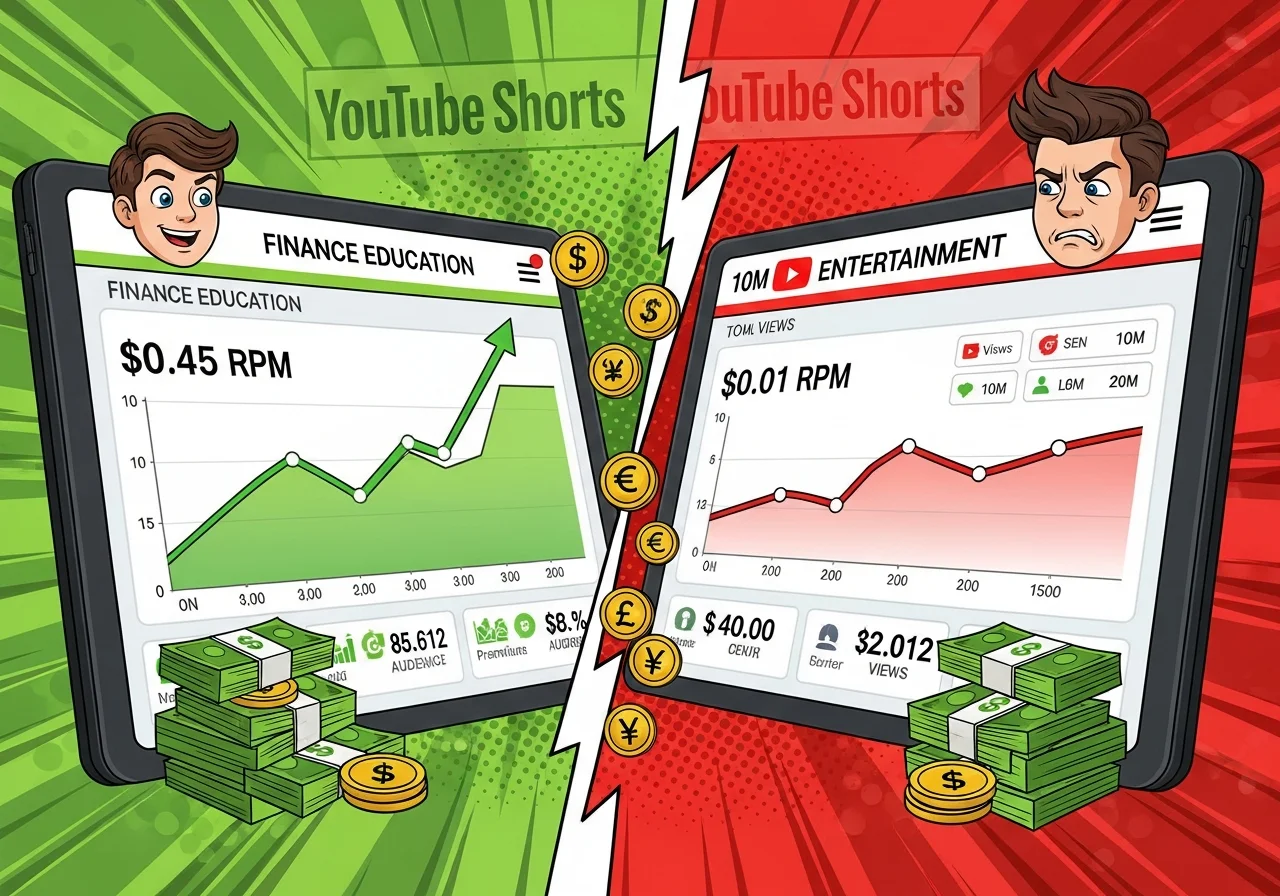
Business case-study and documentary formats are benchmarking $6–$14 RPM, with reported monthly earnings of $6,000–$18,000 on 600K monthly views. AI and tech explainers sit at $5–$12. Production stays under $100 per video at scale using AI narration over stock footage and graphics, and 38% of new creator monetization ventures are now faceless channels.
AI ASMR has become one of the highest-growth short-form categories, with kinetic sand cutting, glass-breaking, soap-cutting, candle-wax pouring, and ice-crushing as the dominant sub-formats. The emergent wrinkle is the hybrid: slime ASMR fused with Italian-brainrot characters, which stacks satisfying trigger audio on absurdist recognition. Both formats win on completion rate, which is the metric the algorithm actually rewards.
YouTube confirmed on September 23 it's combining speaking-voice detection with facial detection in likeness detection, and bringing enrollment plus match alerts to the mobile app. The tool has been open to any creator 18-plus since May 17, 2026, but enrollment requires a government ID and a selfie video. If you use synthetic voices or AI presenters, this cuts both ways — protection for your own likeness, exposure if your stack is borrowing someone else's.