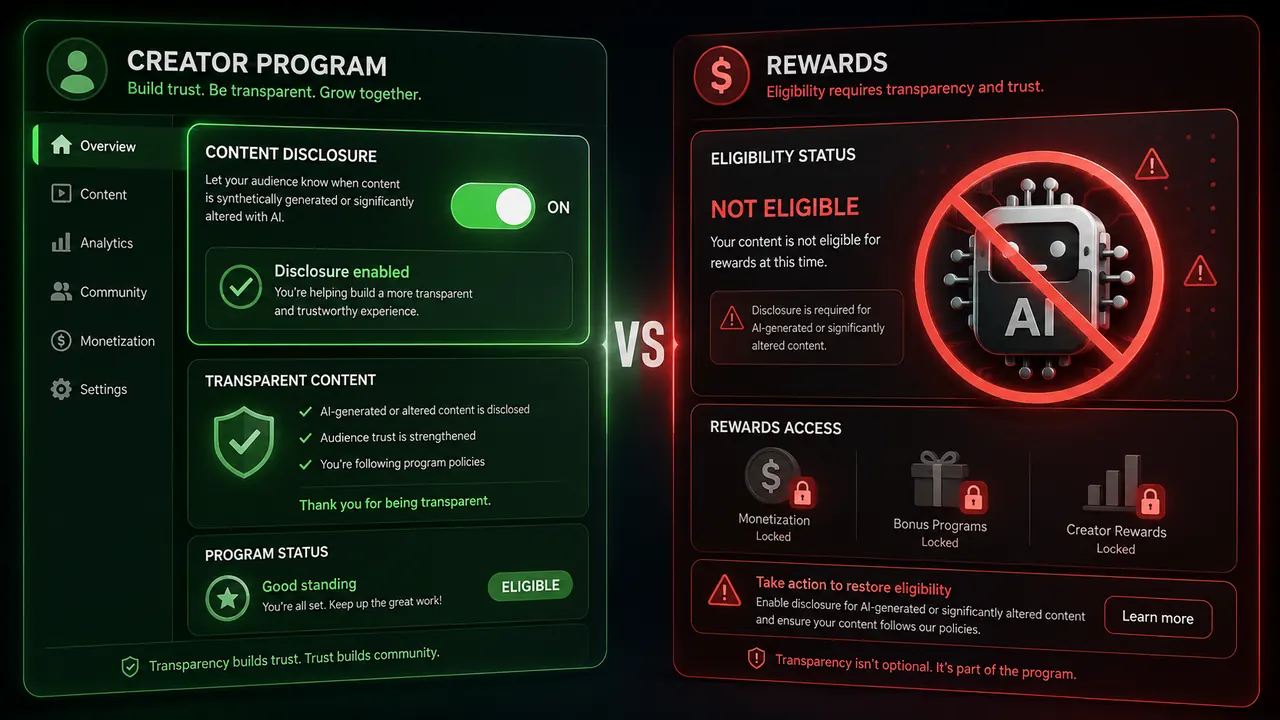
The Creator Rewards Program now bans AI-generated content from monetization outright, while the Creativity Program still pays out provided you use TikTok's built-in disclosure label. Enforcement moved off the honor system: C2PA Content Credentials, invisible watermarking, and computer-vision classifiers flag synthetic faces whether you self-disclose or not, feeding a four-tier penalty ladder from warning to permanent ban. TikTok maintains the label itself doesn't suppress distribution — the penalty comes from non-disclosure, not disclosure.
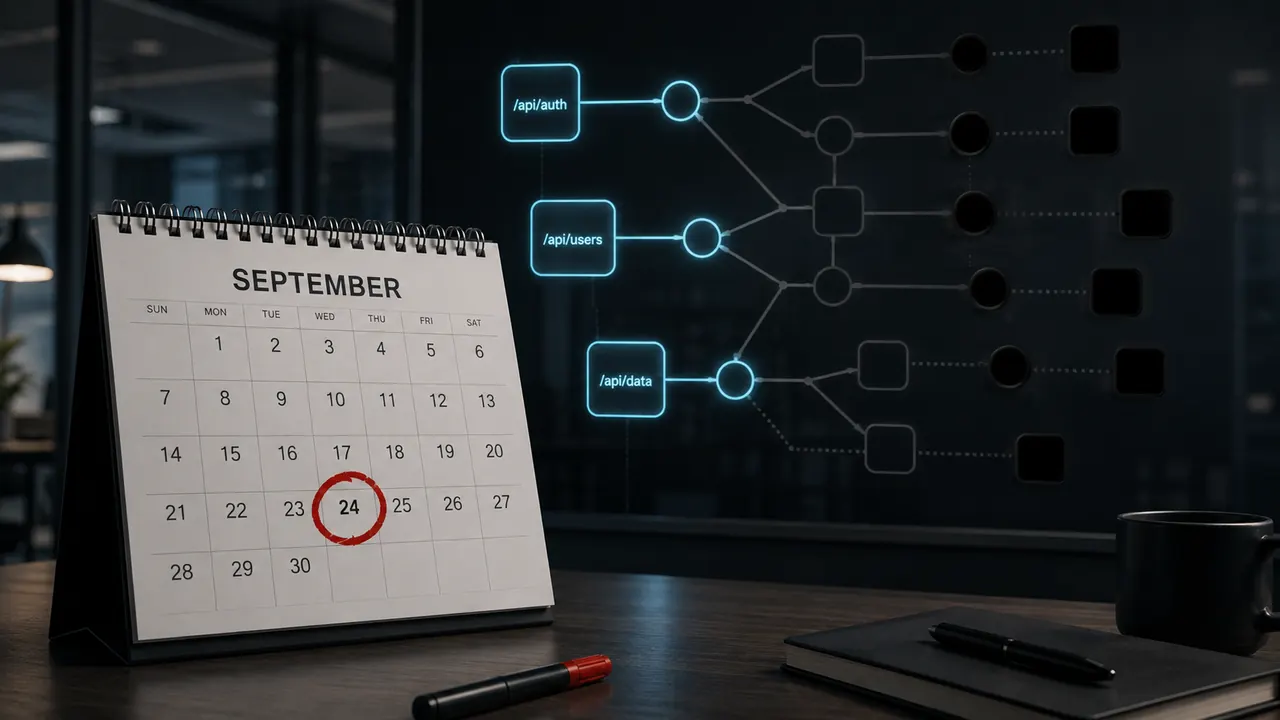
OpenAI's consumer Sora app already closed on April 26, and the API sunsets September 24, 2026. Any pipeline with a Sora call in it has a hard deadline this month, not a deprecation warning. Migration targets in the same tier are Veo 3.1, Kling 3.0, and Seedance 2.0.
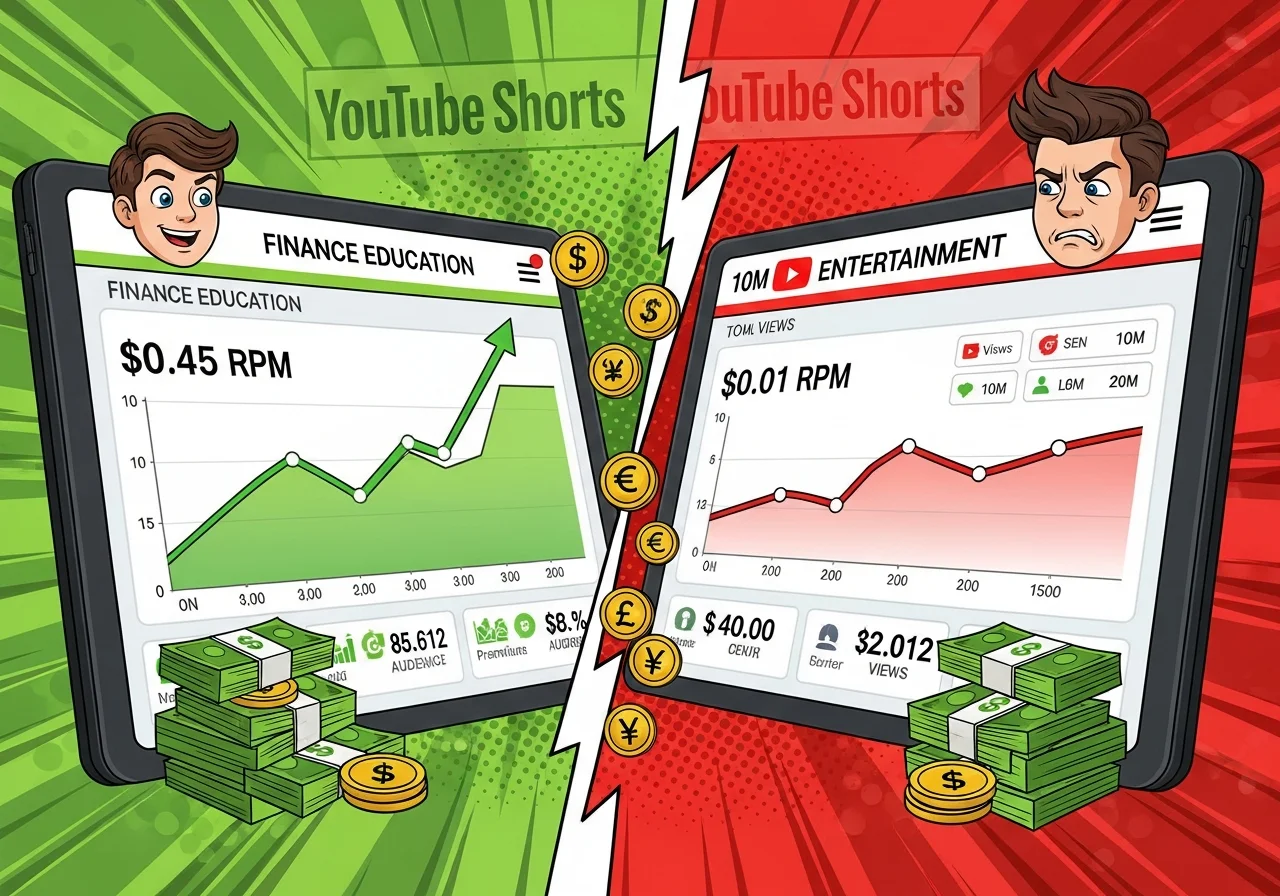
Typical Shorts RPM sits between one and twelve cents per thousand views, but finance, tech, B2B, and real estate push into the ten-to-twenty-five-cent band while entertainment and comedy bottom out at one to three cents. That's the difference between a million views paying twenty-five dollars and paying two hundred fifty. Shorts RPM overall still runs roughly five to twenty times below long-form in the same niche.
LTX-2.3 generates synchronized audio and video in a single diffusion pass, with 4K output at 50fps — no separate TTS-and-align stage. Official minimum is 32GB VRAM for 720p and 48GB-plus for native 4K at full precision, but fp8 quantization at 720p brings it into the 12-to-24GB range, which puts it on a single consumer card.
Wan 2.2 ships open weights under Apache 2.0 — clean commercial use, weights on Hugging Face. Wan 2.7, launched in spring, is ModelScope-only and is not a clean Apache-2.0 release, and full-quality output wants 80GB-plus anyway. For commercial output, 2.2 at 14B remains the defensible choice.
Seedance 2.0 accepts nine reference images, three reference videos, and three reference audio clips in a single pass — a conditioning budget no competitor matches at that quality tier. But after MPA condemnation and cease-and-desist letters from Disney and Paramount, ByteDance committed to strengthening safeguards against IP and likeness use. Character-adjacent reference stacks that work today are the ones most likely to break.
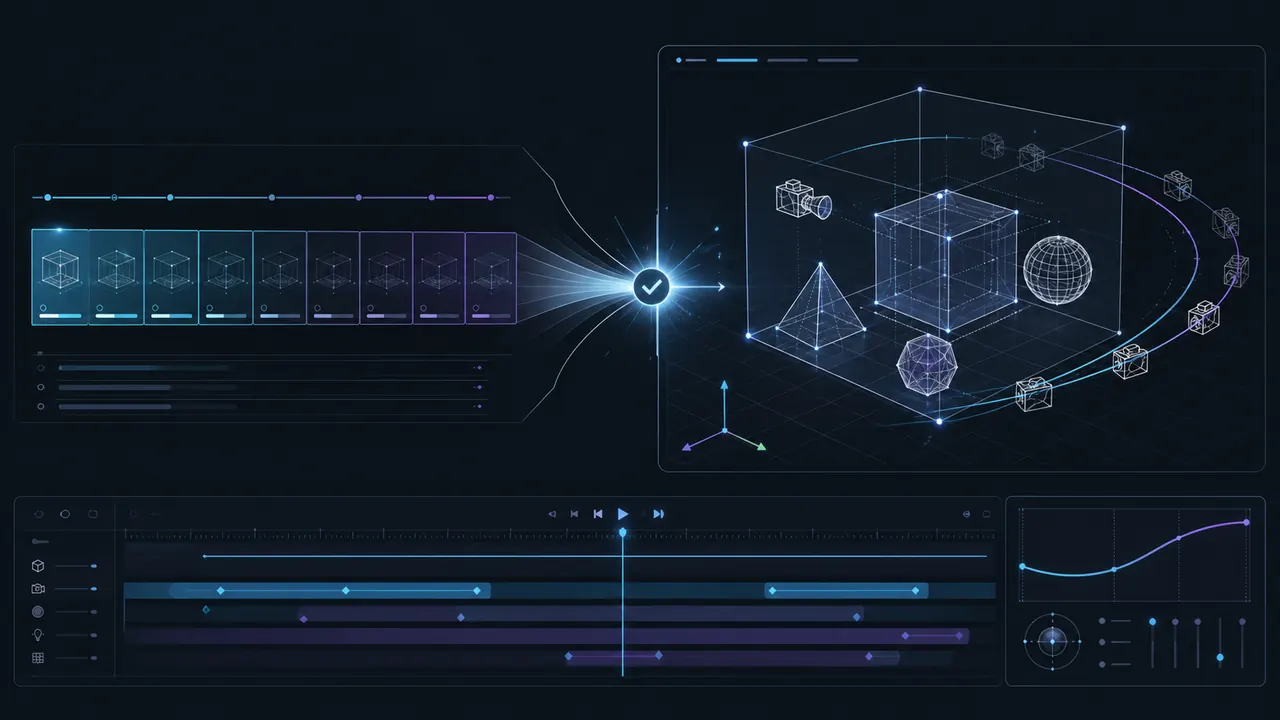
Bloomberg reports today that ByteDance is preparing a model built for real-time spatial video generation, with founder Zhang Yiming personally overseeing it and a launch possible as soon as next month. Real-time generation collapses the render-queue step that currently gates iteration volume — the constraint most short-form pipelines are actually built around.
Nine-by-sixteen reached 43.7 percent share and is tracking to overtake 16:9 during 2026. Generation defaults, LoRA training sets, and upscaler configs still overwhelmingly assume landscape — anything still rendering wide and cropping down is paying a resolution tax on every clip.