Since May 2026 YouTube has been applying synthetic-media disclosure labels automatically to photorealistic AI content, even when the creator skips self-disclosure. Enforcement reportedly escalates in five stages: forced un-removable label, policy warning, content removal, then YPP suspension across the whole channel. The upside is that properly disclosed AI content stays fully monetizable with no documented reach penalty — so the disclosure toggle is free money and skipping it is channel-ending risk.
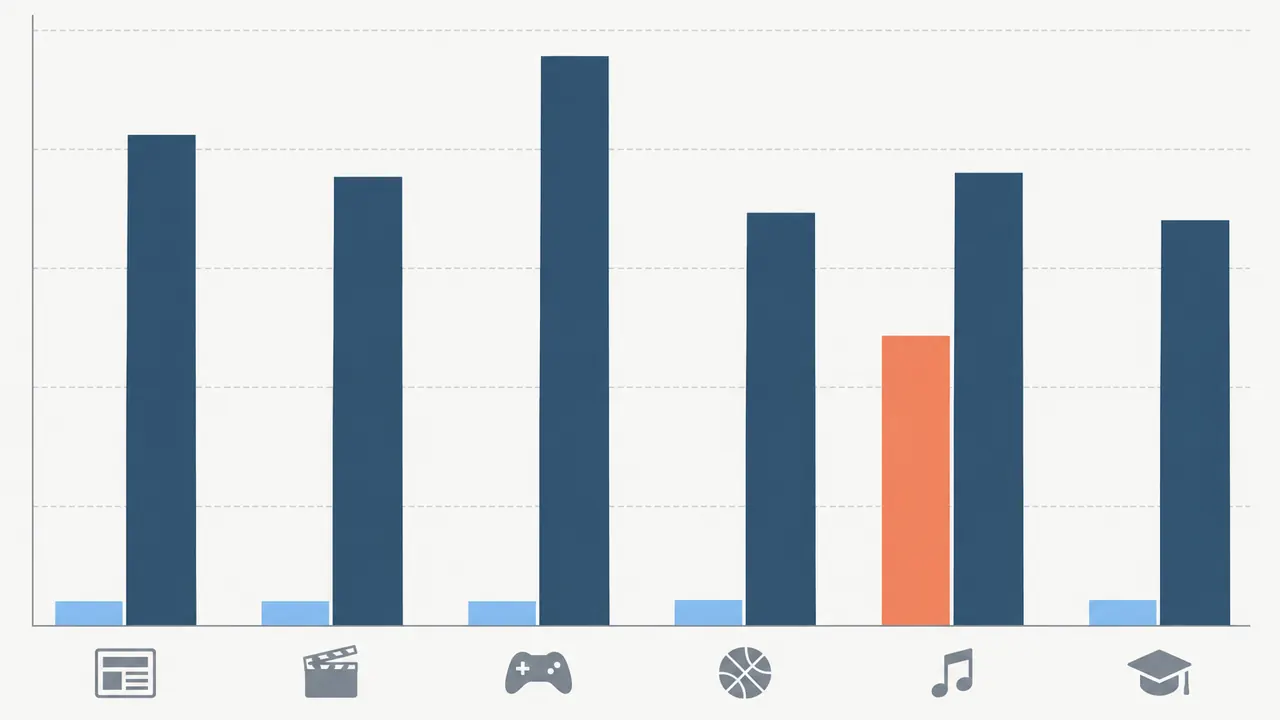
AIR's dataset across 274 channels puts Shorts RPM at just 3 to 14 percent of long-form RPM in nearly every niche — except music, where Content ID closes the gap to 41 to 60 percent. Typical Shorts RPM sits at roughly $0.01 to $0.12 per thousand views, so a million-view Short in a generic niche can clear under twenty bucks. If you can legitimately route AI output into a music-adjacent format with Content ID registration, you're looking at a 4-to-10x multiple on the exact same view count.
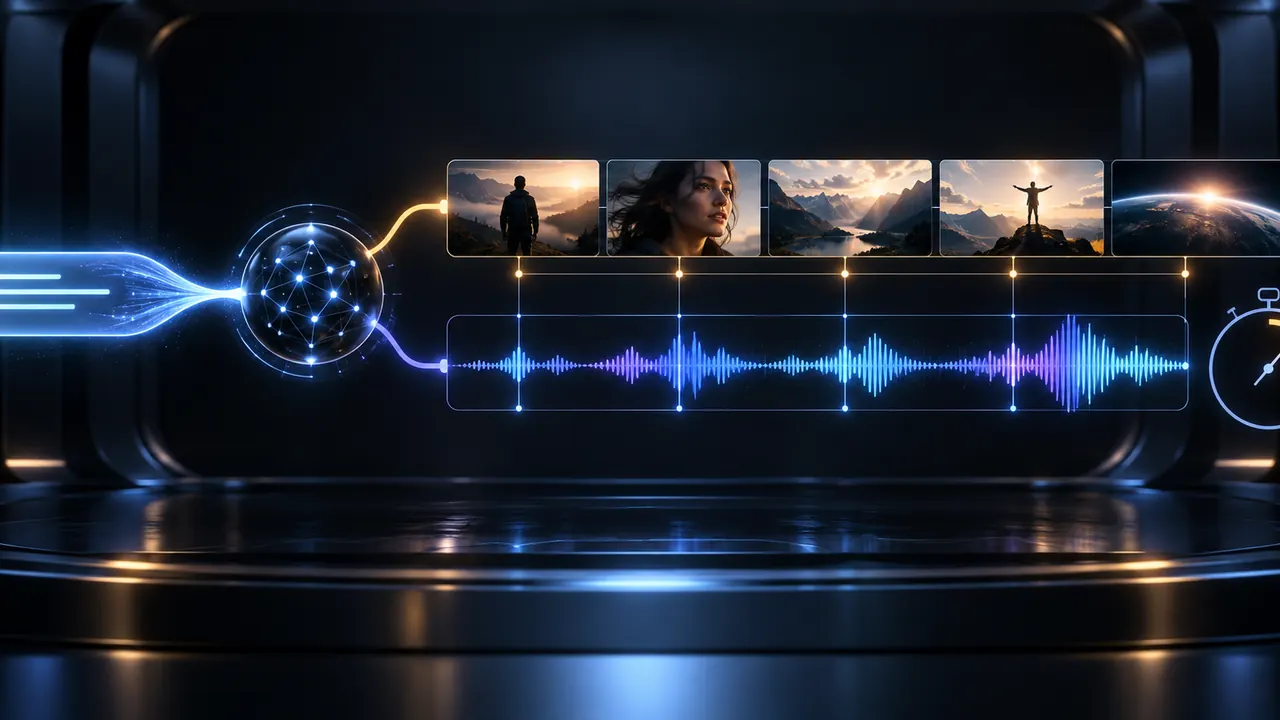
ComfyUI v0.36.0 shipped September 15 with FastVideo FastH3, an 8-step distilled MiniMax H3 doing text-to-video and image-to-video with synchronized native audio — ambience, SFX, music, and spoken dialogue from a single prompt. Hao AI Lab's benchmark (released August 27) measured a 15-second 1344x768 24fps clip with audio in 47.2 seconds on one B200 versus 678.7 seconds dense — a 14.38x end-to-end speedup. Caveat worth your attention: the reference config is four B200s with CUDA 13, with RTX, DGX Spark, and Apple Silicon optimizations still in development, and it's text-to-audiovisual only for now.
TikTok is using C2PA Content Credentials to auto-detect synthetic media whether or not you disclose, and requires visible labels on AI visuals and audio depicting realistic people or scenes. The material fact for operators: AI content is eligible for the Creativity Program at the same rate as traditional content when disclosed, and non-disclosure risks removal plus program suspension. Reported creator earnings land around $0.40 to $1.00+ per thousand views — roughly an order of magnitude above Shorts.
Wan Animate 2 is native in ComfyUI via the Comfy-Org/Wan-Animate-2 weights on Hugging Face, feeding driving video straight into a redesigned Diffusion Transformer with no intermediate motion extractor. The WanAnimate2Cache node caches the pose branch and roughly halves generation time in exchange for system memory — a free throughput win if you have RAM headroom. It also adds text-driven viewpoint control that decouples output camera angle from your source footage, plus a Lite variant for real-time streaming animation.
Current per-second pricing clusters at Veo 3.1 Lite around $0.05/sec with no audio, Kling 3.0 roughly $0.09 to $0.14/sec, and Veo 3.1 Standard with audio at $0.40/sec — meaning a 5-second Standard clip runs about $2.00. Set that against Shorts RPM of $0.01 to $0.12 per thousand views and the math is brutal: a single Veo Standard clip needs tens of millions of Shorts views to pay for itself on ad revenue alone. Rented generation only pencils out on TikTok rates, brand deals, or local inference.
The same v0.36.0 release added a Video Concatenate node that joins multiple clips end to end inside the graph, plus Flux Video Edit for editing a source clip from a plain text instruction. Pruna P-Video-2 also landed with 720p and 1080p text-to-video and image-to-video output. For anyone currently exporting stems to an external editor just to stitch a multi-shot Short, that round trip is now optional.
ComfyUI v0.37.0 on September 21 added Qwen-Image-2.1 with native 2K generation and editing, multi-image references, and — the part that matters — an alpha channel. That's transparent-background asset generation without a separate matting pass, which is exactly the bottleneck for overlay-heavy short-form. The v0.37.1 build a day later added HY Image 3.5 Preview with up to 5 reference images at native 2K, and v0.37.0 auto-enables fast-disk on NVMe.
TheSoul Publishing's Glorb is being cited as the instructive AI-character case of 2026 — an exaggerated 3D cartoon built on a rap format with satirical lyrics and absurdist humor, engineered for Gen Z meme culture, that broke out off a single video. The structural lesson isn't the aesthetic, it's the persistence: a recurring character converts one-off view spikes into a followed account with brand-deal surface area. Worth noting this comes from a studio with real production budget, not a solo operator.