YouTube's July 2025 rename of "repetitious content" to "inauthentic content" finally bared teeth: in January 2026 the platform terminated 16 channels holding a combined 35 million subscribers and 4.7 billion lifetime views, with press pegging their ad revenue near $10 million a year. The shared fingerprint was synthetic narration, templated thumbnails, stock-footage loops, and an upload cadence no human editorial process could sustain. AI use itself is not the trigger — templating at scale with zero original input is, so variation and disclosure are now load-bearing infrastructure, not nice-to-haves.
TikTok's Creator Rewards Program explicitly excludes AI-generated content from monetization, while the Creativity Program will accept it only with the built-in "AI-generated content" label applied before posting. Undisclosed synthetic content risks removal and program suspension outright. The working play in 2026 is the 70/30 framework — TikTok Shop integrations and brand partnerships routinely out-earn platform payouts per post, so treat the feed as a top-of-funnel commerce engine rather than an ad-share machine.
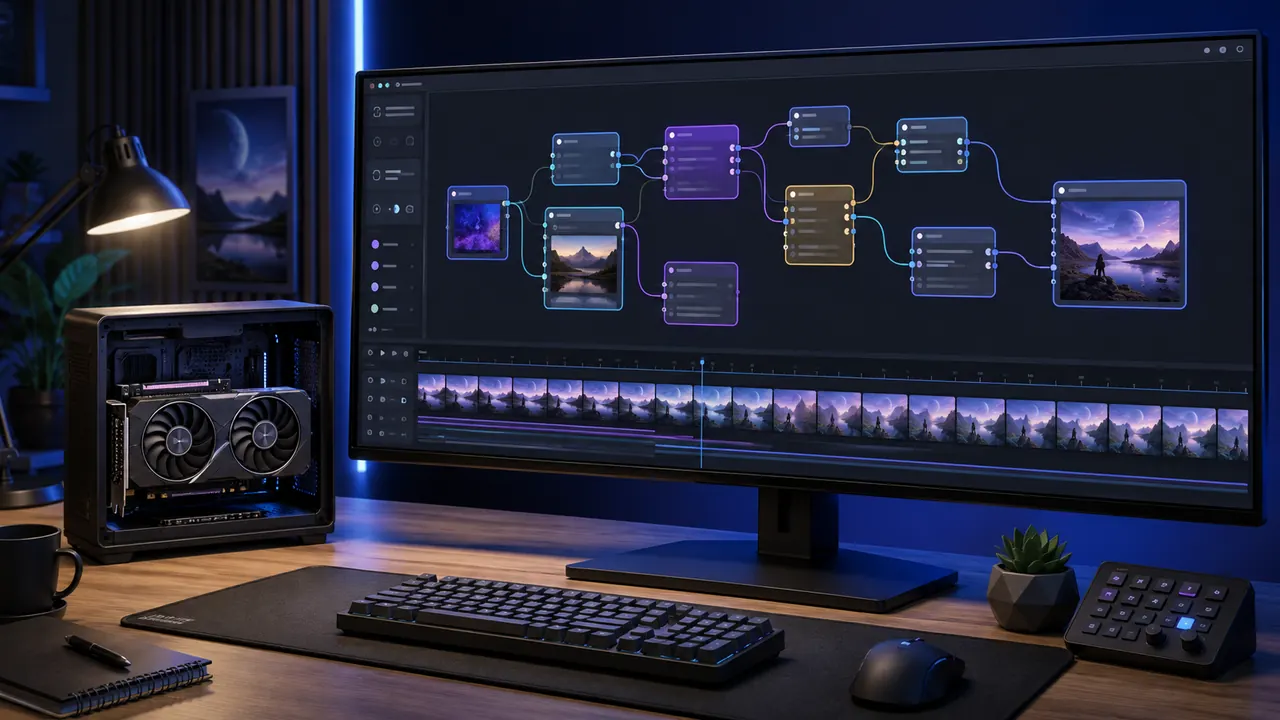
The Endless MiniMax H3 v1.0 workflow dropped September 2, 2026, chaining H3 Motion Context clips through a latent-saver node to produce unlimited-length video with lip-sync on a 12GB GPU. That's a hard VRAM floor most operator rigs already clear. Same week ComfyUI shipped v0.34.5 with beta Comfy Cloud nodes for curated Flux 2, Z-Image Turbo, Mage Flow and MiniMax H3 workflows, plus an Expert Text Prompt node that parses prompts as an AST with weighted wildcards and inline mute/solo — real prompt-variation tooling for exactly the anti-templating problem in item one.
AI ASMR broke out in late 2025 and is now one of the fastest-growing short-form categories across TikTok, Reels and Shorts. The winning formats are kinetic sand cutting, glass-breaking, soap-cutting, mechanical-keyboard typing, candle-wax pouring, fruit-slicing and ice-crushing. The structural edge is that AI shoots things no camera crew practically can — a thousand glass marbles falling at 240fps, a building-sized candle melting, an oversized blade through a sand block — which is a physics-flex niche, not a slop niche.
Apple's folding iPhone Ultra launches the same day as the NFL season opener, September 9, stacking two enormous reaction-and-unboxing windows into a single 24-hour block. September's broader TikTok format set leans on contrast gags — "My American Girl Doll," the Ancestor Photo Prank, "Right Round Hangover," "What I Looked Like When" — all built on sweet-versus-savage or mundane-versus-staged reveals. That contrast structure maps cleanly onto image-to-video pipelines: one grounded input frame, one absurd generated payoff.
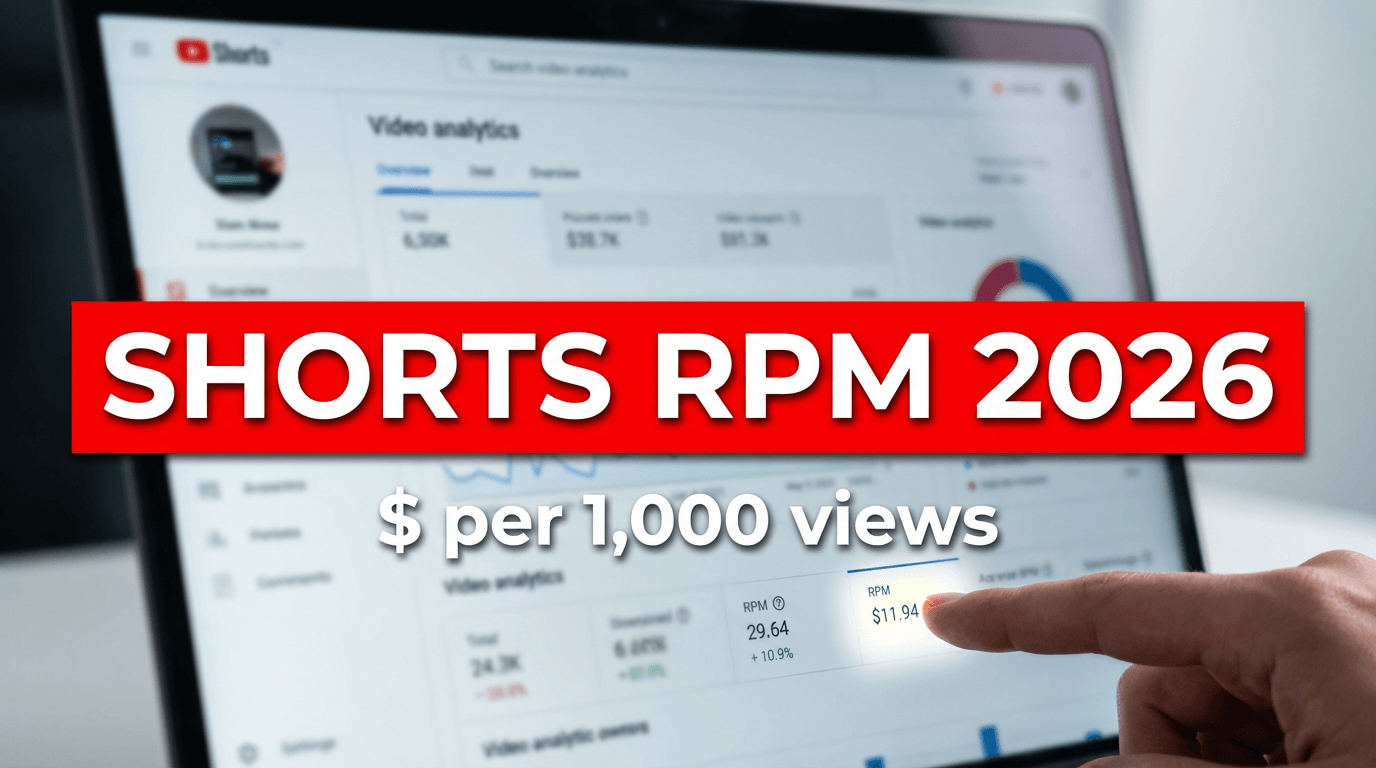
YouTube Shorts RPM in 2026 averages $0.03–$0.05 per thousand views, with the real distribution running $0.01 to $0.15 by niche and geography, against $3–$20+ for long-form in the same niche. Channels doing 1–5 million monthly views land $20–$300; mid-tier at 10–50 million monthly views make $200–$2,000. Creators clearing $10K+ monthly aren't living on the 45% revenue share at all — they're stacking sponsorships, affiliate deals and product funnels, and using Shorts purely as a feeder into high-RPM long-form.
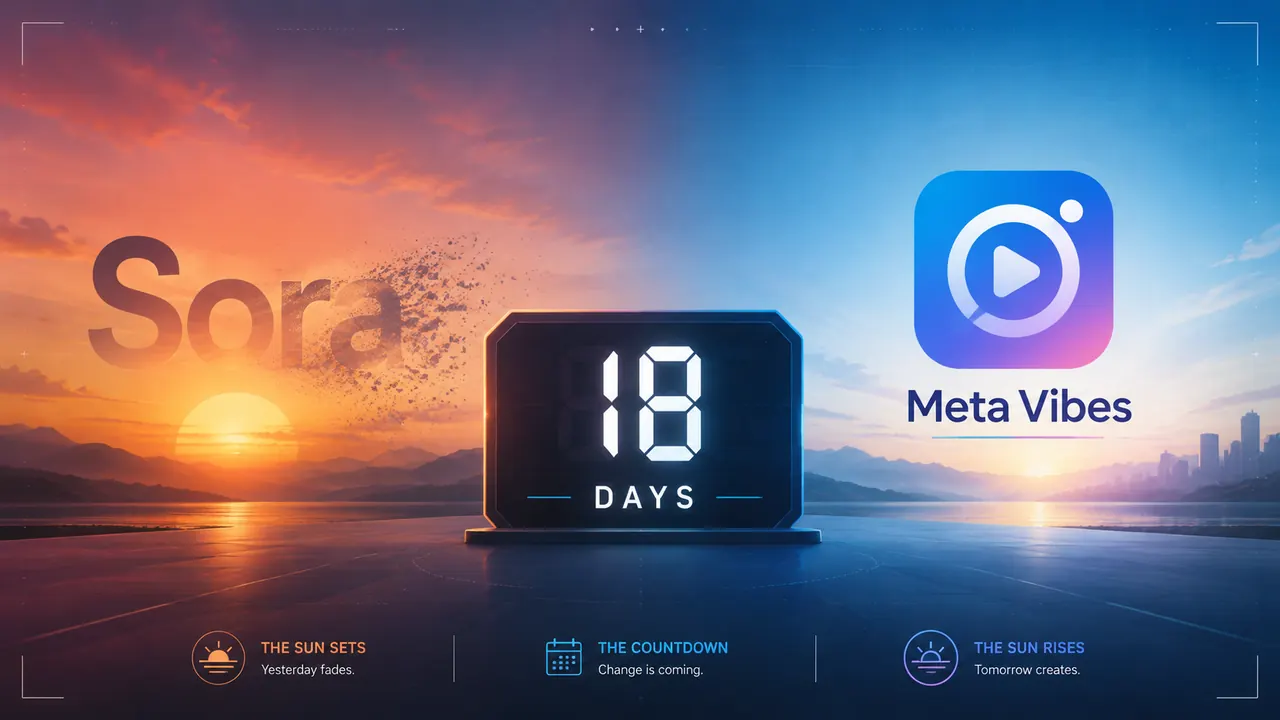
OpenAI discontinued the consumer Sora app on April 26, 2026, and the Sora API sunsets September 24, 2026 — that's eighteen days out. Anyone with Sora calls inside a production pipeline needs a migration path this month. Meanwhile Meta Vibes went the other direction: standalone app testing in Brazil and Mexico began February 5, 2026 after strong traction, and Meta has been directly paying creators to produce AI video for the feed, though it still hasn't published monetization or derivative-rights terms.
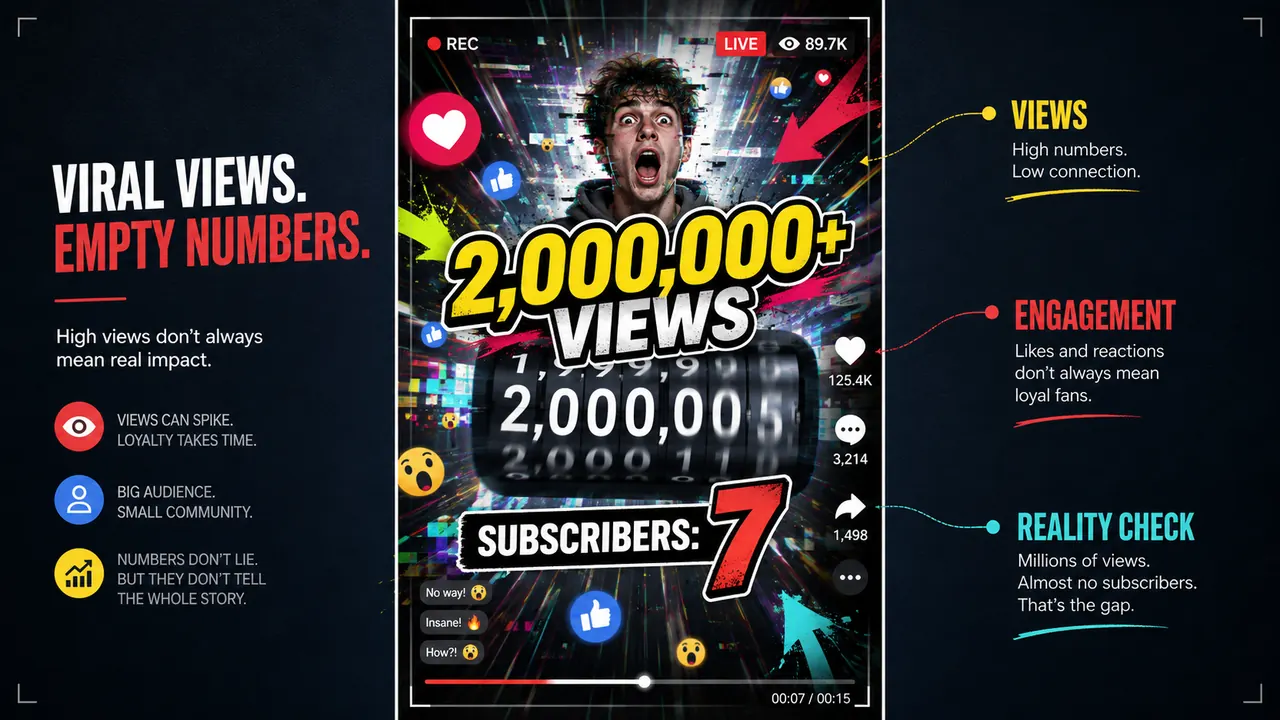
Creators working the brainrot niche routinely hit 500K–2M views on individual videos with negligible subscriber counts, because the format optimizes directly for the retention and replay signals TikTok rewards. Thumbnails with bold text and recognizable characters like Tralalero Tralala or Tung Tung Sahur are pulling high click-through. The sleeper is "study brainrot" on Shorts, where gameplay-plus-narration is outperforming static educational video with students — a format that borrows brainrot's mechanics while sitting in a far higher-RPM lane.
Wan 2.6 shipped as a closed commercial API through Alibaba Cloud with no open release, and reporting on the state of official downloadable weights is genuinely muddled — some sources say the line stops at Wan 2.2 as of July 2026, others claim a Wan 2.7 Apache 2.0 release in March 2026 with first/last-frame control and 9-grid image-to-video. Verify against the Wan-AI HuggingFace org before you plan a local build around it. On the closed side the split is clean: Kling 3.0 owns native 4K and motion physics, Veo 3.1 owns scene consistency and prompt adherence, Seedance 2.5 does 30-second clips with native audio and up to 30 reference images.
Long-form faceless RPMs cluster hard by vertical: personal finance $10–$15, education $9–$14, true crime $8–$13, animated storytelling $9–$13. A 10K-sub finance channel does $300–$1,500 monthly at 70–90% net margin; 100K-sub history channels do $1,500–$6,000 net; 500K-sub true crime runs $5,000–$20,000. Production overhead sits at $50–$150 a month, which means niche selection — not output volume — is the single largest lever on take-home.