OpenAI's Sora API shuts down September 24, 2026, with no grace period, no rolling deprecation, and no successor API to migrate to. The consumer app already died April 26 after an 84-day run, and all associated account data gets permanently deleted after the cutoff. If any part of your pipeline still calls Sora, you have roughly a week and a half to move to Veo 3.1, Kling 3.0, Runway, or Seedance.
Adrien Toupet of AInVFX released a rank-32, 654MB IC-LoRA that turns flat painted color blobs on your first and last keyframes into art-directable smoke, steam, and fire. Trained on 52 Pexels clips with trigger word ainvfxfluid, it runs on the LTX 2.5 22B distilled transformer at 8 steps, CFG 1 — and a 121-frame clip renders in about 60 seconds on a laptop RTX 4090. Ships with a compositing workflow that generates plates against black for overlay on live footage.
Two first-party performance features hit ComfyUI core: a sparse attention node built on comfy-kitchen kernels with three selection modes (Sol-Attn, top-k/SLA, and VSA), and the Comfy Compiler, a memory compiler using aimdo plus CUDA graphs to cut allocation overhead. On an RTX 5060 running MiniMax H3 at 720p across 158 frames, the compiler hit roughly 43 seconds per step where the pipeline previously stalled out entirely. Requires comfy-kitchen 0.2.33 and comfy-aimdo 0.5.2 — and the speedup scales with sequence length, so long video benefits most.
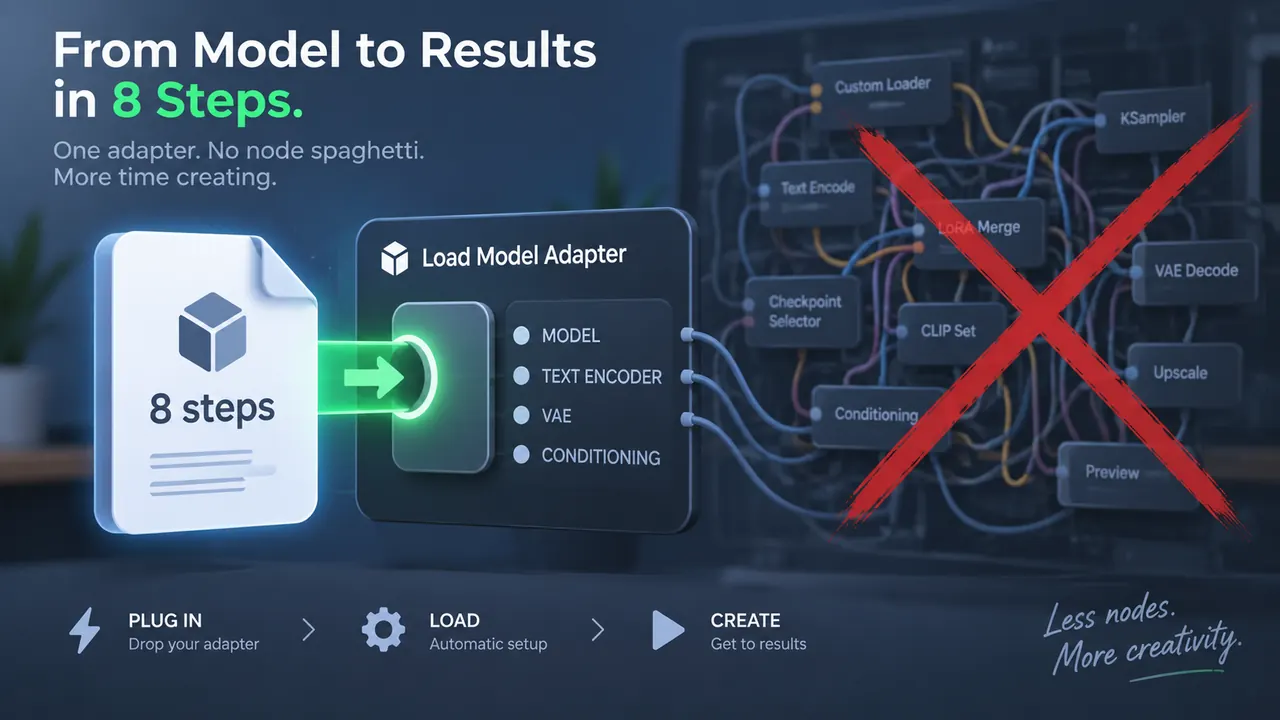
Community contributor drbaph extracted the VDN-H3 8-step LoRA into a standalone adapter you load with ComfyUI's stock LoRA loader on an unmodified MiniMax H3 checkpoint. Pruned variants run about 2.1GB each, with a companion INT8 ConvRot checkpoint shrinking the linear branch from 4.28GB down to 2.20GB. Benchmarks show 2:04 for a 1280x736 generation at strength 0.65 to 1.0 — slower than the FastH3 route, but it holds fast motion noticeably better.
The Alibaba TaoLive AIGC team released TaoMate-H3, a low-latency streaming audio-video runtime built on MiniMax H3 that generates synchronized speech, sound, and video in small chunks on one timeline at 480p, 768p, and 1080p. The repo ships a step-3000 generator EMA LoRA at rank 128, alpha 128, using three Stage3 denoising intervals per chunk. MiniMax themselves publicly called it a wild initiative but noted true real-time still needs more inference acceleration — and floated an H3 hackathon in response.
Wan 3.0 is live in ComfyUI through three API nodes (Text to Video, Image to Video, and Reference to Video) with 30-second generation, but the weights are not on Hugging Face, there's no GitHub inference repo, and no published license text. It's been API-only public beta since August 6, 2026. Plenty of creators are reading "Wan 3.0 in ComfyUI" as an open release — it is hosted inference with a Comfy front end, and your costs and rate limits are Alibaba's to set.
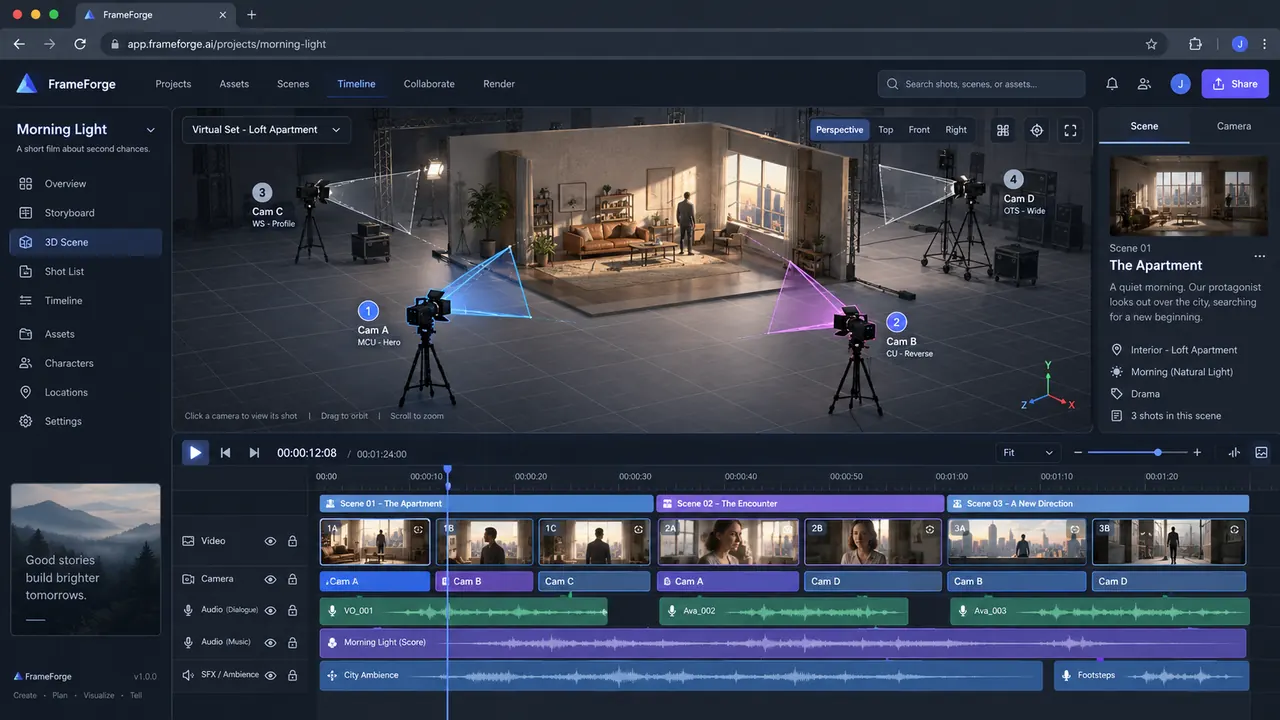
Nathan McConnell, an LED volume stage manager at SCAD, released an AGPL-3.0 browser-based filmmaking workstation that sits on top of local ComfyUI or cloud APIs. It adds 3D storyboarding with virtual camera placement, character continuity systems, an experimental Long Take mode, LoRA support across generation surfaces, and timeline export straight to Premiere or DaVinci. Runs LTX Video 2.3, Wan, and MiniMax H3 for video plus Z-Image, Qwen Image, Flux 2, and Krea 2 for stills — 8GB GPU minimum, 12 to 16GB for the full local set.
TikTok's 2026 policy requires visible labels on AI-generated visuals and audio depicting realistic people or scenes, enforced via C2PA Content Credentials that flag synthetic media whether or not you self-disclose. Properly labeled AI content earns the same Creativity Program rate as anything else — but trip the automated detector without the label and you get zero Creator Fund earnings for 14 days, and retroactive labeling does not undo it. YouTube's parallel system, live since May 2026, auto-applies disclosure labels to photorealistic synthetic media, with disclosed content fully monetizable and no reach penalty.
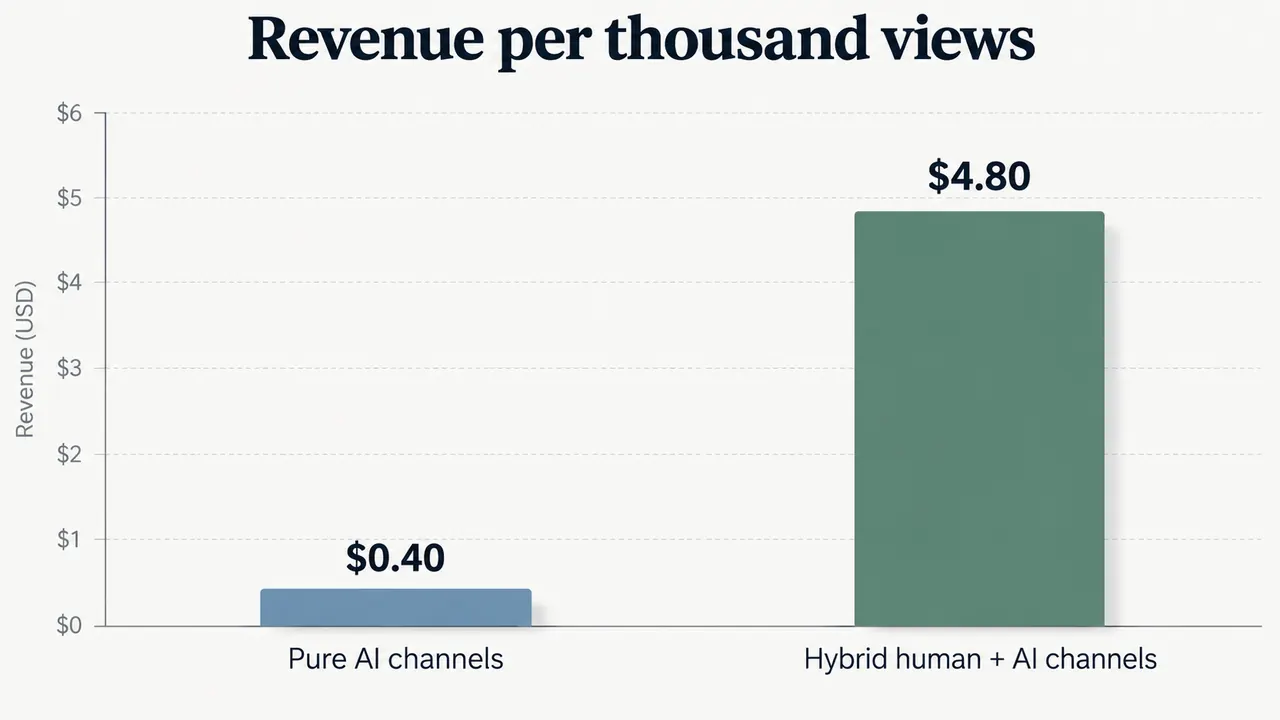
YouTube Shorts RPM sits at roughly $0.03 to $0.10 per thousand views for AI content in 2026, meaning a million-view Short returns about $30 to $100 on the 45% creator share. Finance and other high-CPM niches clear $0.13-plus while entertainment bottoms out at a cent or two. The consistent finding across case studies: channels blending AI efficiency with authentic human storytelling beat pure-AI channels on every monetization metric, and creators clearing $10K a month are doing it on sponsorships and product funnels, not the rev share.
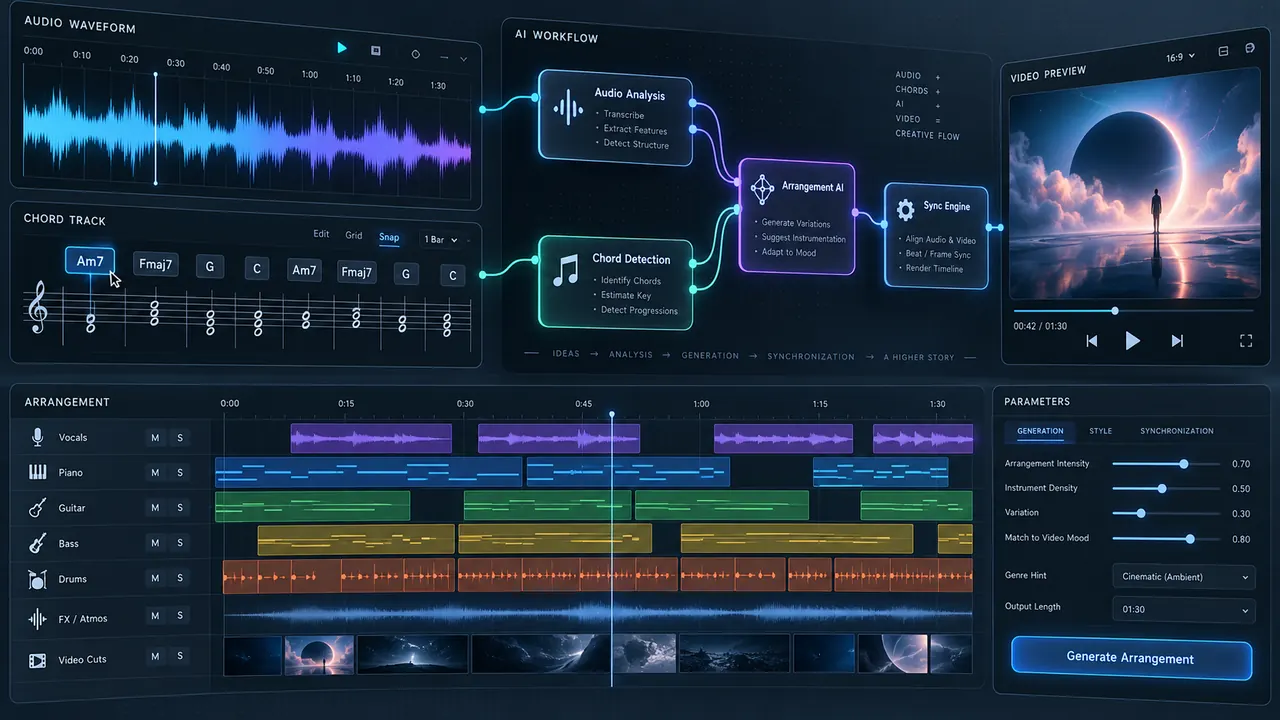
Tencent Hunyuan open-sourced AuK, a single 1.5B model covering text-to-speech, voice cloning, lyric editing, and audio separation — with official ComfyUI nodes in the box. Alongside it, the MAP team shipped YuE2-3B, an open music generation model with editable melody and chord scores that they claim beats Suno v5, and native ComfyUI support is already merged. Both mean your soundtrack and VO can now live inside the same graph as your frames.