OpenAI's Videos API and every sora-2 / sora-2-pro alias and snapshot start returning 410 Gone on September 24, 2026. Unlike a normal deprecation there is no official migration path, so anything you've wired into sora-2 needs to be repointed to Veo 3.1, Seedance 2.5, Runway Gen-4.5 or Kling 3 this week. Export your archive at sora.chatgpt.com/sunset before the door closes.
Released September 9, the headline is the Comfy Compiler with CUDA graphs plus sparse attention for comfy-kitchen backends — real throughput gains, not just node count. On the model side it adds MiniMax-H3 PDD LoRAs and Fun Union ControlNet, LTXV generated keyframes with latent guide pinning, native VideoTrim and VideoCrop widgets, and SenseNova U1.5 with up to 10 reference images.
Viggle released a 33.1B full finetune of MiniMax-H3's ref2va transformer that replaces a character in a video from a single repainted frame — no pose estimator, no segmentation model, no face tracker, no text prompt. Two inputs, three forward passes, 124 frames in about 26 seconds on a single GPU. Weights are under the MiniMax H3 Community License, inference code is Apache 2.0, and community ComfyUI nodes are already up on GitHub.
Lightricks' 22B audio-video foundation model does native multishot scenes — wide, medium, close-up in one generation with character, lighting and voice held consistent across the cut — plus auto duration and 4K HDR. A 10-second image-to-video clip renders in roughly 6.8 seconds on NVIDIA superchips with the distilled variant. Free for orgs under $10M ARR, with official ComfyUI templates shipped day zero. It's sitting at 3,391 likes and 1.74M downloads on Hugging Face.
H3 is the most-downloaded video model on the Hub at 5,128 likes and over 5.08M downloads, generating 5-15 second clips at 24fps and 2K on the short edge, with unified text, image, video and audio context. Via vLLM-Omni and FastVideo's FastH3, a 10.1-second video-plus-audio MP4 renders in about 8.7 seconds — faster than playback. Read the license first: it's not OSI-approved and it excludes the US, EU, UK and South Korea.
Meta renamed the "AI creator" label to "AI-generated profile" and began limiting reach on accounts featuring AI-generated people without it, per an August 31 rollout. Voluntarily self-identifying as an AI creator does not suppress your distribution — Meta is explicit that recommendations are unaffected. Skipping the label on a synthetic-persona account is what costs you reach.
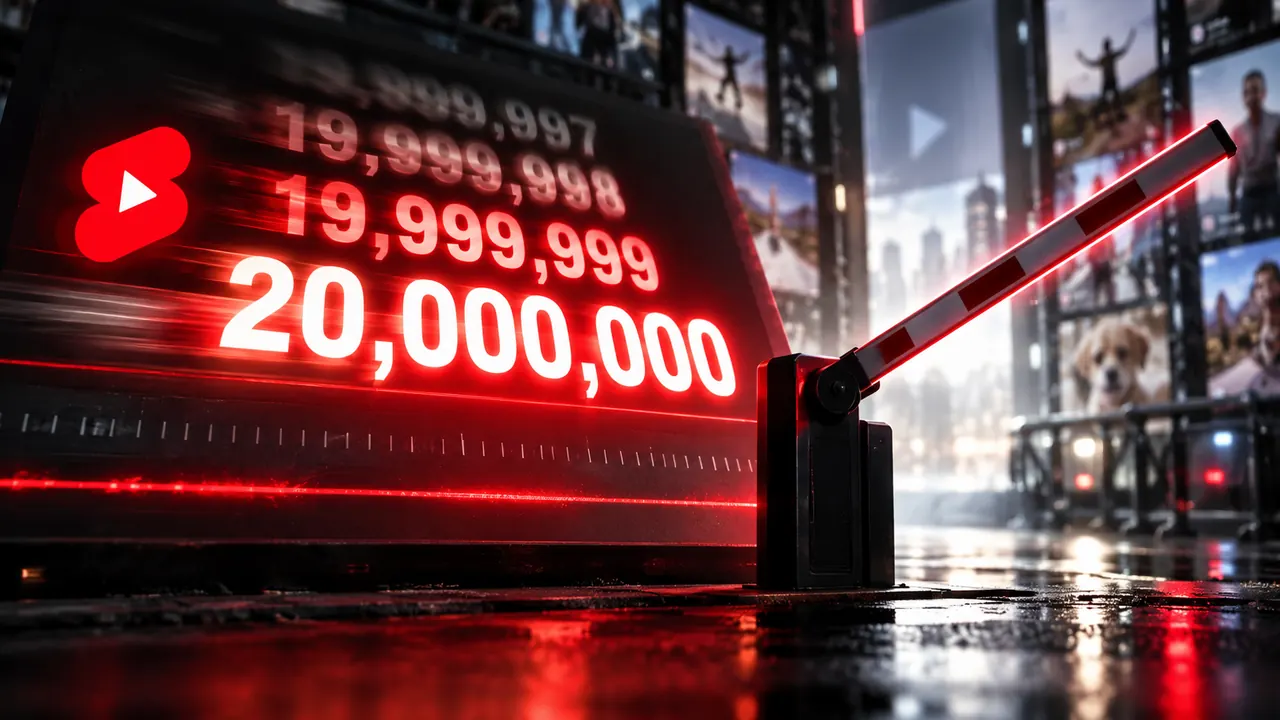
Announced August 10 and effective February 1, 2027, new applicants will need 8,000 qualified watch hours or 20 million qualified Shorts views — up from 10 million. Existing partners are grandfathered. The inauthentic content policy still targets mass-produced templated uploads rather than AI tooling itself, so disclosed AI work with real editorial input stays monetizable.
The Alibaba-backed video startup closed a Series C Extension with 150 million registered users and 15 million monthly actives, explicitly positioned to absorb consumer demand orphaned by Sora's shutdown. Meanwhile eMarketer projects US TikTok Shop sales at $23.4B in 2026, up 48% year over year, driven substantially by cheap AI-generated product demos.
Bandar Apna Dost, an Indian AI-produced channel, has crossed 2.07 billion lifetime views with an estimated $4.25 million in annual ad revenue and no filming, actors or locations. Faceless channels now account for 38% of all new creator monetization ventures, up from 12% in 2022. The counterweight: documented case studies show creators spending $26,311 on production against $15,218 in AdSense — the median is not the headline.
Google's economy tier runs $0.05 per second at 720p and $0.08 per second at 1080p — about 40 cents for an 8-second 720p clip — at under half the cost of Veo 3.1 Fast with the same speed. It supports 4, 6 and 8-second clips, native 9:16 vertical, and native audio. With Sora's API dying in under two weeks, this is the obvious landing spot for anyone running programmatic batch generation.