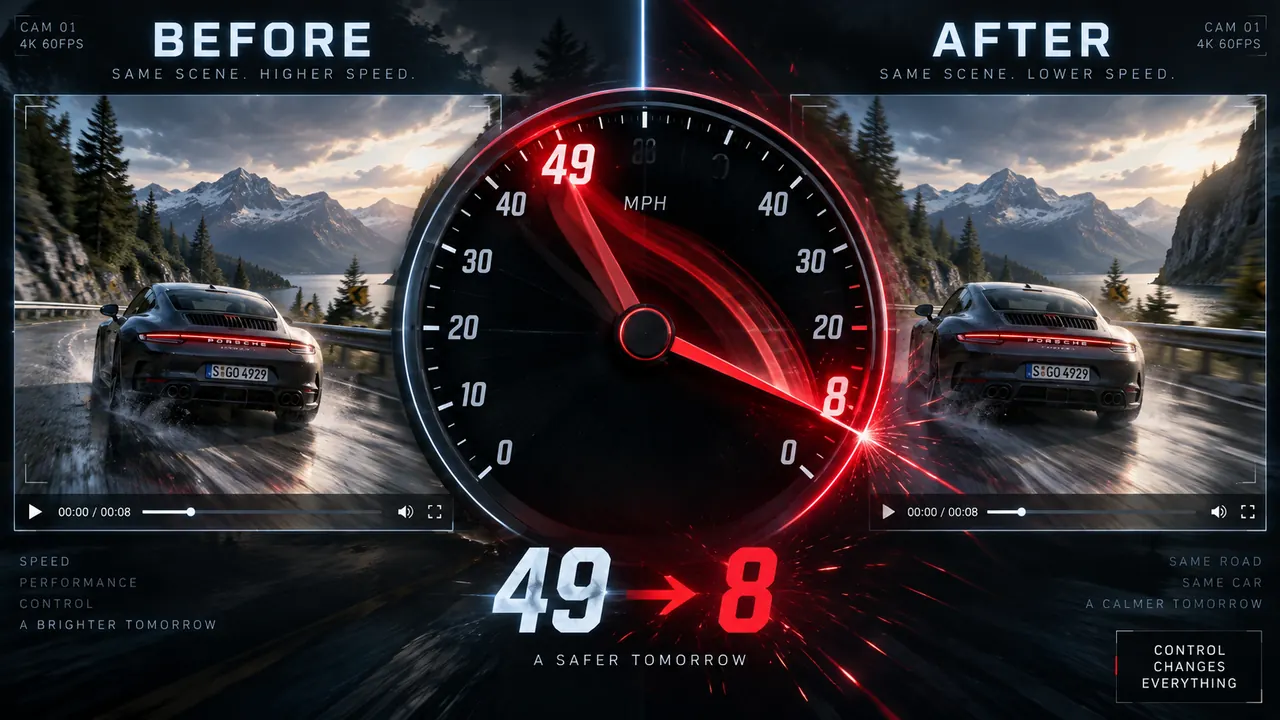
Video Rebirth dropped a data-free self-distillation LoRA that collapses MiniMax H3 sampling from 49 transformer forwards down to 8 — a roughly 6x throughput win on the open-weights audio-video model. Two independent ComfyUI ports are already live, including Saganaki22's ComfyUI-Hyperflow node pack, which runs on ComfyUI's native H3 implementation with no core file edits and no custom sampler. The adapter is a rank-256 unmerged bf16 LoRA with two-time (t, r) conditioning, so every step is conditioned on the interval it integrates.
OpenAI's Videos API and all Sora 2 model aliases are removed on September 24, 2026, closing the book on a shutdown that began when the consumer app died April 26. The deprecation table lists no recommended replacement, so there is no official successor path — an estimated 500,000 creators have already scattered to Kling 3.0, Seedance 2.5 via CapCut, Runway Gen-4.5, and Veo 3.1. If you have a production pipeline still calling Sora endpoints, you have a long weekend to rewrite it.
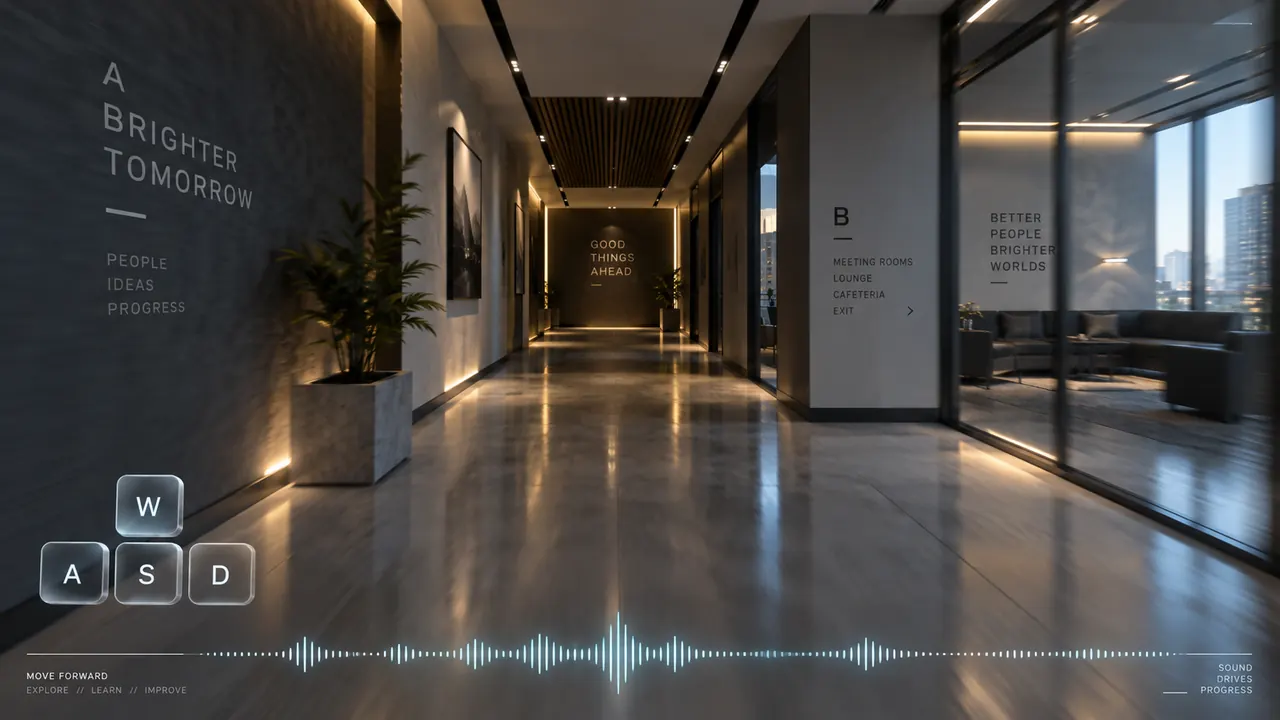
XGEN Labs released XGEN-JING, an egocentric interactive model built on MiniMax-H3 that generates first-person video and synchronized audio from keyboard camera input, action history, and reference images. The shipping checkpoint, JING-Flash-v1, is a four-step bidirectional model, and reference conditioning lets you compose a scene from separate character, object, and environment images and then branch different actions from the same start state. Weights and inference code are on GitHub and Hugging Face under the MiniMax H3 Community License.
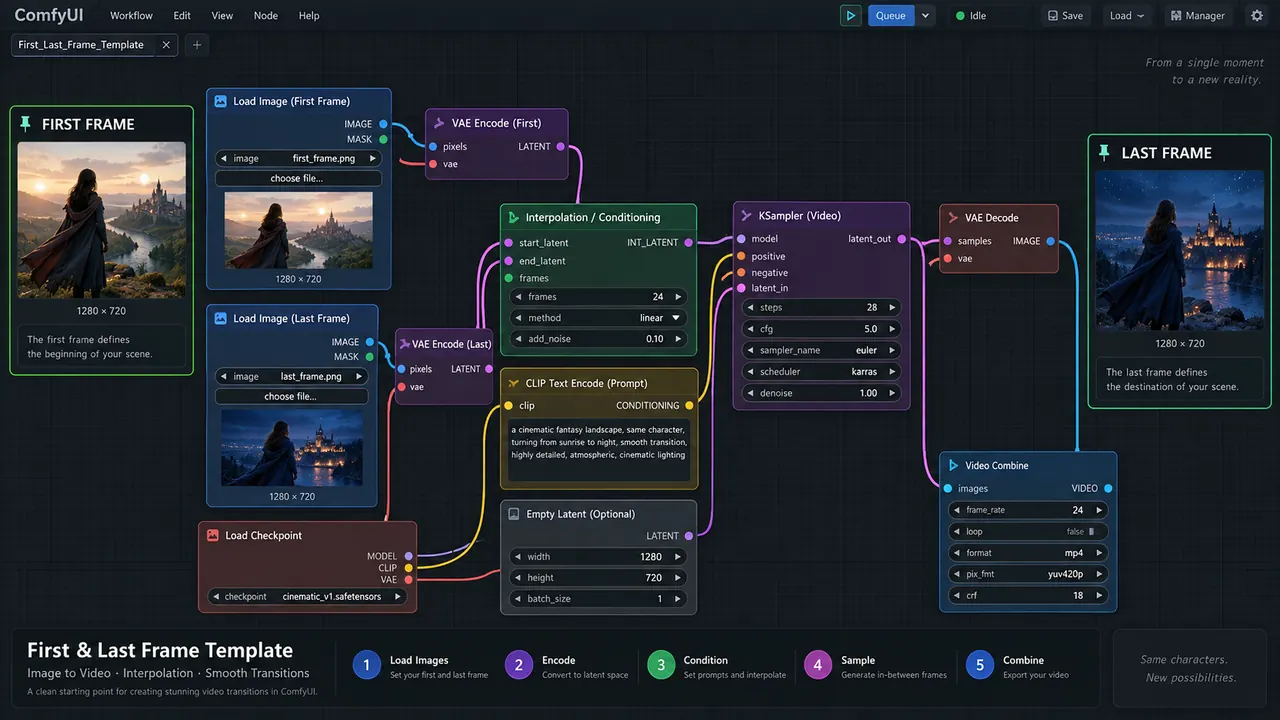
FastVideo shipped official text-to-video and first/last-frame templates for FastH3 8-Step V2 that run natively in ComfyUI, complete with recommended BlockSparseAttention VSA settings. That first/last-frame template is the practical one — it's the cleanest path to controlled shot continuity without hand-rolling a custom sampler graph. Paired with HyperFlow, there are now two competing 8-step routes to fast H3 output, so bench them against your own prompts before committing.
Fizgig v6 introduces RefMods for MiniMax H3 — reference photos compressed into a single small file and tuned directly against the model rather than bolted on as a generic IP-adapter. For anyone running a recurring character across an episodic series, this is the lightest-weight consistency mechanism to hit the H3 ecosystem so far. It slots alongside XGEN-JING's reference conditioning as a second approach to the same problem.
SelfLift runs early denoising passes at low resolution and finishes at full res, a progressive-resolution sampling trick that needs no training and no fine-tune. It's confirmed working on Z-Image, FLUX.2-Klein, and MiniMax H3, which makes it one of the rare optimizations you can stack on top of an existing workflow with no model swap. It composes with step-reduction LoRAs, so the H3 crowd can stack SelfLift on HyperFlow for compounding gains.
Fei-Fei Li's World Labs is running early access on Atlas, an omni world model that generates up to a minute of 1440p camera-controlled video from a handful of photos and also emits explicit 3D reconstructions. World Labs claims human raters preferred Atlas over rival video models in 75 to 94 percent of trials and that it beats reproduced open-source specialists on 3D reconstruction error across six benchmark datasets. Caveat worth flagging: no paper, no model card, no price, no named partners, and every benchmark was run in-house.
Instagram's 2026 Reels ranking leans on shares, watch time, and an originality score, with visual fingerprinting that demotes any video retaining 70 percent or more of another creator's visuals or audio — aggregator accounts have seen 60 to 80 percent reach drops. The counterintuitive read for AI creators: a freshly generated clip posted natively scores as original content, not a recycled repost, so AI Reels are fully allowed provided they aren't deceptive. The killer is the cross-post watermark, which caps reach before a single viewer sees the frame.
TikTok has expanded automatic labeling of AI-generated video and tightened enforcement against bot-driven engagement, requiring visible "synthetic" or "not real" disclosure on realistic depictions of people, places, or events. The money detail: TikTok pays AI content at parity with traditional content when substantial human input is demonstrated, but videos caught by automated detection without proper labeling forfeit Creator Fund earnings for 14 days — and retroactive labeling does not restore them. Instagram has separately renamed its "AI Creator" badge to "AI-Generated Profile," and unlabeled synthetic-person accounts see limited reach until the label is applied.
Community LoRAs for Krea-2-Raw now paint a fully rendered image while faithfully following your input lineart, running through Ostris edit nodes in ComfyUI. That matters for video creators building storyboard-to-keyframe pipelines, where the whole game is locking composition before you burn GPU minutes on motion. Separately, a YuE2 LoRA trainer landed as native ComfyUI nodes — feed it mp3 or wav, pick a trigger word, get a stock-loader-ready music LoRA for custom scoring.