The Hao AI Lab distillation of MiniMax-H3 now ships with first-party ComfyUI templates for text-to-video and first/last-frame generation, complete with BlockSparseAttention presets so you don't have to guess the config. V2 is an eight-forward, data-free DMD2 checkpoint with 80% Video Sparse Attention — the earlier 4-step preview hit up to 14x speedup on a single Blackwell GPU. Open weights, synchronized stereo audio, 24fps clips from roughly 5 to 14 seconds.
Fizgig v6.0.1 now builds RefMods for MiniMax H3 — pre-encoded safetensors files in the 1.1 to 1.6 MB range that store conditioning latents pulled through H3's 3D video VAE, loaded like a LoRA but requiring zero training. Builds take minutes, the basic path needs no captions, and the new RefMod Studio tab lets you A/B a mod against the base model before you commit. Character consistency without a training run is the single biggest unlock for episodic AI content right now.
OpenAI's Sora API is scheduled for discontinuation on September 24, 2026 — the app itself already shut down on April 26. If you have any pipeline, n8n node, or client deliverable still calling Sora endpoints, you have one week to cut over. Veo 3.1 via Gemini API and Kling 3.0 Turbo are the two lowest-friction commercial swaps.
Shipped September 15: FastVideo FastH3 nodes for text-to-video and image-to-video with native audio, Marigold V2 for depth and surface estimation, and YuE2 music generation from style prompts. That follows v0.35.2 on the 14th, which added the Bria edit suite and Flux Video Edit for instructional clip editing. Four point releases in seven days — update, but pin your custom nodes first.
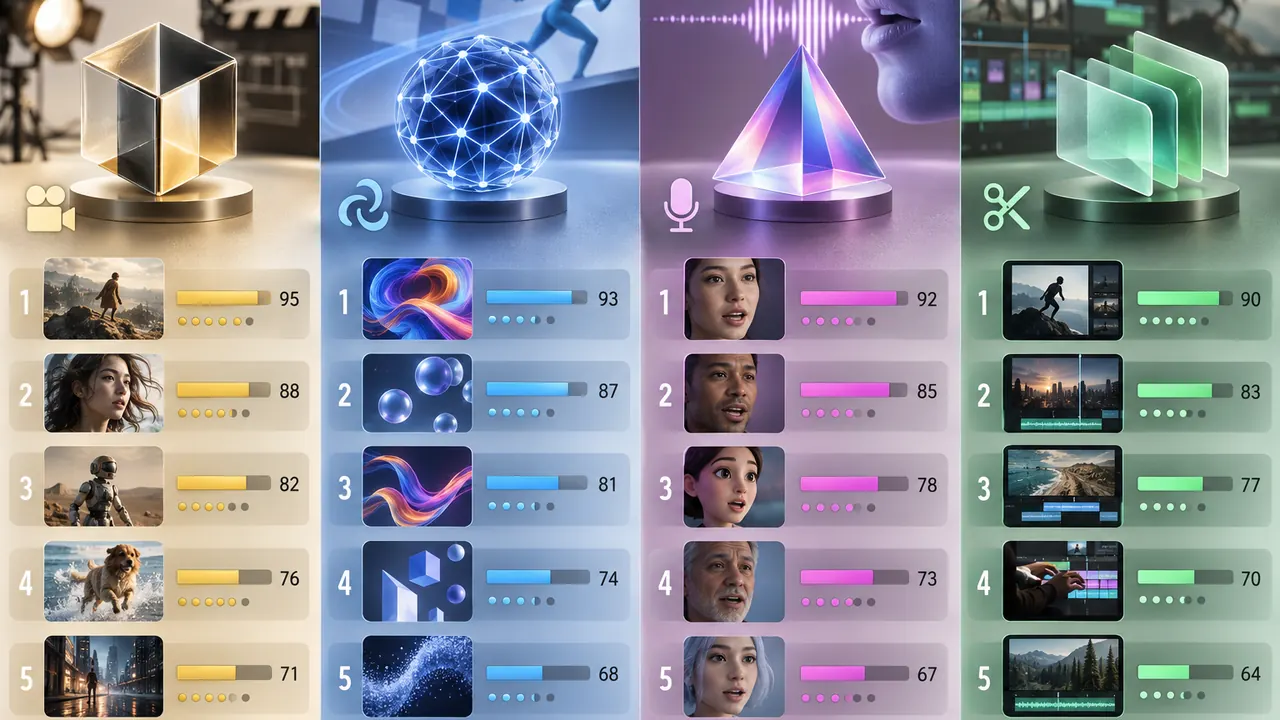
Launched September 15, OpenArt's Arena ranks models per task instead of one blended score. Seedance 2.5 takes overall video at 1,081 and leads film (1,049), motion design (1,059), and lip sync (1,063); Wan 3.0 sits second overall at 1,004 but actually edges Seedance in video editing, 1,034 to 1,033. On the image side, Seedream 5.0 Pro leads overall at 1,010 while GPT Image 2 wins graphic design and image editing. Caveat for local creators: both top video models are API-only, and Wan 3.0 still has no published weights.
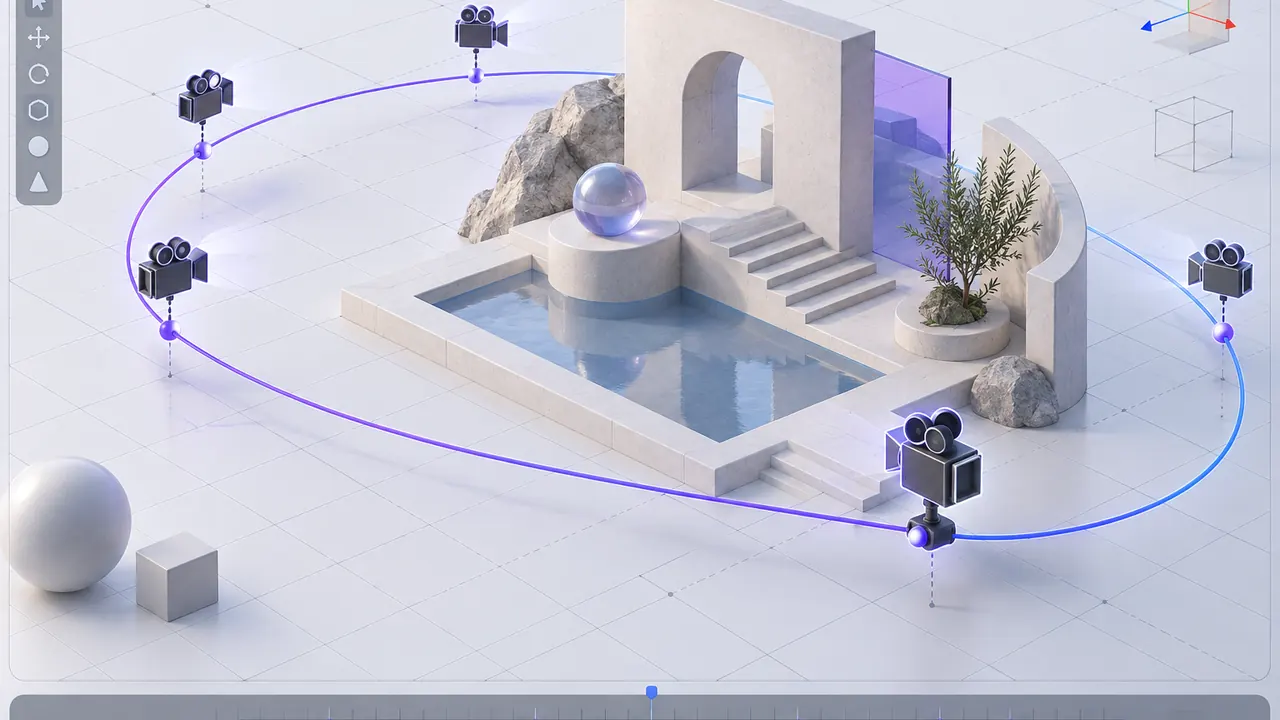
A new community node exposes a keyframe-based camera path editor for MiniMax H3 and compiles the movement into model-readable prompt conditioning. Instead of fighting prose like "slow dolly in with a slight arc," you draw the move. This is the kind of control layer that separates a usable shot from a lucky roll.
A free in-context LoRA for LTX 2.5 that converts painted keyframes into art-directable smoke, steam, and fire footage. You block the shape of the element by hand, the LoRA handles the simulation-like motion. For anyone who's been compositing stock elements over AI plates, this collapses a whole post step into the generate pass.
AuK covers text-to-speech, voice cloning, and lyric editing in a single 1.5-billion-parameter model, and Tencent shipped first-party ComfyUI nodes alongside it. Paired with the YuE2-3B music model — which the release claims beats Suno v5 on WildSongBench with editable melody and chord scores — the entire audio bed for a short can now live in the same graph as the video.
Meta renamed the "AI creator" tag to "AI-generated profile" and began limiting distribution for accounts featuring AI-generated people that don't disclose it. Creators who do apply the label aren't penalized for the AI persona itself. If you run a synthetic-presenter account on Reels, labeling is now strictly cheaper than not labeling.
Community GGUF builds of the pruned H3 architecture run from 8.9 GB up to 21.6 GB, with Q4_K_M recommended for 16GB GPUs and Q5_K_M for 24GB. Reported VRAM peaks land around 14.2 GB for 30 seconds at 640x480 and 14.4 GB for 5 seconds at 1344x768. Watch your system RAM — ComfyUI keeps the text encoder resident on the host side.