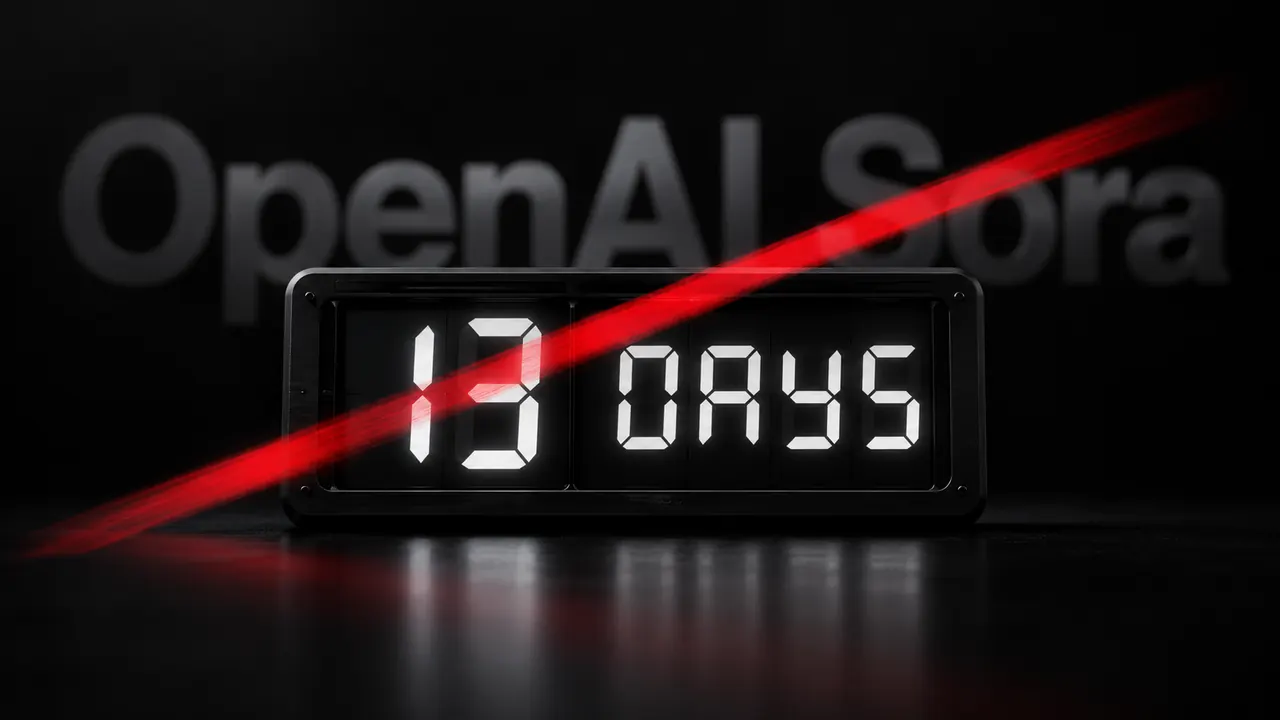
OpenAI's Videos API and every Sora 2 generation model (sora-2, sora-2-pro, and all dated snapshots) are removed on September 24, 2026. This is a hard cutoff, not a rolling deprecation — no grace period, and OpenAI left the "recommended replacement" column of its own migration table blank. Any pipeline, SaaS wrapper, or automation still calling the Sora endpoint breaks silently that day.
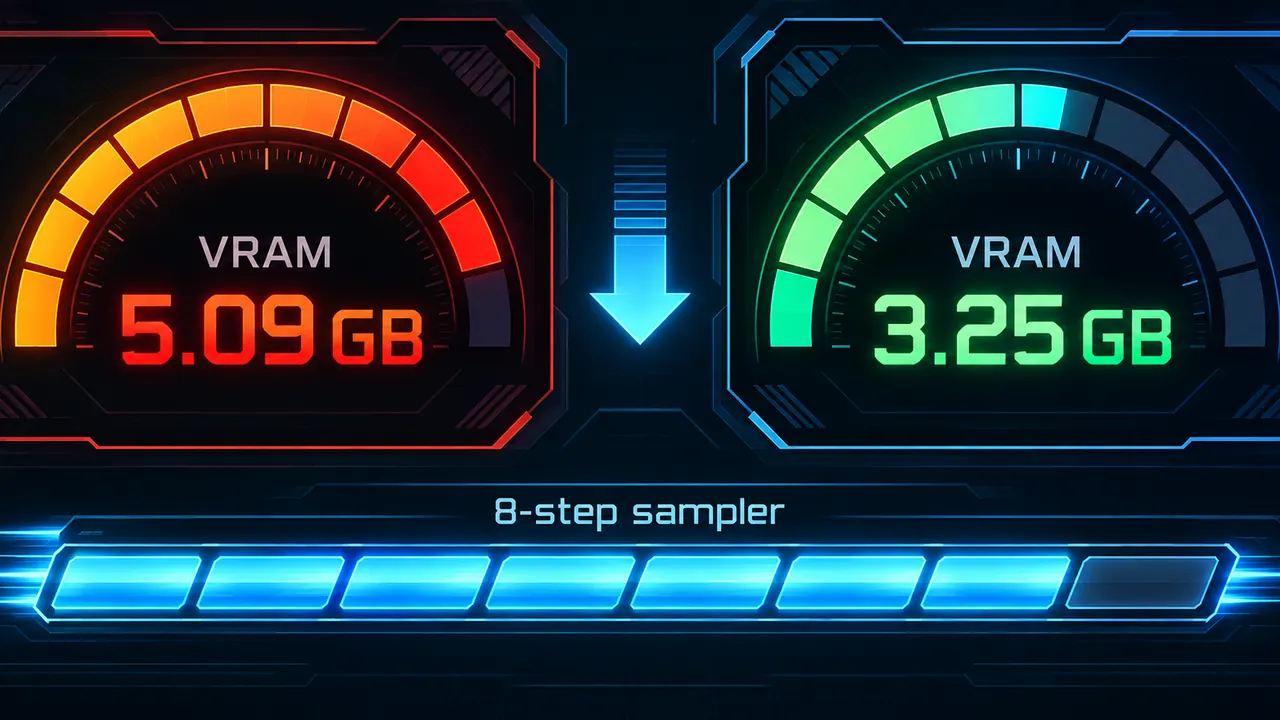
drbaph converted the VDN-H3 Turbo adapter into a plain LoRA that works on unmodified MiniMax H3 checkpoints, shipping three ~2.1 GB files (non-pruned fl2va/ref2va, plus pruned fl2va and ref2va variants) at a recommended 8 steps, strength 0.65 to 1.0. The companion INT8 ConvRot checkpoint cuts stage VRAM from 5.09 GB to 3.25 GB, runs the linear-branch matmul about 2.7x faster, and pulled one end-to-end test from ~111s to ~95s.
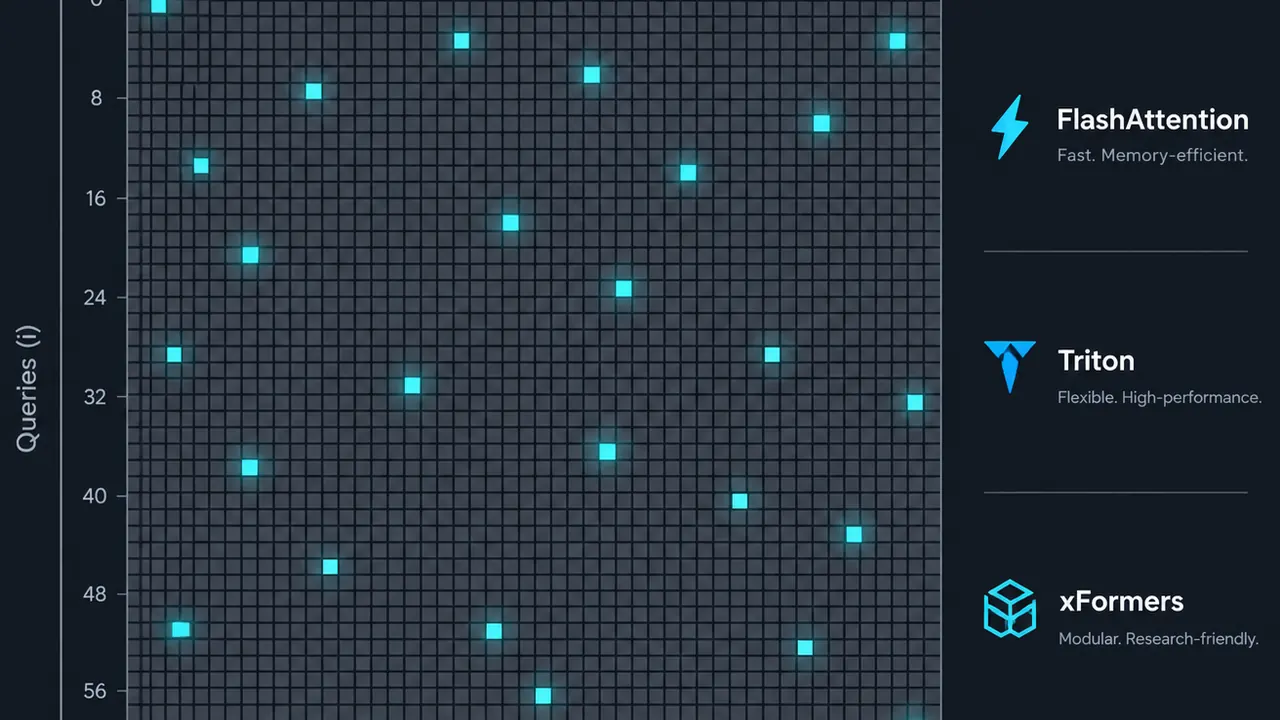
Two performance features landed in core builds: a Block Sparse Attention node with three selection backends — Sol-Attn adaptive tau, top-k SLA matched to trained LoRA weights, and VSA cube tiling from FastVideo — plus a Comfy Compiler that cuts CUDA allocation overhead and holds a stable VRAM footprint. Reported results include MiniMax H3 at roughly 43 seconds per step on an RTX 5060 and about 35% more step throughput on MiniMax Music 3. Requires comfy-kitchen 0.2.33 and comfy-aimdo 0.5.2.
WASasquatch (Jordan Thompson) rebuilt the legendary pack from the ground up — 220 nodes to 463 — and killed the dependency hell that made v2 an install gamble, since v2 pulled roughly 20 Python packages on its own. Face detection, background removal, and frame interpolation now run natively on PyTorch using ComfyUI's device. New categories include 43 Three.js 3D scene nodes, 28 file/archive nodes, 24 logic and loop nodes, 9 HDR/linear-light nodes, and a Compare Video node for side-by-side renders. Old workflows still run.
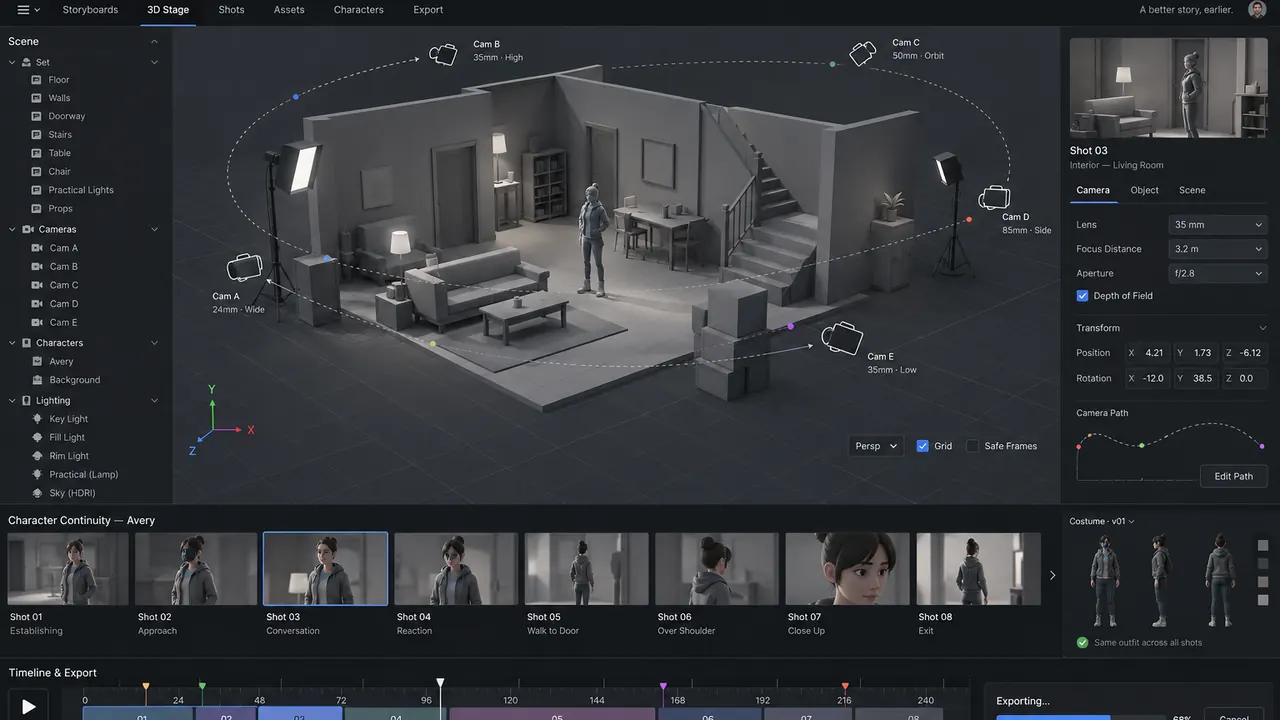
Nathan McConnell, a virtual production specialist who runs LED volume stages at SCAD, rebuilt his browser-based AGPL-3.0 workstation from scratch around actual film workflow: 3D storyboard for camera positioning, a continuity system for character consistency across shots, experimental Long Take mode, LoRA support on every generation surface, custom workflow registration from ComfyUI JSON exports, and timeline export to Premiere or DaVinci. Drives LTX Video 2.3, Wan via Kijai's wrapper, and MiniMax H3 for video; Z-Image, Qwen Image, Flux 2, and Krea 2 for stills. Runs on 8GB minimum, 12-16GB for everything local.
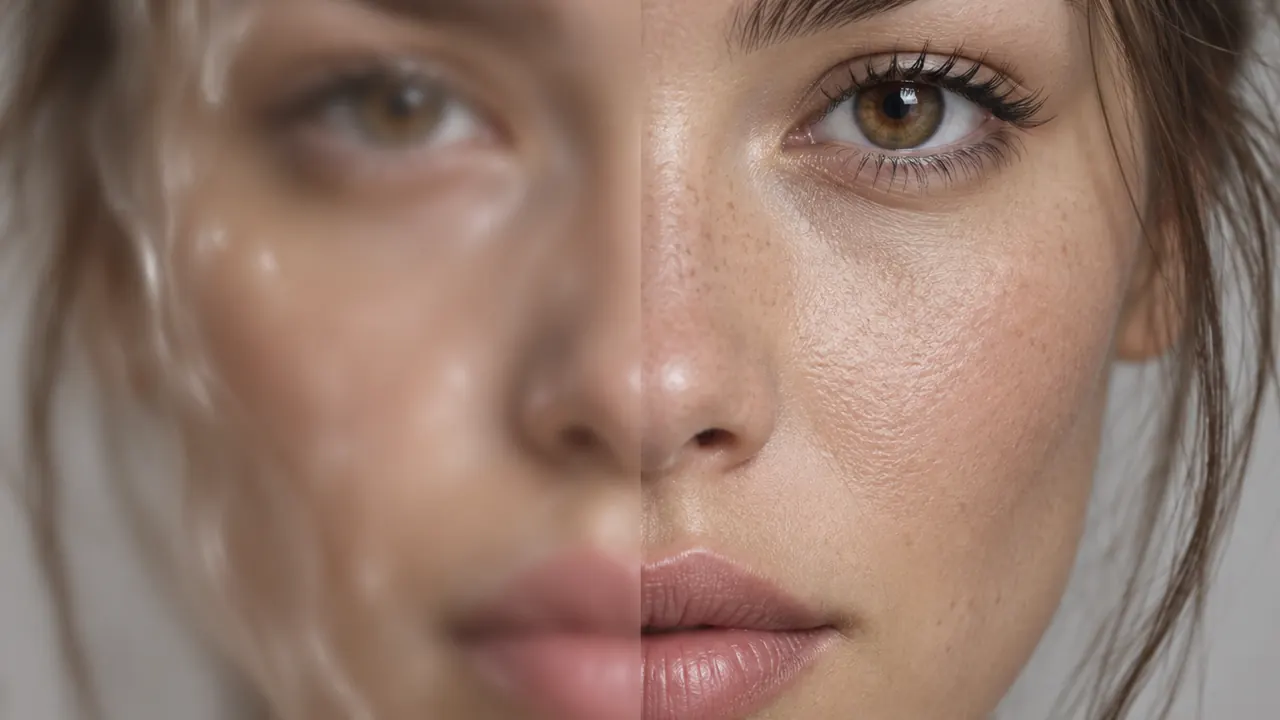
Community trainer Alissonerdx published a 1.2 GB detail-recovery LoRA that works same-resolution rather than as an upscaler — the source clip gets VAE-encoded and injected into the transformer sequence as a conditioning block, so the model learns a source-to-target mapping instead of denoising both. It's already past 70 likes and 1,300 downloads on Hugging Face. Strength around 0.8 keeps skin and texture natural; 1.0 goes aggressive.
Three nodes went live — Text to Video, Image to Video, and Reference to Video — delivering native 30-second single-pass output with no stitching, 2 to 30 second durations, up to 20 referenced assets (10 images, 5 videos, 5 audio) via @ syntax, prompts to 20,000 characters, and document or webpage parsing. New 480p tier joins 720p and 1080p for cheap drafts. The catch: Alibaba's own model page lists "Open Source: No" — no Hugging Face checkpoint, no GitHub repo, no license text, billing per resolution tier.
H3 Max is a post-trained variant of open H3 tuned for stronger prompt adherence and better aesthetics; H3 Max Turbo is a further distillation for throughput at the same look. Both cap at 480p and 768p — versus 2K on the open base model — run 5 to 15 seconds with synchronized audio, and bill per output second through ComfyUI's API node system. They show up as dropdown options in text-to-video, first-last-frame, and reference-driven workflows.
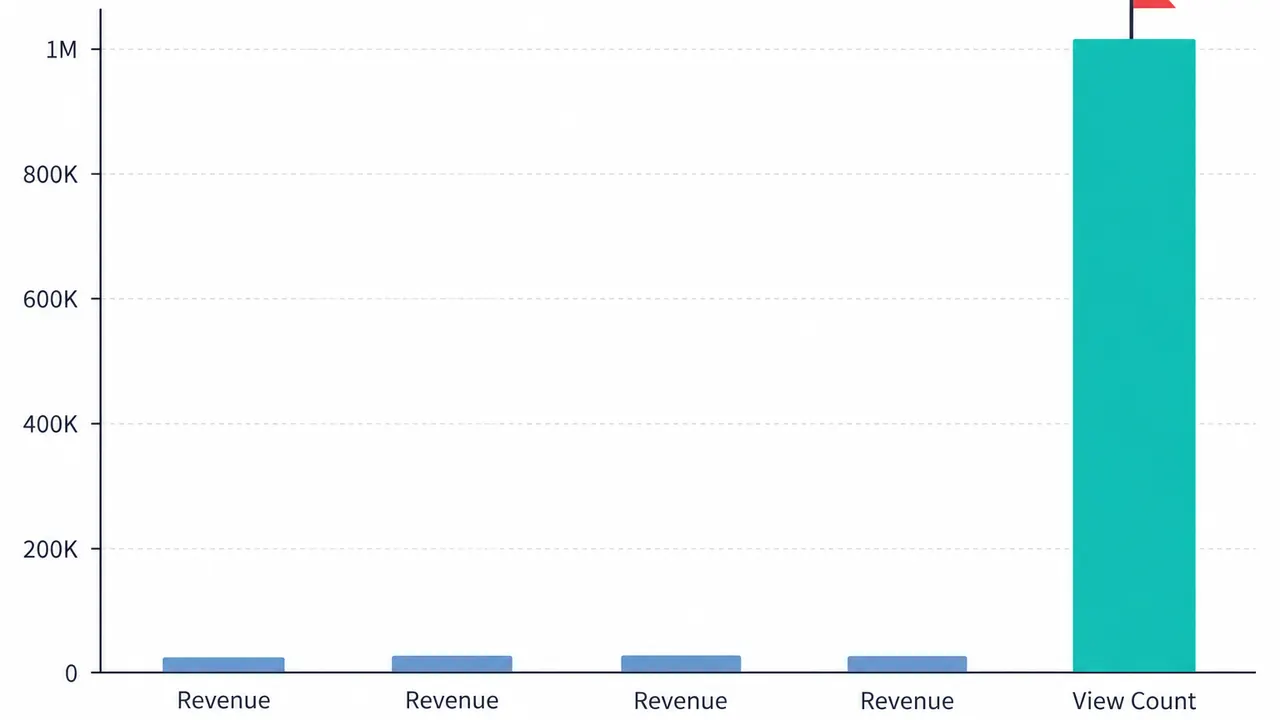
Fresh channel-level numbers put US Shorts RPM near $0.33 per thousand views across 274 channels and 13 niches, which means 1 to 5 million monthly views lands around $20 to $300, and 10 to 50 million lands roughly $200 to $2,000. Roughly 21% of new-user feeds are now flagged as AI-generated filler, and exam-prep and faceless documentary channels have reported monetization paused overnight — the reported trigger is volume without a human fingerprint, not AI use itself. Channels blending AI production with authentic human storytelling are outperforming pure-AI channels on every monetization metric.
EU AI Act Article 50 transparency provisions became enforceable August 2, 2026, and platform policy has hardened behind it. TikTok now runs C2PA Content Credentials detection that catches synthetic media even when creators don't self-disclose, and videos caught by automated detection without a label forfeit Creator Fund earnings for 14 days — even if you label retroactively. Meta unified Instagram and Facebook AI policy in February 2026 around an in-post disclosure tag separate from caption text, and YouTube still requires the "altered or synthetic content" box in Creator Studio.