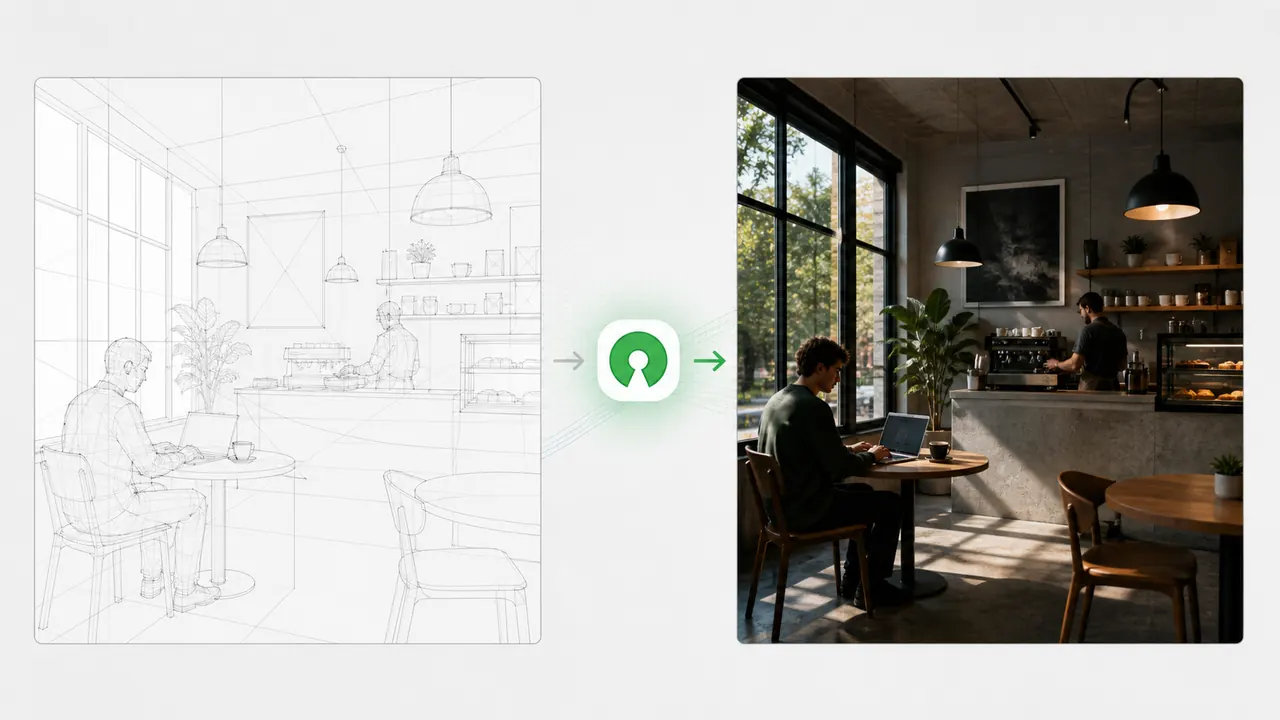
Dropped August 30 — a ComfyUI custom node that renders arbitrary-length MiniMax H3 video by splitting inference into chunks and using Gemma to hold narrative and visual continuity across the seams. It runs in 16GB of VRAM, which puts long-form H3 generation on a 4080-class consumer card instead of a rented H100. If you've been stitching 4-to-15-second H3 clips by hand, this is the workflow change of the week.
FastVideo shipped a 4-step DMD2 distillation of MiniMax H3 paired with 90% sparse attention, quoting up to 14x speedups on text-to-video-and-audio for Blackwell GPUs. Four steps with no CFG on a 33B omni-modal model is the kind of number that changes your daily output ceiling, not just your benchmark screenshot. Alibaba PAI also pushed PDD acceleration LoRAs for H3 running at 8 or 4 steps, CFG-free, with a native ComfyUI node pack under Apache-2.0.
KoshiMazaki's spatial audio LoRA for LTX-2.5, out August 30, places generated voices and music into specific acoustic spaces — rooms, clubs, cathedrals, or open outdoors — instead of the flat, close-mic'd default that instantly reads as synthetic. ComfyUI nodes ship with it. For anyone doing dialogue or narrative work, bad room tone is the tell that gets you clocked faster than any visual artifact.
Packaged August 29 by rzgar, this wires ByteDance's Bernini-Diffusers-v2 semantic planner to a Wan2.2 renderer as native custom nodes, with FP8 and NVFP4 quantized weights and a single workflow covering six task types. The Apache-2.0 license is the headline — planner-plus-renderer architectures normally arrive wrapped in research-only terms. Wan remains the licensing-friendliest option in the open-weights tier.
Version 5.0.0, out August 29, enables full model fine-tuning — not just LoRA — of MiniMax H3 33B and Krea 2 12.9B down to 16GB of VRAM, and includes a checkpoint-to-LoRA exporter so you can ship the result as a lightweight ComfyUI asset. That combination means a solo creator can train a genuine house style and distribute it as a small file. Full fine-tunes historically beat LoRA on motion and identity coherence.
Announced August 27: Comfy is now the first sanctioned reseller of MiniMax H3 commercial-use licenses, covering the video, audio, and music models with full commercial rights plus LoRA training rights. H3's weights went public on Hugging Face August 3 under the MiniMax H3 Community License, which left a lot of creators unsure whether client work was clean. This closes that gap with a real paper trail.
On August 31 Runway shipped scene-referred ACEScg OpenEXR HDR output for its video-to-HDR endpoint and Gen-4.5 HDR, supporting ACES 1.3 and 2.0 for real compositing pipelines. Five days earlier the platform added WAN 3.0 — up to 30-second generations with native audio, reference-driven character and style consistency, at 480p, 720p or 1080p for 5 to 20 credits per second — plus Meta's Muse Image at 1 credit per image with up to 10 reference images. EXR delivery is the piece that gets AI footage accepted by a Nuke or Resolve finishing artist.
Released August 28, Lightricks split out image-only LTX checkpoints with a proper ComfyUI path — 13B Dev plus a Distilled variant doing CFG-free 8-step sampling, with int8 convrot builds for tighter VRAM. Using the same latent family for your stills and your video first frames removes a whole class of color and texture drift at the image-to-video handoff. Community workflows pairing H3 base generation with LTX 2.3 spatial upscaling are already climbing on Civitai.
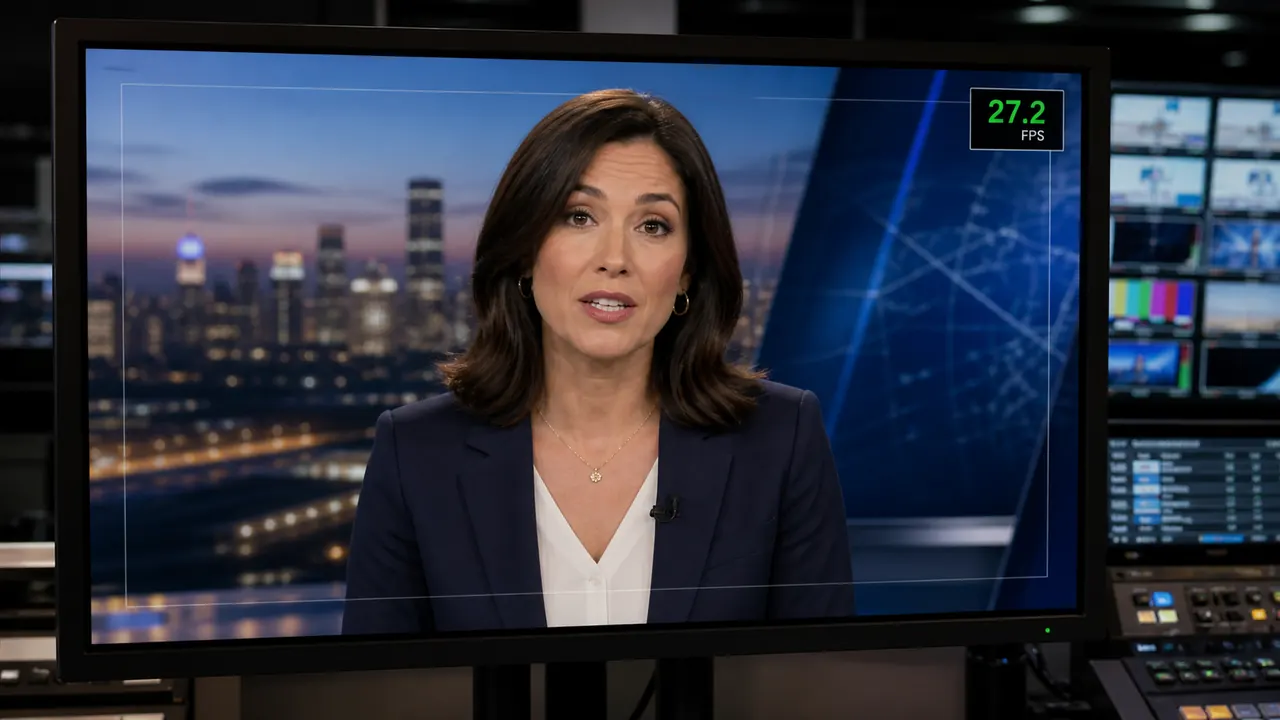
A joint effort from PolyU, ByteDance and AMD built on LTX 2.3's 22B model with a ForeverCache streaming approach, delivering audio-driven avatars at 27.2 FPS with no length limit. That's past real time, which means live-driven presenters rather than rendered-then-played clips. Meta's SAM 3D Body also landed natively in ComfyUI with full-body mesh tracking, pose, and facial expression driving, exporting GLB and BVH.
EU AI Act Article 50 transparency provisions became enforceable August 2, 2026, and YouTube's automatic detection — live since May — now applies disclosure labels to photorealistic synthetic media whether or not you tag it yourself. Properly disclosed AI content stays fully monetizable and doesn't eat reach, but YouTube's separate inauthentic-content policy still restricts mass-produced AI video from ad revenue even when it is disclosed. Context on the upside: faceless channels now account for roughly 38% of all new creator monetization ventures, up from 12% in 2022, while only about 3% of automation channels actually reach the monetization threshold.