Announced at the Volcano Engine Conference, Seedance 2.5 generates a full 30-second clip in a single pass at native 4K — no segment stitching, no seams. It accepts up to 50 reference inputs for consistency, claims 20% better prompt accuracy, and processes audio and video in a unified latent space simultaneously. API pricing is not yet confirmed; access is via Volcano Engine platform.
The ComfyUI team shipped v0.28.0 through v0.28.2 between July 15–18, adding SeedVR2 image and video upscaling, PID 1.5 PixelDiT, int4 quantization support, HeyGen Avatar Video and Talking Photo nodes, GPT-5.6 variants (Sol, Terra, Luna), and Gemini 3.5 Flash integration. Earlier this month v0.27.1 brought Seed Audio 1.0 into the graph: speech, music, sound effects, and multi-speaker dialogue generation, all nodified. Over 1,000 community custom node packages now available.
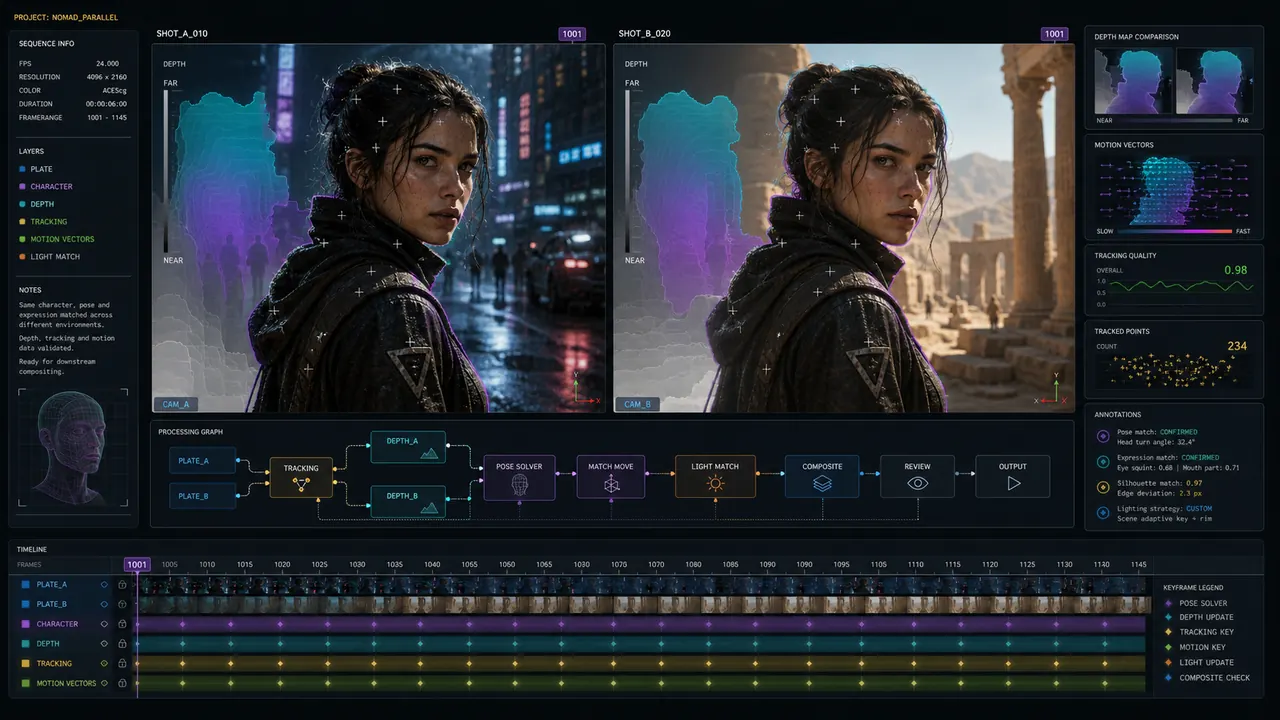
Lightricks' open-weight LTX-2.3 (22B params, native 9:16, free under $10M ARR) now has a suite of IC-LoRA workflows live on RunComfy: motion transfer from a reference clip, ID-LoRA for frame-consistent character appearance, and explicit camera control transfer. Practical ceiling for ControlNet stacking is depth plus canny — a third net causes VRAM conflicts on a single RTX 4090. This is the most actionable character-consistency pipeline available in open-source right now.
OpenAI shut down the Sora app on April 26, 2026. The API deprecation date is September 24, 2026. Any production workflows still hitting Sora endpoints have roughly 60 days to migrate. Kling, Hailuo, and Veo 3.1 are the current commercial replacements; Wan 2.7 is the open-source path.
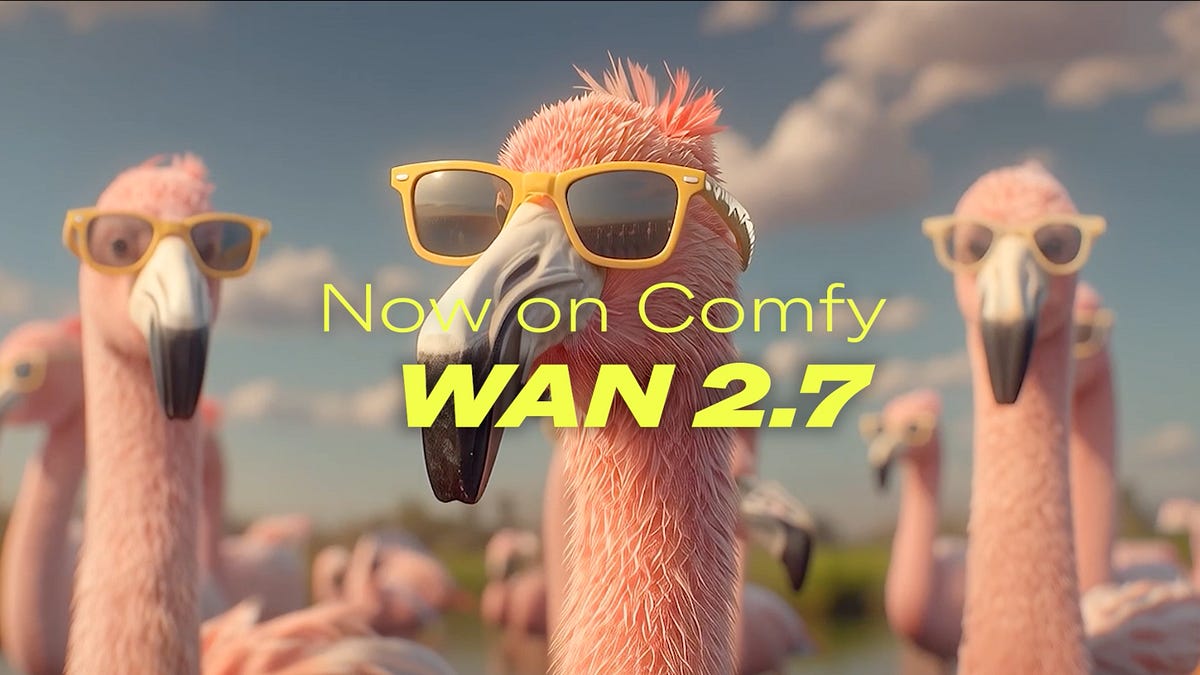
Wan 2.7 supports up to 20-second clips at 4K, a 9-image grid input for image-to-video, and both voice timbre reference and first/last-frame conditioning — all accessible via ComfyUI partner nodes. Open weights live on GitHub and Alibaba ModelScope; minimum 24GB VRAM for local inference. Wan 3.0 (60B parameters, 30-second clips) is still expected later this year.
TikTok now runs C2PA Content Credentials scanning on all uploads and auto-applies AI labels even when creators don't self-disclose. A 4-tier labeling system is in force, synthetic media featuring real private individuals is banned entirely, and AI content is algorithmically deprioritized on the For You Page versus human-created video. The algorithm now weights watch time over raw view count.
YouTube's mandatory AI disclosure policy (enforced since May 2026) includes a three-strike system: warning, 90-day YPP suspension, permanent removal. Critically, mass-produced and recycled AI content is explicitly ineligible — not a gray area. Properly disclosed original AI video remains fully monetizable. YPP Shorts threshold remains 10M views in 90 days or 4,000 watch hours.
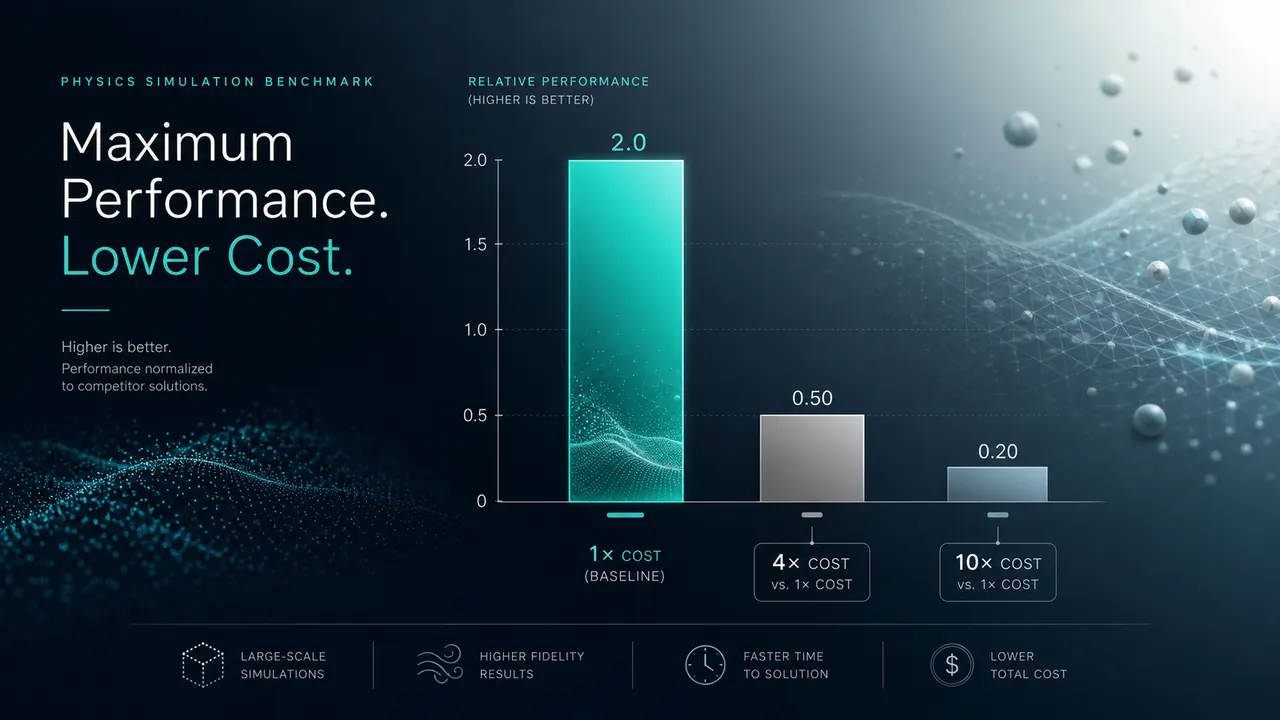
MiniMax's Hailuo model version 2.3 holds the top physics-realism score on WorldModelBench as of July 2026. Pricing is running roughly 4x cheaper per clip than Runway and 10x cheaper than Sora was charging. A promo code (SAVE2026) is active. For creators optimizing cost per output, this is currently the sharpest value proposition in the commercial API tier.
The July Runway API changelog adds negative prompt support for Veo 3 and 3.1 (up to 1,000 characters) — a long-requested control layer. Seed Audio 1.0 arrived late June: text-to-speech and sound effects up to 120 seconds, output in WAV, MP3, or Ogg Opus. Gemini Omni Flash and Seedream 5.0 Lite are also now accessible via the Runway API gateway.