YouTube's VP of Trust and Safety on July 13 clarified three new content buckets that kill monetization eligibility: Generic or Repetitive Content, Unsatisfying or Off-Putting Content, and AI Personas Related to Sensitive Topics. The enforcement isn't new — sixteen major faceless channels carrying 4.7 billion combined views and roughly ten million dollars in annual ad revenue were yanked from the Partner Program back in January — but this is the first official taxonomy. AI-assisted content that delivers original human perspective is still fully eligible; templated, low-variation, easily-replicable-at-scale content is not, and the platform's auto-detection system applies disclosure labels even when creators forget.
ByteDance's Volcengine debuted Seedance 2.5 at its FORCE conference in Beijing and targeted an early-July public rollout through the Dreamina and Jimeng platforms. The headline feature is genuine 30-second continuous generation — no stitching — which is a first among closed commercial tools; Runway, Veo 3.1, and Kling 3.0 all cap out at 8 to 15 seconds natively. Support for up to 50 multimodal reference assets in a single generation pass makes it a direct bid for professional advertising and micro-drama production. No independent benchmarks yet — all numbers are ByteDance's own claims.
Runway's API changelog added six native 4K output ratios this month including 21:9 cinematic widescreen and 9:16 vertical, billed at 150 credits per second. On July 10, Seedream 5.0 Lite became available through the same API — supporting prompts up to 4,000 characters, up to 14 reference images, and outputCount 1 to 4, billed at just 4 credits per image regardless of resolution. For developers building pipeline tools, this is a meaningful capability expansion in a single update cycle.
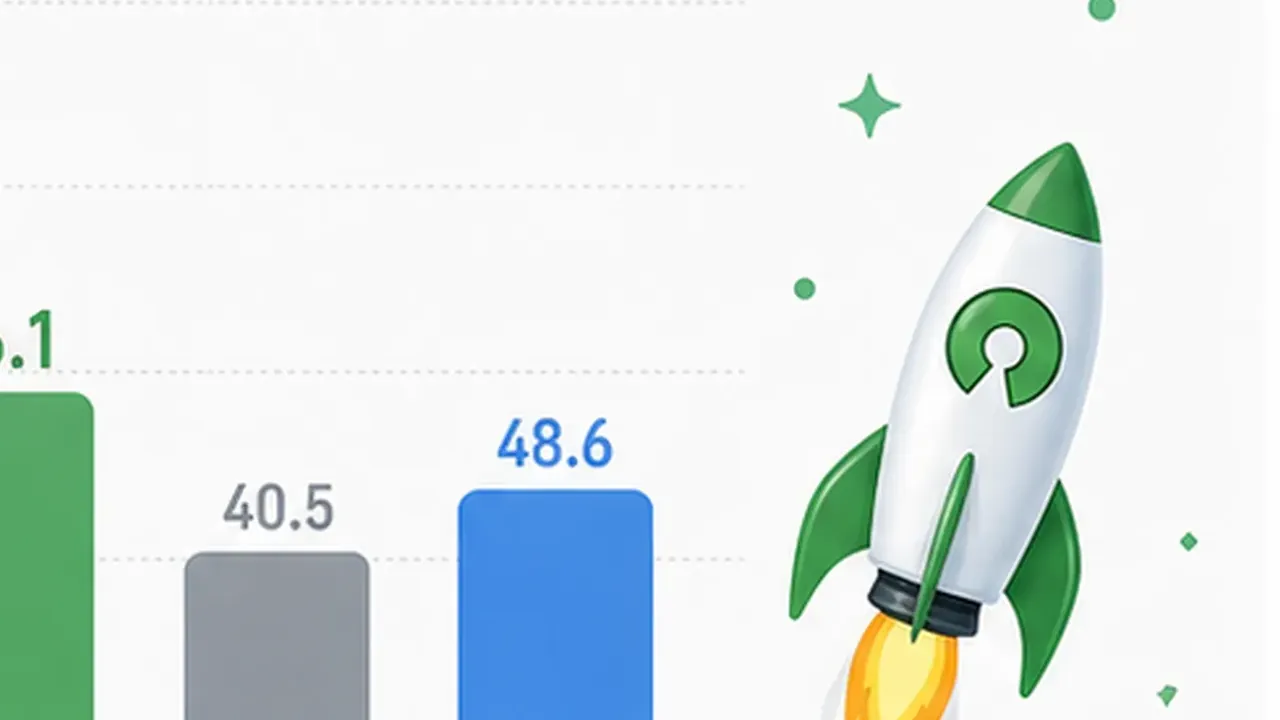
Released July 16 by researchers from Nanjing University and Shanghai AI Lab, VideoChat3 is a 4-billion-parameter video understanding MLLM that landed at number one on Hugging Face trending the following day. On the Charades-STA temporal grounding benchmark it scored 56.1 mIoU versus GPT-5's 40.5 and Gemini 2.5 Flash's 48.6. The full release includes model weights, training code, and all three training datasets totaling roughly three million instruction samples — making it the most complete open video understanding release since LLaVA set the image MLLM template in 2023.
Google opened Veo 3.1 to any account holder with 10 free generations per month, available across the Gemini app, YouTube Shorts, Google Vids, Flow, and both the Gemini API and Vertex AI. Portrait 9:16 output is now native, and upscaling to 1080p or 4K is built in. Pro and Ultra subscribers also get Lyria 3 music generation and customizable AI avatars. For short-form creators, the Shorts integration is the most actionable piece — prompting directly inside the upload flow removes one major friction point.
Two notable additions dropped into ComfyUI's Partner Nodes system: Topaz Astra 2, the diffusion-based video upscaler targeting 1080p and 4K with a fast mode that preserves motion and detail; and Luma UNI-1, a decoder-only autoregressive transformer that jointly models text and images as a single interleaved sequence. UNI-1 is architecturally different from anything else in the ComfyUI ecosystem right now — not a diffusion model, which opens interesting hybrid pipeline options. Both are accessible directly from the Node Library without leaving the interface.
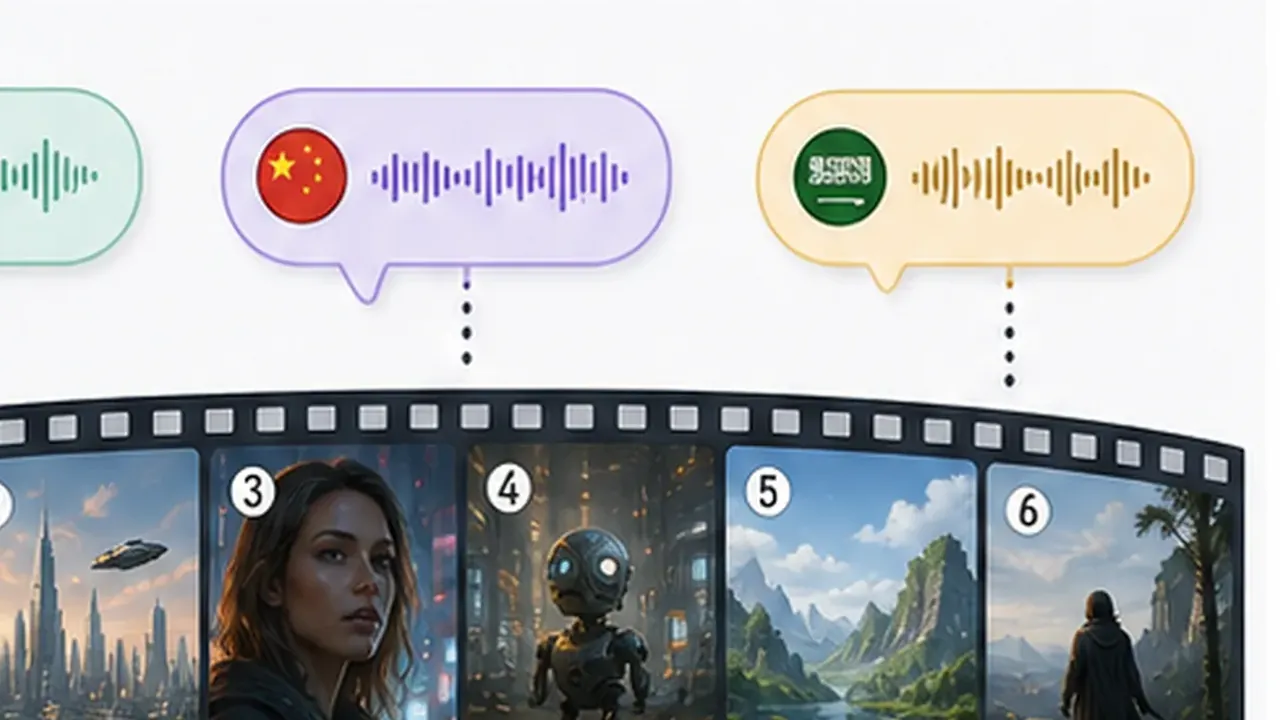
Kuaishou's Kling 3.0 Turbo, released June 17, rounds out the 3.0 family alongside the higher-fidelity Pro variant. It generates 3 to 15 second clips at 720p or 1080p, supports up to 6 shots in a single multi-shot prompting pass, and bundles audio synthesis with native lip-sync in five languages. At roughly 84 cents per 10-second 1080p clip with audio, independent benchmarks consistently place it as the best value-to-quality ratio among broadly available flagships right now — meaningful for anyone doing volume production.
Lightricks quietly shipped two significant LTX-2.3 additions in late June: an IC-LoRA Motion Track Control node that guides motion in generated clips using sparse point trajectories, and a unified LTX Trainer that handles 13 training modes — video, audio, and cross-modal objectives — from a single configuration file. The motion tracking approach in particular is being picked up in the ComfyUI community as a low-cost alternative to ControlNet-style rigs for character consistency across cuts.
As of March 2026, TikTok requires its built-in AI-generated label on all synthetic videos and auto-scans uploads for AI artifacts even without creator disclosure. Meta unified Instagram and Facebook AI content policies in February 2026 with mandatory in-post Made with AI labels via advanced settings. Disclosed AI content earns RPM rates comparable to non-AI content in the same niche on all three platforms — the risk is suppression, not categorical demonetization. YouTube Shorts AI RPMs in tech and finance niches currently run $10 to $35 per thousand views for compliant disclosed content.