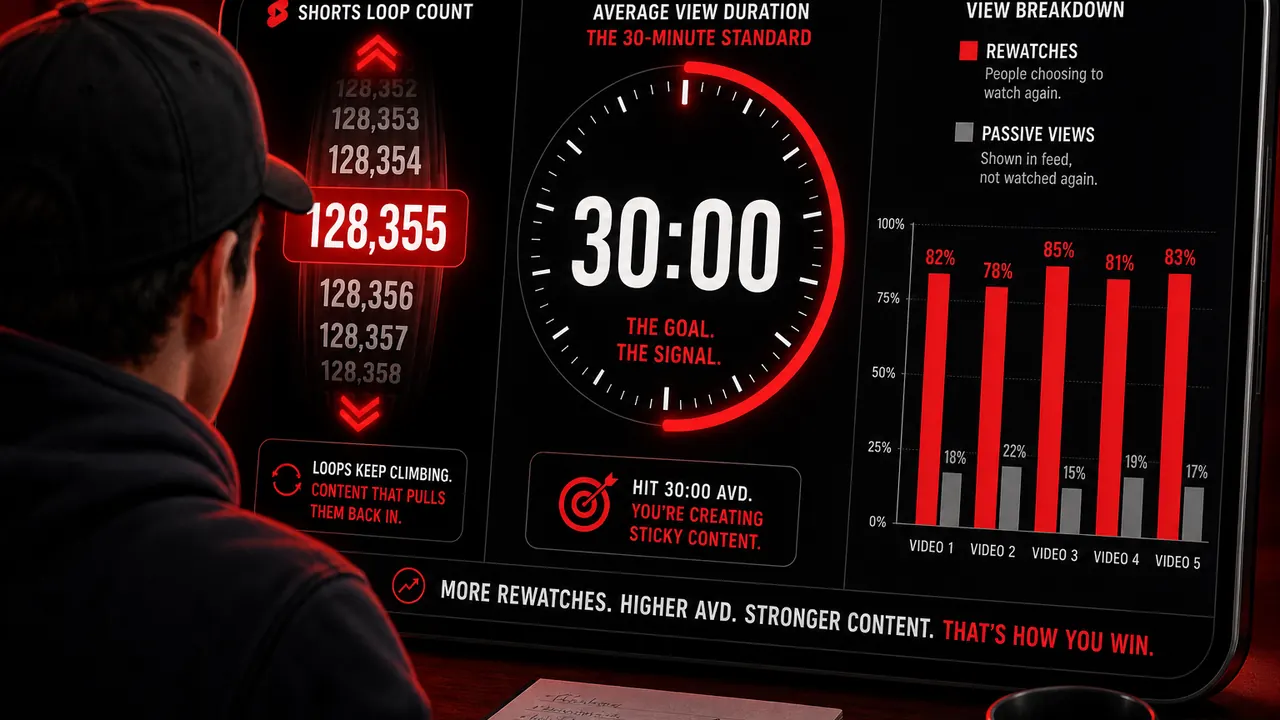
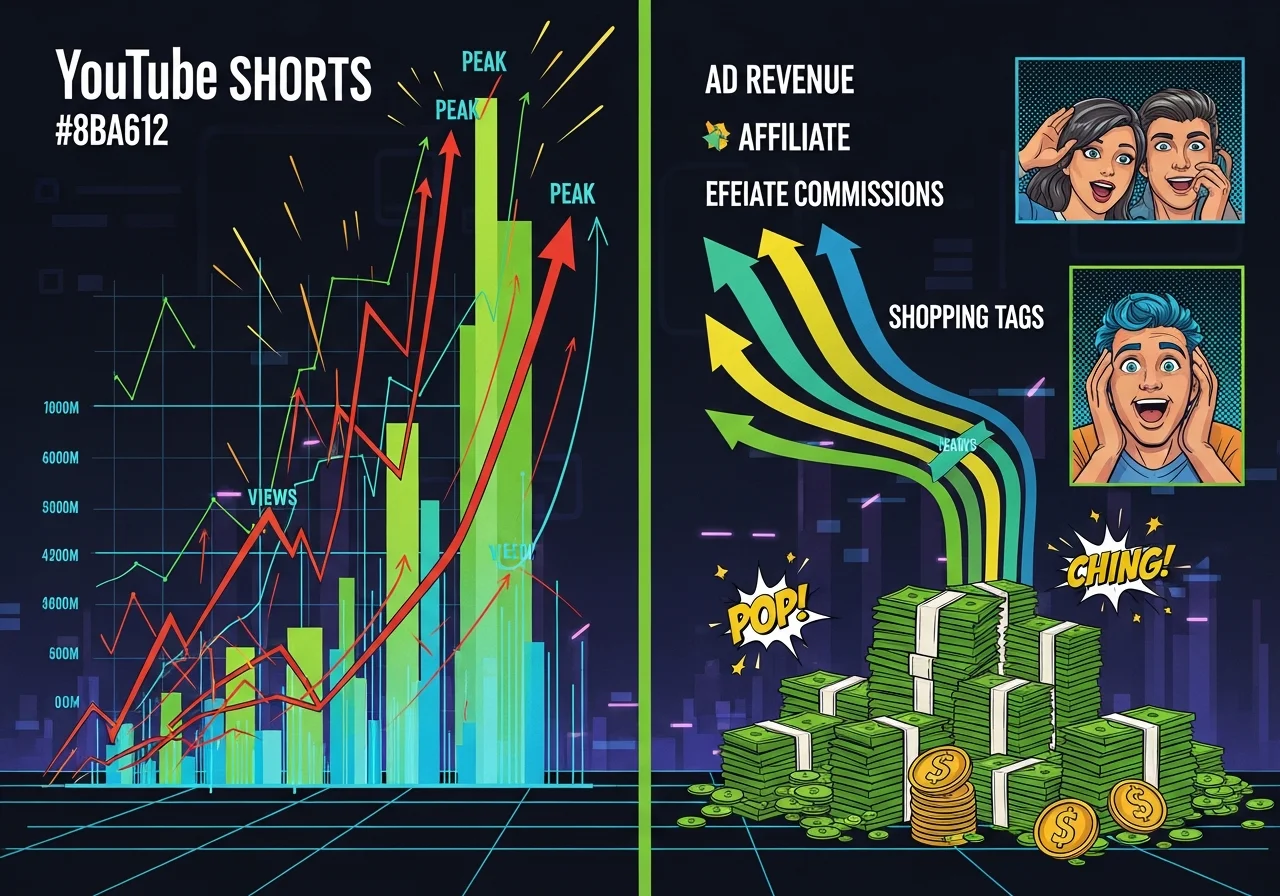
YouTube's 2026 Shorts algorithm has fully pivoted: first-loop rewatches are now a stronger quality signal than raw view counts, and a Short with 1,000 rewatches will consistently outperform one with 10,000 passive half-watches in distribution. The brutal part is the window — if your Short doesn't clear a performance threshold in the first 30 to 60 minutes, the platform largely stops pushing it. Target a completion rate above 70% and swipe-through rate above 50% in that opening hour, or the clip is dead on arrival.
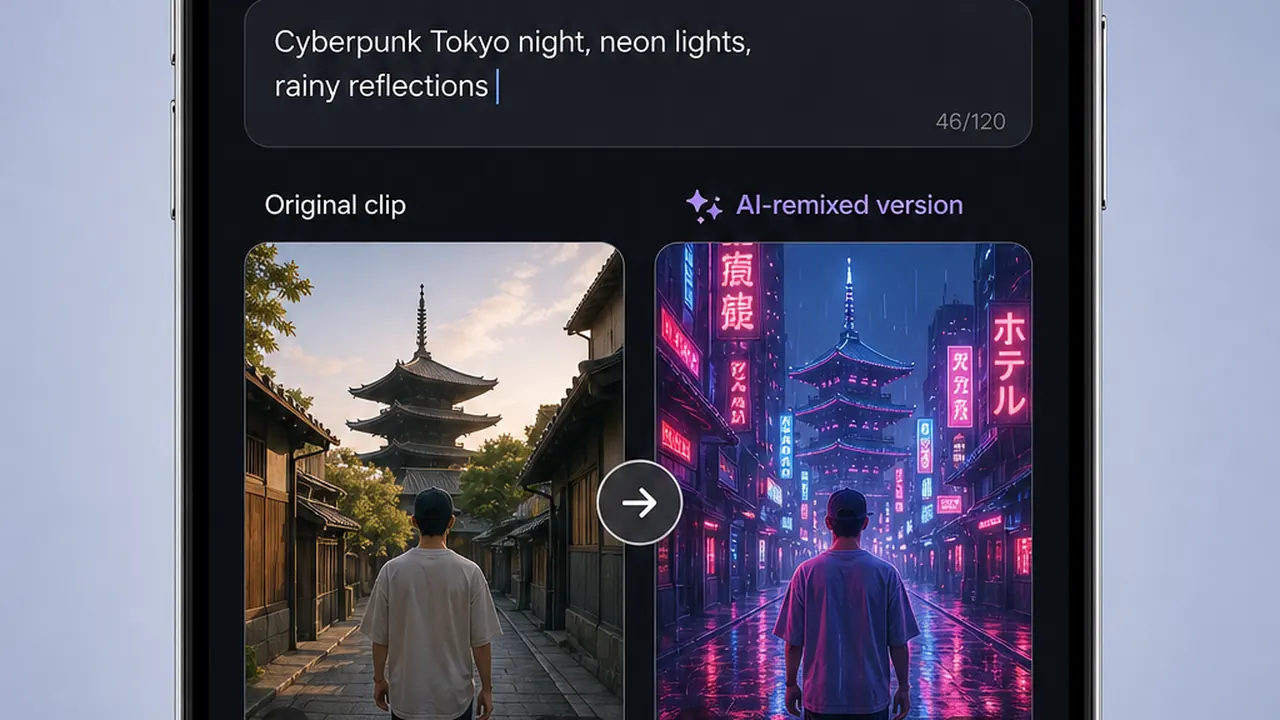
YouTube's Reimagine tool (rolled out March 2026) lets any creator remix an existing Short using a text prompt plus up to two reference images, outputting an eight-second clip powered by Veo. Remixed Shorts are fully eligible for monetization — revenue splits between the remixer and the original rights holder. Only English-language prompts for now, and not yet live in the EEA or UK, but for US operators this is an immediate low-friction content multiplication play worth testing this week.
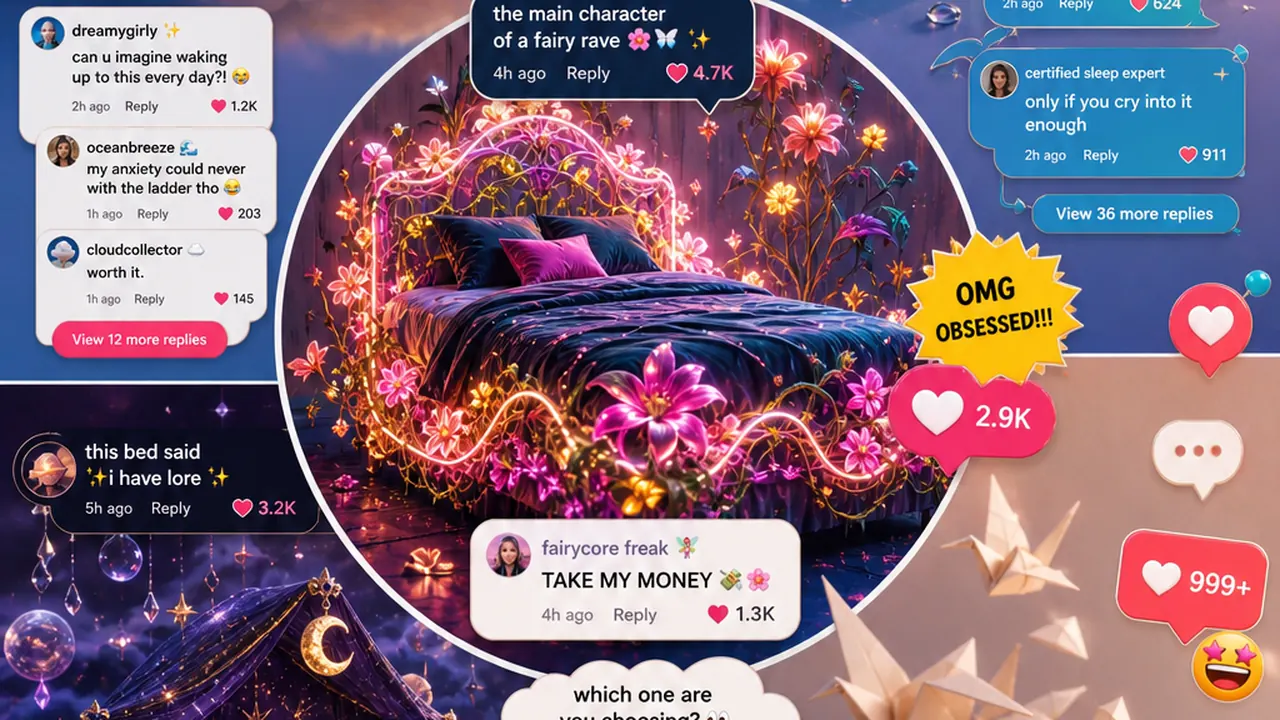
The AI-generated "which bed would you choose" format hit 20.7 million views, one million likes, and 41,000 saves on a single TikTok. The mechanic is simple: AI renders five to eight hyper-specific, dreamlike options, you caption it with a second-person prompt ("You haven't slept in five days… which bed are you choosing?"), and the comment section does the distribution work for you. The format stacks engagement signals — comments, saves, shares — that TikTok's algorithm weights heavily. Virtually zero production cost on a Wan or Flux workflow.
Surreal body horror — mundane scenes rendered physically impossible in AI video — is logging completion rates between 85 and 95 percent on TikTok and Shorts right now. The play is the Uncanny Valley weaponized: something that looks physically real but is biologically wrong forces the brain to stop scrolling and process. Pika Labs is the go-to for the fast, looping style. This niche sits at the intersection of high algorithmic favor and low commercial intent, so it's a top-of-funnel awareness play rather than a direct revenue channel — but the raw distribution numbers are hard to argue with.
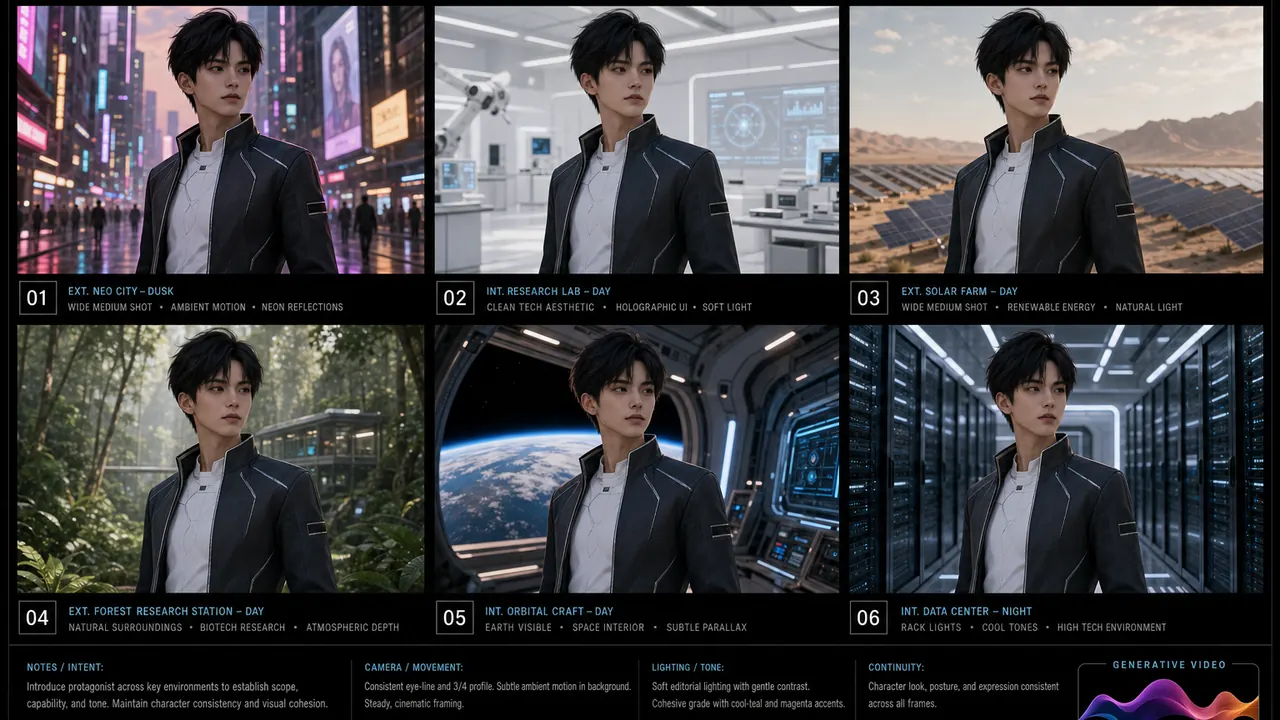
Alibaba's Wan 2.7 video model (April 2026) added first-and-last-frame generation, native 1080p output, instruction-based editing, multi-subject referencing, and multi-language lip sync. For the pipeline crowd, the jump from Wan 2.2 to 2.7 in ComfyUI means consistent characters across a full short-form series without post-processing hacks. If you're still running Wan 2.2 workflows, the upgrade path to 2.7 for image-to-video and reference-to-video generation is available on Atlas Cloud and multiple API providers right now.
TikTok's Creator Rewards Program pays $0.40 to $1.20 per 1,000 qualified views and explicitly allows AI-generated content — but only when it's original, transformative, and carries the platform's AI-content label. Videos under one minute are excluded from payouts entirely. The 2025 to 2026 policy tightened: fully synthetic, low-effort, or undisclosed AI content gets downranked or flagged ineligible. The floor to qualify is 10,000 followers and 100,000 views in the prior 30 days, available in the US, UK, Germany, France, Japan, South Korea, Mexico, and Brazil.
Hard data point worth noting: psychology-focused faceless channels are reaching 1,000 subscribers in an average of two to four months with daily posting, compared to six to nine months for generic motivation or listicle content. Finance content still commands the highest RPM on the platform — $25 to $40 CPM in the US — but the psychology niche offers a faster audience build with lower competition density. If you're spinning up a new channel, psychology content sits in that sweet spot of high completion rates, strong comment engagement, and a clear path to the 10K subscriber threshold for cross-platform monetization.
ComfyUI closed a $30 million round at a $500 million valuation in April 2026, with 4 million users, 60,000-plus community-built nodes, and 150,000 daily downloads. The signal for operators: the open-source stack we run our pipelines on is now institutional-grade infrastructure — it's not going anywhere, and the node ecosystem is only accelerating. Silverside AI ran the first primarily AI-generated Super Bowl commercial through ComfyUI. The moat for creators shifts from "I use AI" to "my workflow is faster and weirder than yours."
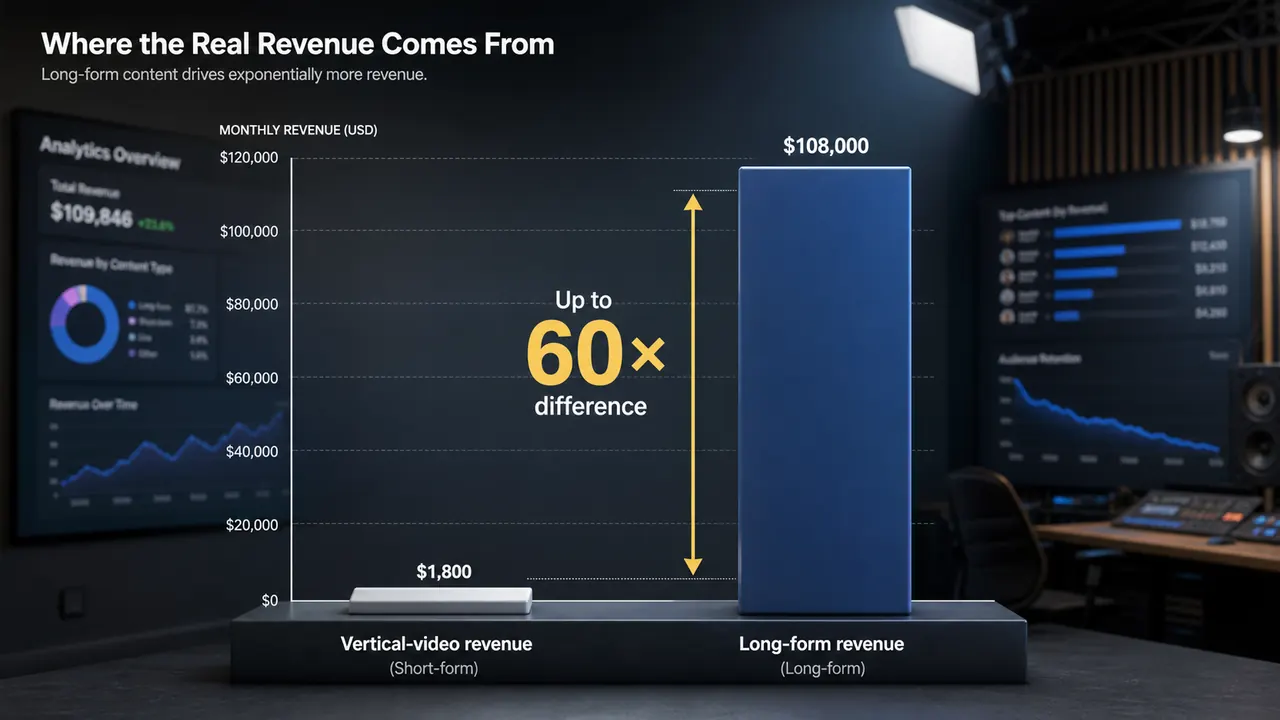
YouTube Shorts RPM runs $0.01 to $0.15 per 1,000 views. Long-form in the same niche hits $3 to $20-plus — a difference of up to 60 times. The winning playbook is using Shorts as a topic-testing and discovery layer, then doubling down on long-form when a topic shows retention potential. Finance and AI/tech niches pay $10 to $35 RPM on long-form. For operators posting Shorts exclusively, you're leaving the majority of monetization potential on the table if you're not converting proven formats into long-form versions.
Runway Gen-4 and Wan 2.7 both ship world-consistency and character locking as native features in 2026 — no more post-processing workarounds to maintain a character across a series. LTX Studio offers end-to-end scene-to-scene pipelines. For operators pitching brand clients, character-consistent AI video is no longer a differentiator — it's the baseline expectation. The competitive edge has moved to speed, cost structure, and niche style vocabulary that clients can't replicate with off-the-shelf tools.