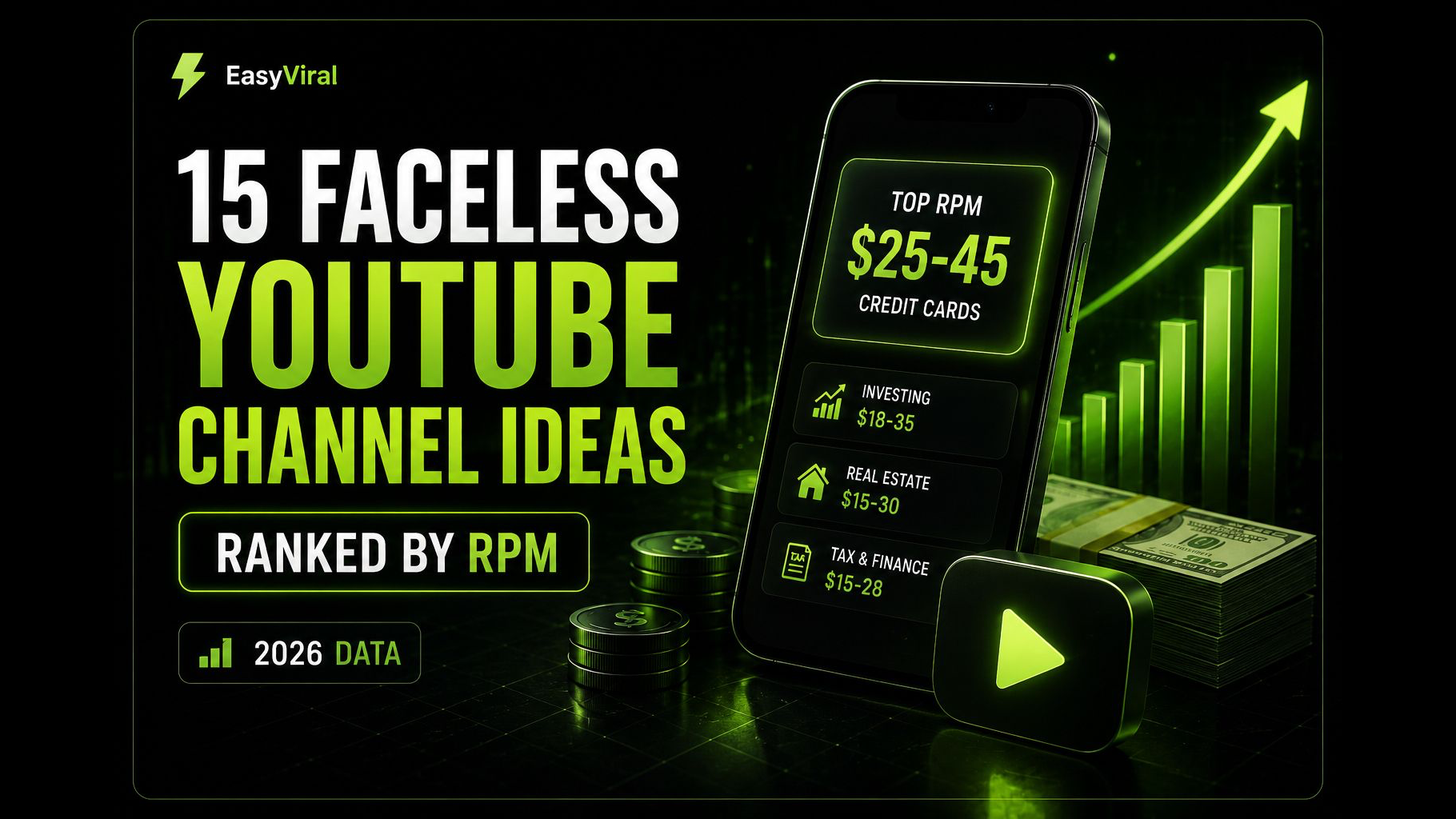
Fresh niche-by-RPM data has personal finance and investing faceless channels pulling roughly $8,000–$25,000/month at 500K views once affiliate income stacks on top, with business documentary ($6K–$18K) and AI-tools/tech-news ($6K–$16K) close behind, and tax content spiking past $35 RPM in Q1. The case study to anchor on: Noah Morris runs ~20 faceless channels at 2.5M+ combined subs, and one court-case video cost $250 to produce and cleared over $20,000 on 5M views. Pick the niche by RPM first, format second.
YouTube renamed its old "repetitious content" policy to "inauthentic content" (effective July 15, 2025) and has been leaning on enhanced detection ever since — the line is AI-as-tool versus AI-as-replacement-for-creativity. Templated farms with minimal variation between uploads get flagged regardless of view count; injecting your own insight, structure, and edits keeps you eligible. Disclosure of synthetic content has no algorithm or monetization penalty — only failing to disclose realistic AI does.
AI ASMR exploded in late 2025 and is now one of the fastest-growing categories on TikTok, Reels, and Shorts — kinetic sand cutting, glass-breaking, soap-cutting, candle-wax pouring, fruit-slicing, ice-crushing. The mechanic that prints: a clean 5-second seamless loop gets watched 3–5x per viewer, and the algorithm reads that as engagement and pushes it. Top channels are hitting 100K+ subs in 6–8 months and $2K–$10K/month across AdSense, TikTok Shop affiliate, and brand deals.
The three-way race is settled into roles — Seedance 2.0 (ByteDance, released Feb 12, 2026) does true unified audio-video joint generation and can fuse up to 9 images, 3 videos, and 3 audio clips in one pass for character consistency and lip-sync, while Veo 3.1 delivers 4K with broadcast color at $0.40/sec and Kling 3.0 undercuts both with multi-shot storyboard mode around $0.10/sec. The operator play: Seedance for iterations and template volume, Veo for the final money shot, Kling when you need shot count on a budget. Match the model to the job, not the hype.
If you're running local to dodge per-second API costs, Wan 2.2 now ships 18 free ComfyUI workflow templates, native WanVideo nodes baked into ComfyUI 0.3.5+, and a Fun Control variant that drives motion off Canny, depth, OpenPose, or MLSD — all viable on ~12GB VRAM, with 16GB+ for stability. On top of that, the SVI 2.0 Pro setup targets infinite long-form generation, which is exactly what the loop-heavy ASMR and ambient niches want. This is the zero-marginal-cost lane for high-volume operators.
OpenAI killed the standalone Sora web/app on April 26, 2026; it now only lives inside ChatGPT, with the API sunsetting in September. Meanwhile a wave of aggregator platforms is bundling Sora 2 Pro, Veo 3.1, Kling 3.0, and dozens of others into single dashboards, so you stop juggling three separate subscriptions to reach the best model for each shot. If your pipeline still has a hard Sora API dependency, this is your migration window.
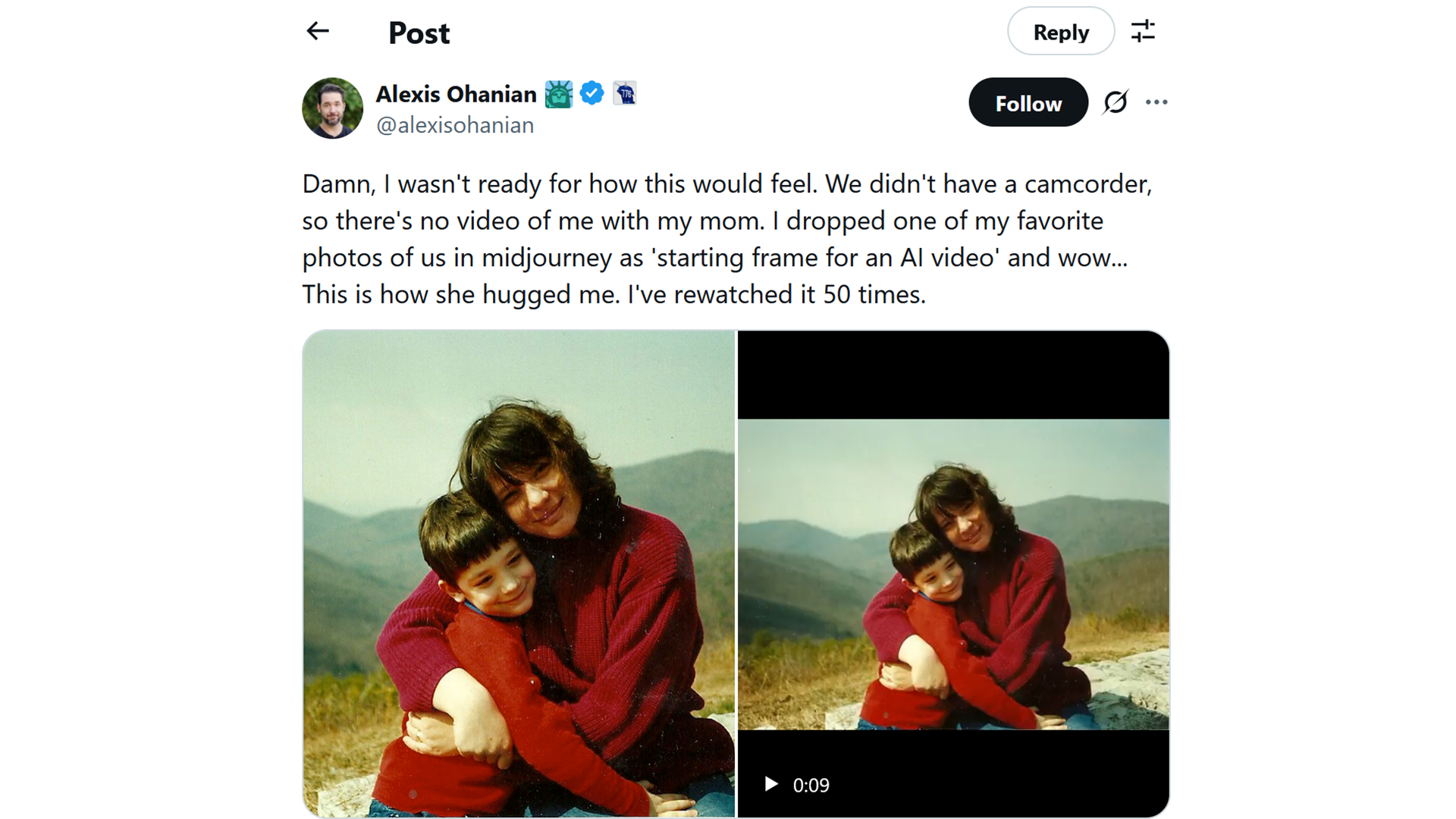
Alexis Ohanian turned one still photo of his late mother into a short AI clip using Midjourney's new image-to-video feature, and it pulled tens of millions of views. The takeaway for operators isn't the discourse — it's the format: a single high-emotion still plus image-to-video is a low-cost, high-ceiling distribution play, and Midjourney just entered that motion lane as a real option in the stack. Emotional single-image-to-video is a repeatable hook, not a one-off.
The community tone has flipped: upvoting a clip just because "an AI made it" is over, and the breakouts now win on craft and model fit. Recent top posts skew toward Seedance comedy ("We need more data centers" cleared 12.3K upvotes) and stylized work where Hailuo/MiniMax keeps getting flagged for motion fluidity that performs on TikTok. Read the room — distribution rewards the right model for the aesthetic, not the AI label.