The community's benchmark Wan 2.2 ComfyUI workflow updated Friday with tiled VAE, native color transfer, and optimized last-frame extraction. It sits at 30,245 total downloads and $5,180 in community tips — the production standard for Wan 2.2 right now. Hard warning from the creator: do not run under ComfyUI Nodes 2.0 beta, connections break on confirmed builds.
TikTok's 2026 algorithm is explicitly penalizing AI-generated video on distribution and has raised the viral completion-rate threshold to 70 percent, up from 50 percent in 2024. Instagram confirmed this week the AI Creator label carries zero algorithmic distribution penalty, and DM shares remain the platform's number-one ranking signal. If TikTok is still your primary AI distribution channel, the math has changed.
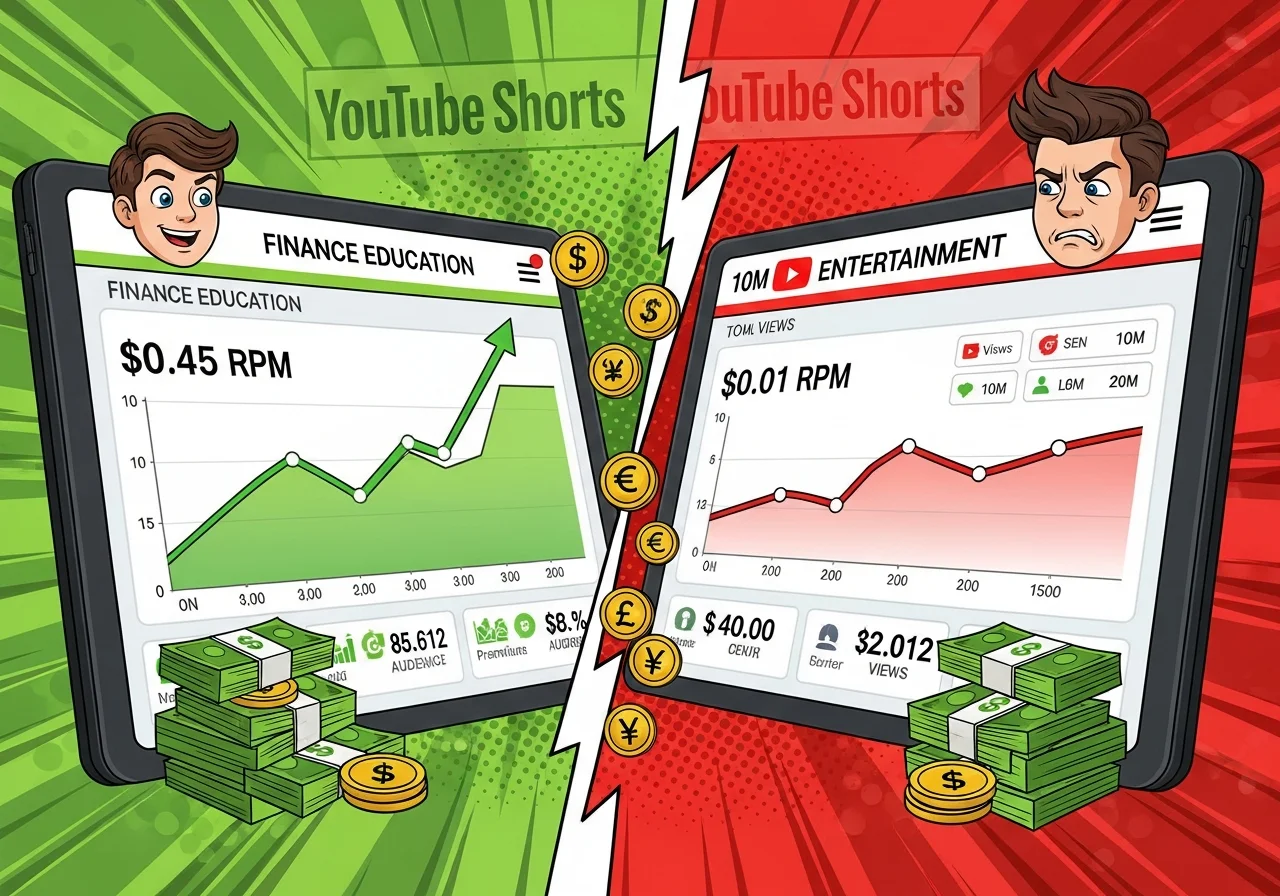
YouTube confirmed in May that Shorts revenue per watch hour now equals long-form in the US market, eliminating the structural ceiling. Finance and B2B Shorts are running $0.15–$0.45 RPM; entertainment still sits at $0.01–$0.05. The Shorts-as-funnel, long-form-as-earner model still holds, but the Shorts side just got meaningfully more defensible as a revenue lane.
WaveSpeed's Wan 2.7 preview shows nine-grid image-to-video, first-and-last-frame generation, instruction-based video editing, and a Subject plus Voice Reference feature for locked character and voice consistency across shots. No confirmed drop date but architecture is staged. For anyone building AI narrative content, this is the character-consistency unlock the open-source pipeline has been missing.
Published May 12 on Civitai, this workflow stacks LTX 2.3 and Wan 2.2 I2V with audio-to-video, five-second voice cloning reference, 50fps interpolation, film grain, and video filters in a single ComfyUI run. It is the first community workflow to meaningfully collapse the multi-tool audio-video production stack. Early uptake looks strong; worth stress-testing this week.
Kling 2.6 is generating real creator traction with single-pass clips up to 120 seconds at 1080p with native audio. Competing newcomer Seedance 2.0 just posted an Elo rating of 1,269, reportedly scoring above Veo 3 and Runway Gen-4.5 on benchmark evals. Neither is open-source but both are live commercial options for operators who want long-clip quality without tying up local compute.
AI tool review content on long-form YouTube is holding $18–28 RPM with channel saturation still well below finance. Operators already producing AI content have native authority here that general YouTubers do not. The early-mover window is narrowing — channels that establish authority in the next 60–90 days are likely to hold position before the niche compresses.
The EU's mandatory AI disclosure law for realistic synthetic voice and video content goes live August 2, 2026. YouTube's Altered or Synthetic Content label in Creator Studio satisfies the platform-side requirement. Eight weeks out — if your upload workflow is not flagging this automatically, the process needs to be locked now before volume becomes a compliance liability.