The June 17 ComfyUI drop bakes Wan 2.2 First-Last-Frame-to-Video straight into the templates panel — feed it a start frame and an end frame, it fills the motion between. That's the cheap way to lock a hook-to-payoff arc locally instead of rolling the dice on text-to-video, and it ships alongside refreshed I2V and FP8-scaled checkpoints for tighter VRAM. Update the app, pull the FLF2V template, and you've got controllable transitions without a paid API.
The clearest sound right now is the German track "Du bist gut genug," driving velocity edits, meme containers, and character swaps across niches, while "Midnight Motion" powers fast beauty-and-fashion transitions. The bigger tell for operators: AI surrealism is mutating out of pure brainrot into small narratives with renovation, transformation, and chase mechanics — story beats, not just spectacle. Build clean meme containers where the joke or transformation is visible in the first second; that's what's breaking small accounts.
Off the release desk: Runway shipped Studio Trim on June 18 — trim, stitch, reorder, and export a final cut in one place — and on June 5 added Seedance 2.0 Fast via API with keyframe control, reference images, reference videos, and generated audio at 4 to 15 seconds, 480p or 720p. Stack that on the existing all-models-in-one setup (Kling 3.0, Sora 2 Pro, WAN2.2 Animate) and Runway's quietly turning into an end-to-end short-form factory. If you're juggling five tabs to assemble a clip, this collapses the pipeline.
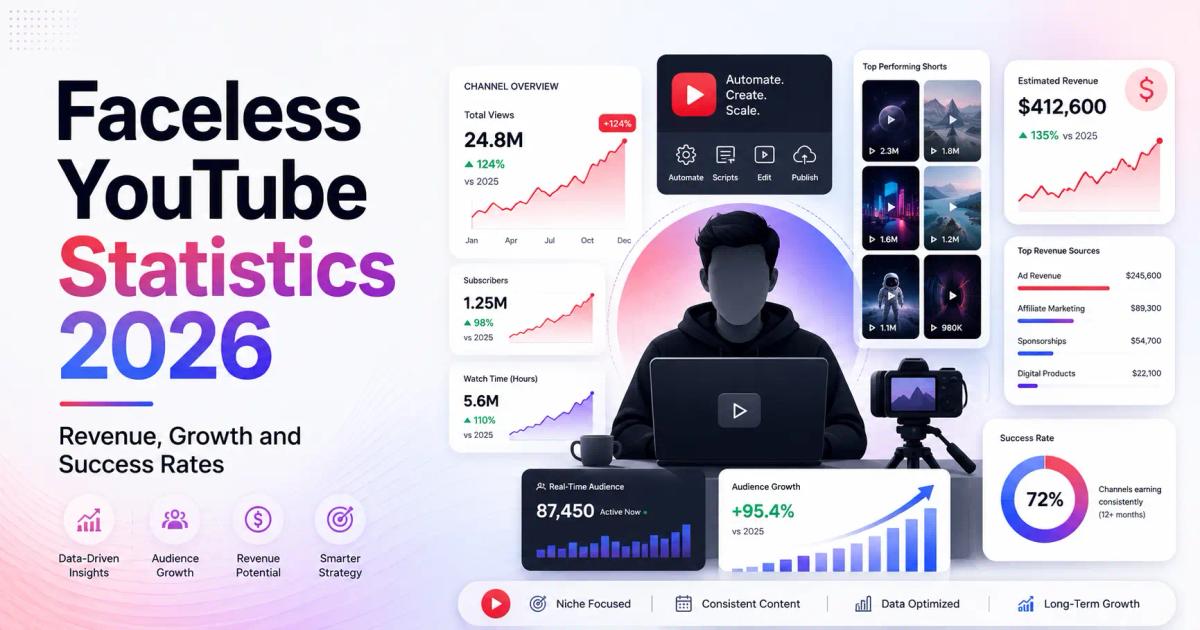
Fresh 2026 numbers put faceless channels at 38 percent of all new creator monetization ventures, up from 12 percent in 2022 — a 217 percent jump in three years. The RPM spread is the whole game: B2B software and SaaS reviews run $18 to $38 plus affiliate, personal finance $14 to $28, AI tools $13 to $22, while entertainment Shorts sit around a dime CPM. A "make money online" channel at $13.52 CPM doing 10K views a video targets roughly $4,000 a month once cadence is steady.
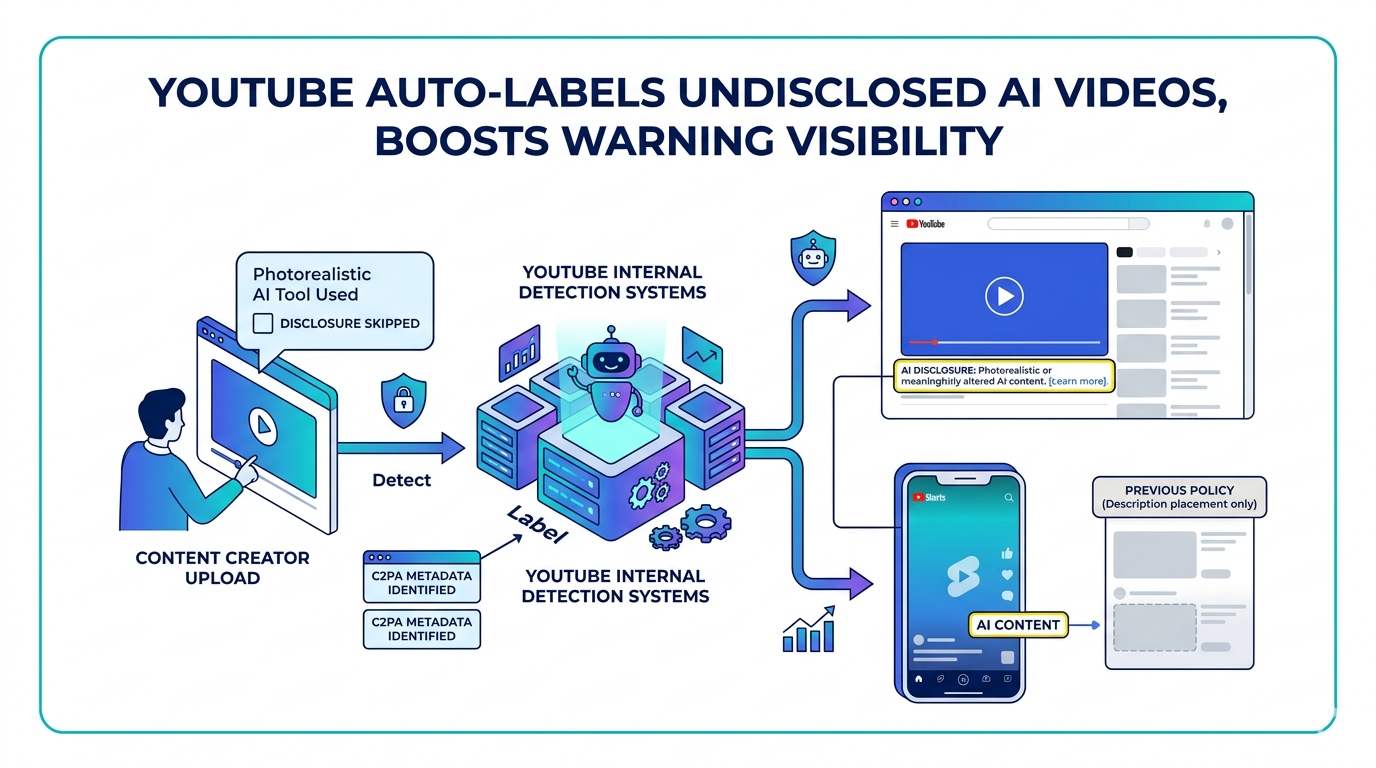
As of late May 2026, YouTube uses internal detection signals to flag "significant photorealistic AI use" and auto-applies the label if you don't disclose first — and on Shorts that label rides as an on-video overlay, not a buried info-panel. The system rewards creators who self-disclose and keeps monetization tied to originality and viewer value rather than AI usage alone. Set a channel disclosure default now so the algorithm isn't slapping a surprise overlay on your best-performing clip.
TikTok now lets all US-based creators earn commissions by tagging relevant businesses through the TikTok GO travel affiliate program — no follower gate mentioned, which is the unusual part. For faceless travel, destination, and lifestyle accounts running AI b-roll, that's a monetization layer that doesn't depend on the Creator Rewards RPM lottery. Worth a test campaign even on a smaller account, since affiliate income scales with conversion, not raw view count.
The trend reads are converging on a length shift: 7 to 15 seconds still wins for pure viral meme bait, but 1-to-3-minute short-form is now out-performing 15-second clips on watch time, retention, and FYP distribution, with 30 to 90 seconds the sweet spot for story and education. Translation for AI operators — the cheap 8-second clip is getting out-distributed by slightly longer, hook-held narrative. Stretch your winners into a tighter 45-to-90-second cut before you assume short-is-always-better.