YouTube has quietly renamed its old "repetitious content" policy to "inauthentic content," and enhanced AI detection is now enforcing it hard against mass-produced, low-variation uploads. AI videos remain fully monetizable, but only if they pass the originality test — creative transformation and a real point of view, not template-swapped clips at scale. Faceless channels leaning on minimal-variation AI compilations are the ones getting pulled from the revenue pool.
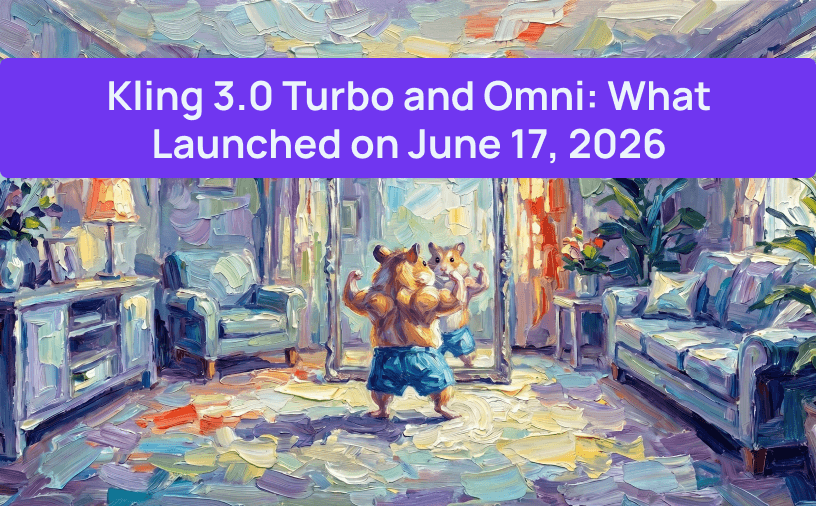
Kuaishou shipped Kling 3.0 Turbo and an upgraded Omni on June 17, with Turbo doing 720p and 1080p at roughly $0.11 and $0.14 per second — audio and tighter lip-sync baked into the price. Omni extends edits to 3 to 15 seconds and now handles 4K input and output for restyling source footage. Turbo is the obvious pick for ads, social, and talking-head work; Omni when fidelity and length matter.
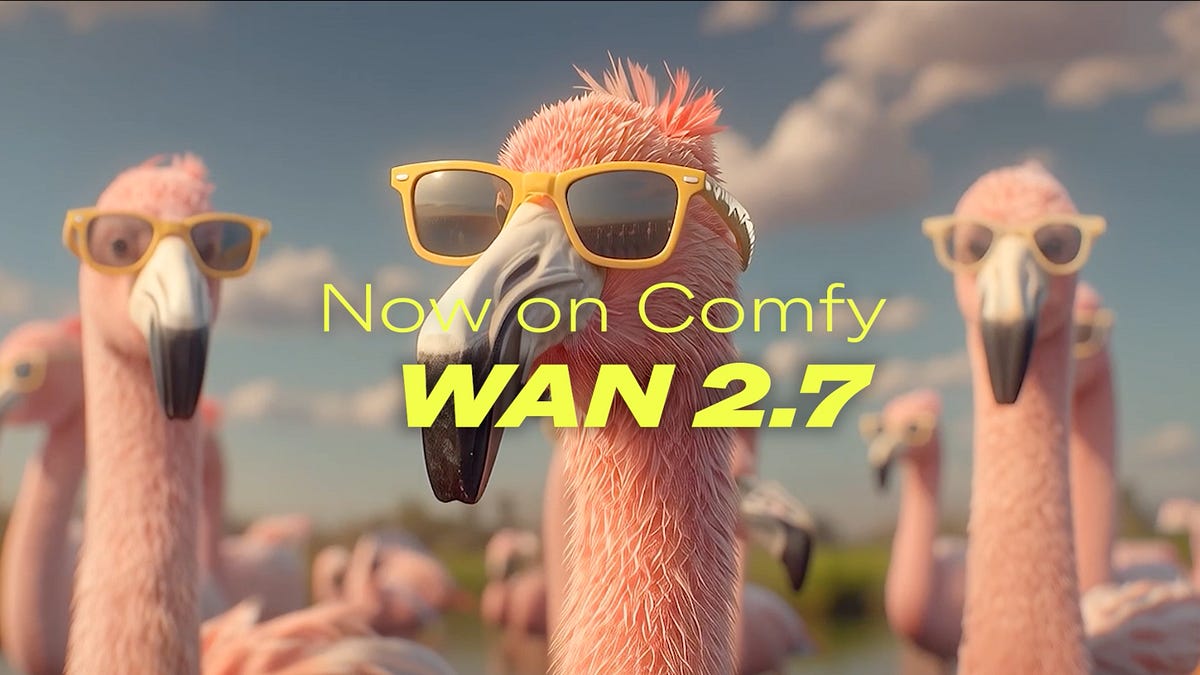
Wan 2.7 is now reachable in ComfyUI via Partner Nodes covering image-to-video, text-to-video, video continuation, reference-to-video, and video edit — plus up to five real-person image inputs and a vocal-timbre reference. Like 2.2 before it, the open-weight checkpoints are downloadable on Hugging Face and ModelScope for fully local pipelines. Big jumps over 2.6 in audio, motion dynamics, stylization, and consistency.
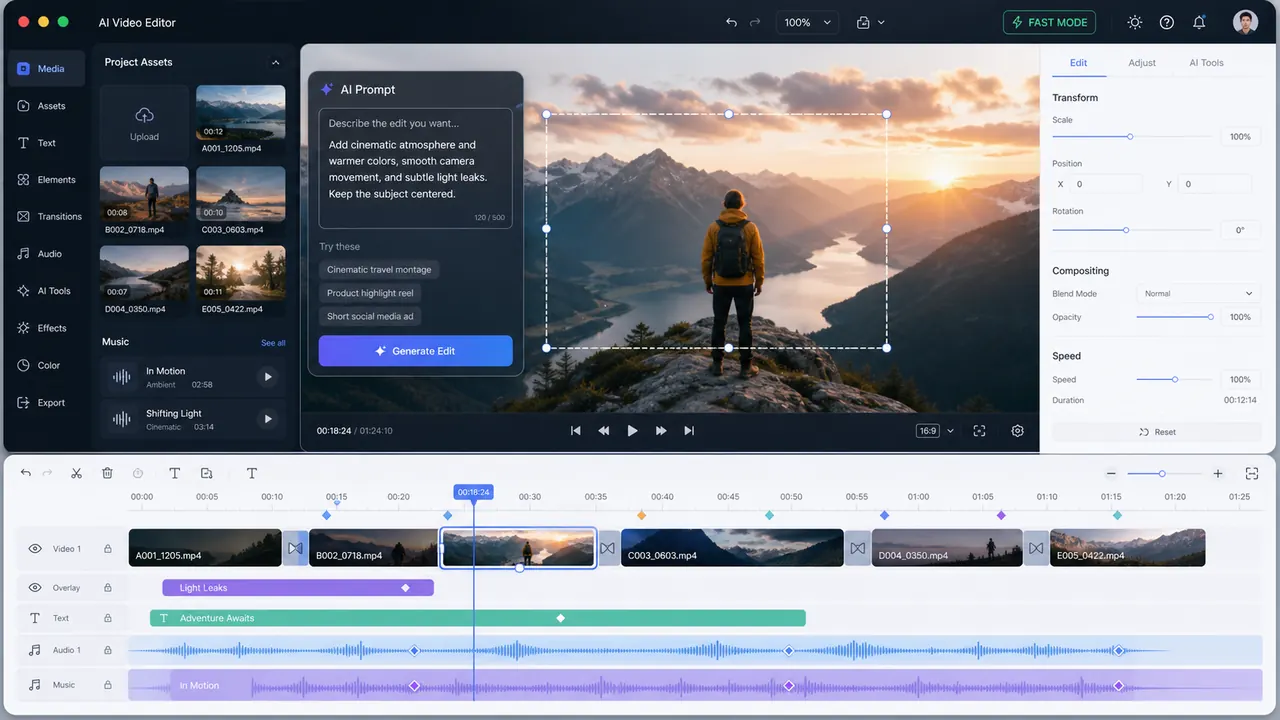
Runway dropped Aleph 2.0 on June 2, enabling text-prompt video editing with optional keyframe images at specific timestamps — directed edits without re-rolling the whole clip. Three days later, on June 5, Seedance 2.0 Fast went live through the Runway API for quicker text, image, and video generation with keyframe control and generated audio. For creators already in the Runway pipeline, that's prompt-driven editing plus a faster generator without leaving the stack.
xAI's Grok Imagine Video 1.5 runs on the autoregressive Aurora engine and generates audio in the same inference pass as the picture. It's image-to-video only at 480p or 720p, 1 to 15 seconds, but the 720p preview sits at #1 on the Arena I2V leaderboard at 1473. For creators with an X subscription, it's a cheap, fast I2V option that punches above its resolution.
ByteDance's Seedance 2.0 uses a unified multimodal audio-video joint architecture taking text, image, audio, and video inputs at 480p to 1080p, 4 to 15 seconds. Its standout is phoneme-level audio mapping — lip and mouth shapes tracked to individual speech sounds, not just word timing — and it keeps winning blind creator tests on image-to-video fidelity and physics. It sits at the top of Artificial Analysis as the production-ready default for multi-shot films and ads.
TikTok's 2026 policy now requires visible labeling on all AI-generated visuals and audio depicting realistic people or scenes, backed by a four-tier label system and automatic C2PA Content Credentials detection — it can flag synthetic media even when you don't self-disclose. Undisclosed deepfakes of real people are prohibited, and synthetic media of private individuals is banned outright. If you're posting AI work to TikTok, get your provenance metadata and disclosure right or risk the algorithm doing it for you.
NVIDIA is pushing 4K AI video generation on consumer RTX hardware, spotlighting LTX-2 and a round of ComfyUI performance upgrades. LTX-2.3 brings 22B parameters, native 4K at 50fps with stereo 24kHz audio, and vertical-native training for portrait output — the open-stack answer to the cloud-only premium models. For creators with a beefy GPU, that's high-res, audio-paired video without per-second API bills.
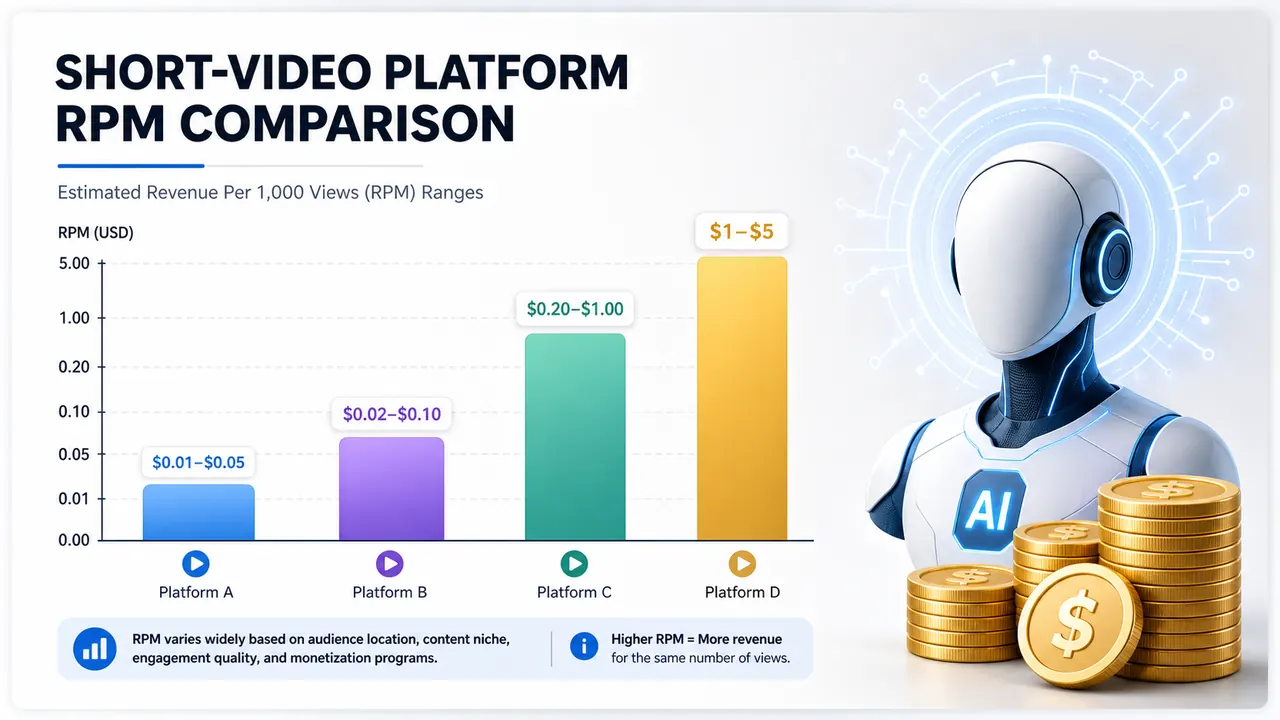
Fresh 2026 figures show YouTube AdSense paying roughly $3 to $7 per thousand views, climbing past $9 in premium niches, while history and faceless AI channels in high-CPM lanes report $2,000 to $20,000 a month. TikTok creator-reported RPMs sit far lower at $0.40 to $1.20 per thousand qualified views. The takeaway tracks with story one — niche selection and originality, not raw output volume, drive the dollars.