Dropped yesterday, October 11: Spark-Attn block sparse attention wired into MiniMax-H3 with prebuilt nodes for RTX 40 and 50 series cards. Claimed 1.73x faster DiT at 10% attention density, Apache-2.0 licensed. This is the single highest-leverage install of the week if you're generating H3 video locally — same weights, same workflow, roughly a third off your render clock.
xAI shipped the references update plus a Lite pricing tier late last week — text, image, and voice references, native 1080p, clips up to 12 seconds with synchronized audio including lip-synced dialogue. At roughly two cents a clip it undercuts Runway's five cents and Pika's four. xAI also claims a hybrid diffusion-transformer cut inference time about 40% versus the prior build.
Akatz Labs released it October 8: tracks a person with SAM 3.1, fills the mask green, then rebuilds the plate with MiniMax H3. Ships with a ready-to-run ComfyUI workflow under the H3 Community License. This is a real post-production capability — removing a crew member, a bystander, or a botched character from a generated shot without re-rolling the whole clip.
Alibaba's official turbo checkpoint went live October 9, running the 7B generator and editor in eight denoising steps at CFG 1, with Comfy-Org repackaged weights for ComfyUI. For anyone building keyframes and reference stills to feed an image-to-video pass, this collapses your front-end cost dramatically. Qwen Research License, so check terms before commercial use.
Kuaishou announced on September 28 that 4.0 lands in October, with 30-second single generations, up to 10 keyframe images, Omni Reference pulling 15 references, 4K with stereo audio and 10-bit HDR to follow. Reality check as of this morning: only Kling 4.0 Flash is accessible, capped at 20 seconds and 720p, limited to Ultra annual subscribers, with no API and no published pricing. Don't scope client work against the full feature list yet.
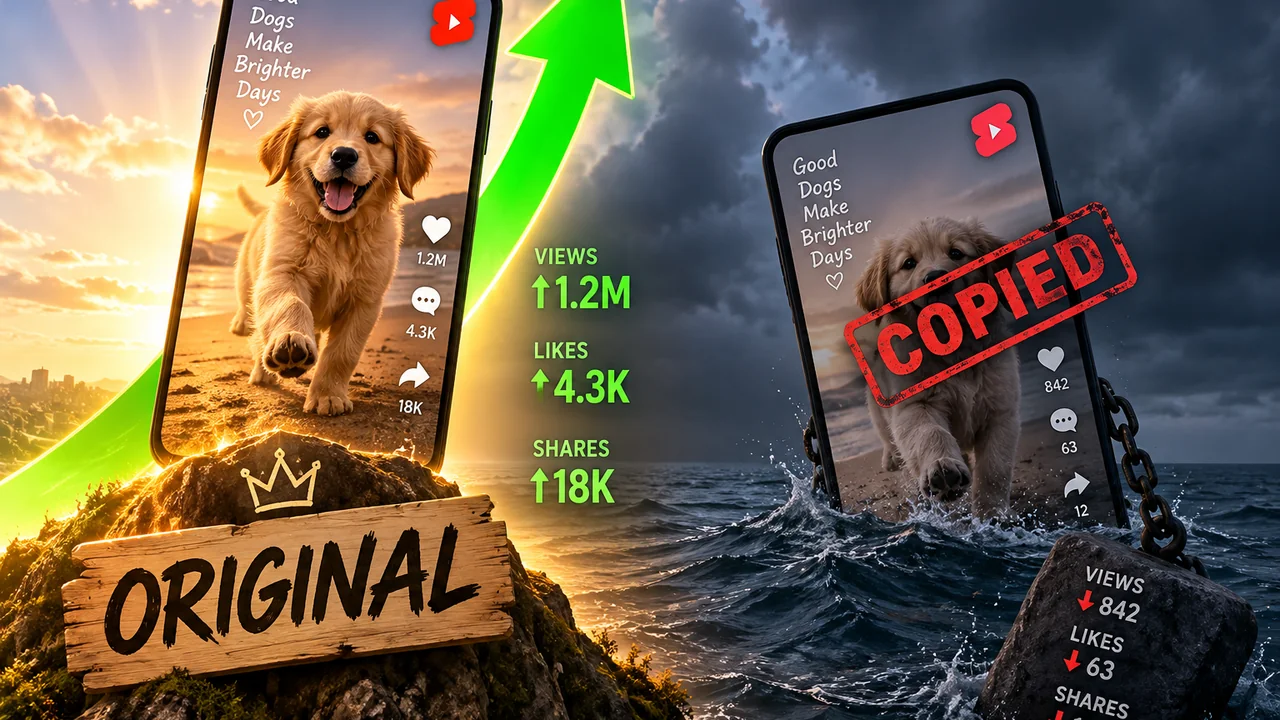
YouTube changed the Shorts algorithm to boost original videos and suppress content copied from other creators. Important nuance for this audience: AI-generated Shorts, reaction videos, and compilations are not automatically penalized. AI labels also moved under the player and onto Shorts, and YouTube can now apply one itself. Monetization remains open to AI content at 1,000 subs plus 4,000 watch hours or 10 million Shorts views, with disclosure.
Three quiet-but-useful core changes this month. October 2 added 4K resolution support to the ByteDance 2, Veo, and Kling nodes. October 5 introduced a DynamicGroup widget letting custom nodes declare repeatable grouped inputs — think proper LoRA rows with strengths instead of chained loaders. October 7 brought a Nano Banana 2.1 node doing text-to-image and editing in one place, 1K to 4K, three thinking levels, up to 14 reference images.
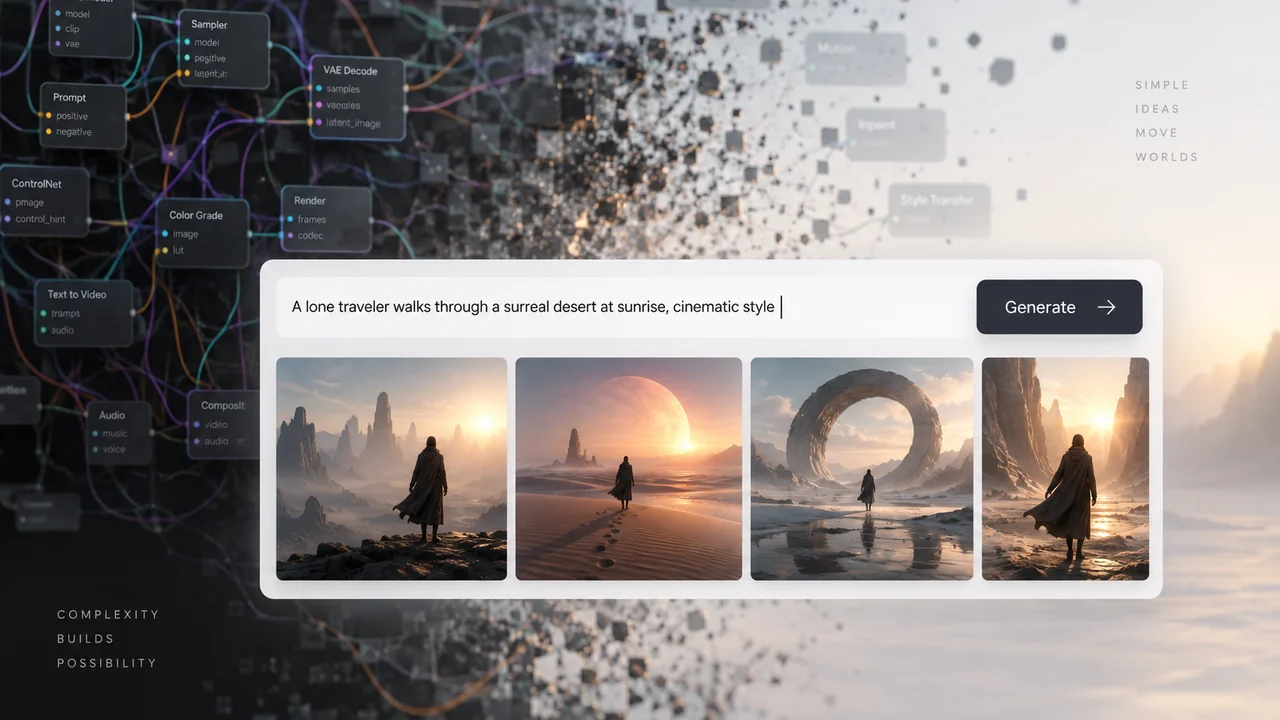
Released October 9 under MIT: an open-source local front end that runs ComfyUI as the engine but presents a prompt box and gallery. Covers 28 model families with one-click downloads for missing files. Genuinely useful for handing a local generation stack to a client or a collaborator who will never learn node wiring.
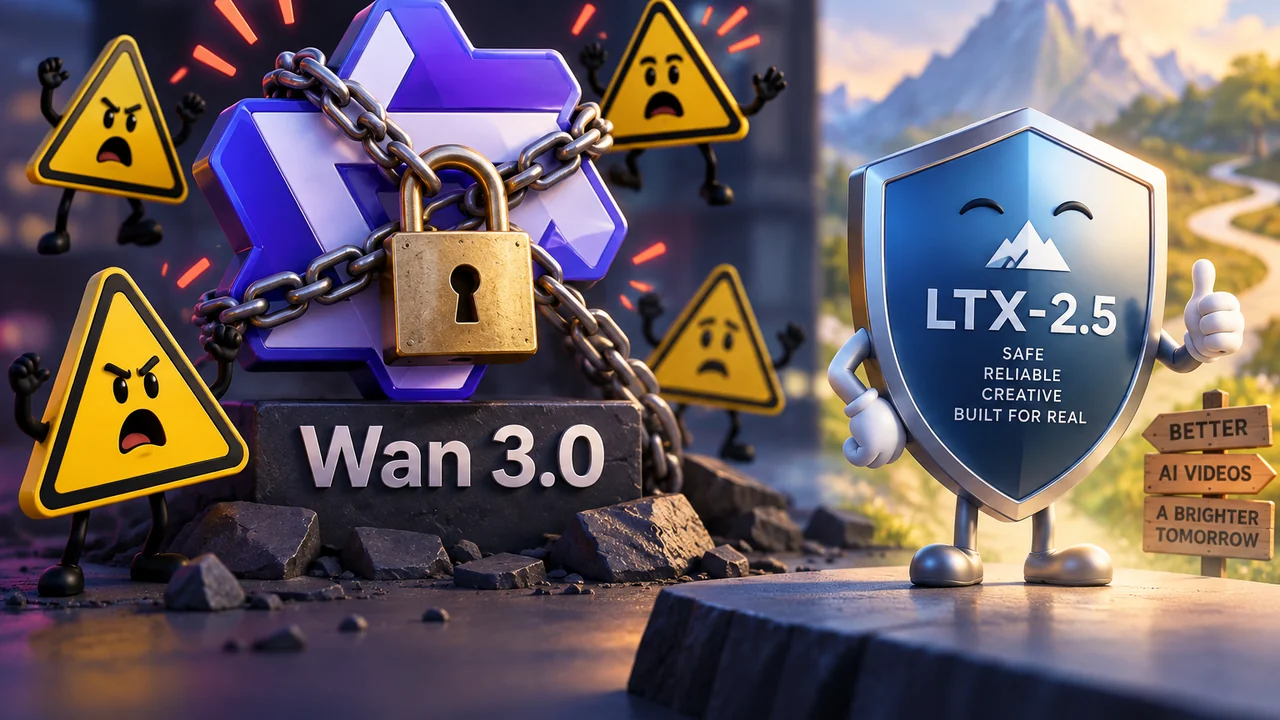
Alibaba's Wan 3.0 opened public beta August 6 with native 30-second 1080p and in-pass audio, but it is API-only through Model Studio and Alibaba's own surfaces. No weights on Hugging Face, GitHub, or ModelScope. A wave of affiliate sites is currently claiming Apache 2.0 licensing and free downloads — none of that checks out. Wan 2.2 remains the last open-weight flagship in that family; if you need open weights with audio today, LTX-2.5 at 22B is the serious option, free under $10M annual revenue.