Independent lab Krea AI open-weighted its 12B diffusion-transformer image model on June 22, shipping a RAW/Turbo pair under a custom license. The play for creators: train your LoRA on RAW (52 steps, guidance 3.5) and run it on Turbo at 8 steps for native 2K on consumer hardware, with official style LoRAs already published. It loads through standard ComfyUI diffusion nodes using a Qwen3-VL text encoder, no T5 or CLIP.
The June 23 v0.26.0 release added the Krea 2 open-weight pair, the new LTX2 Context Windows node for multimodal video-plus-audio sampling, SCAIL-2 multireference character replacement, and seven Luma Rays 3.2 nodes. Update to 0.26.0 or later to pull the Krea 2 template and the new long-form sampling path. It's the single biggest local-creator update of the month.
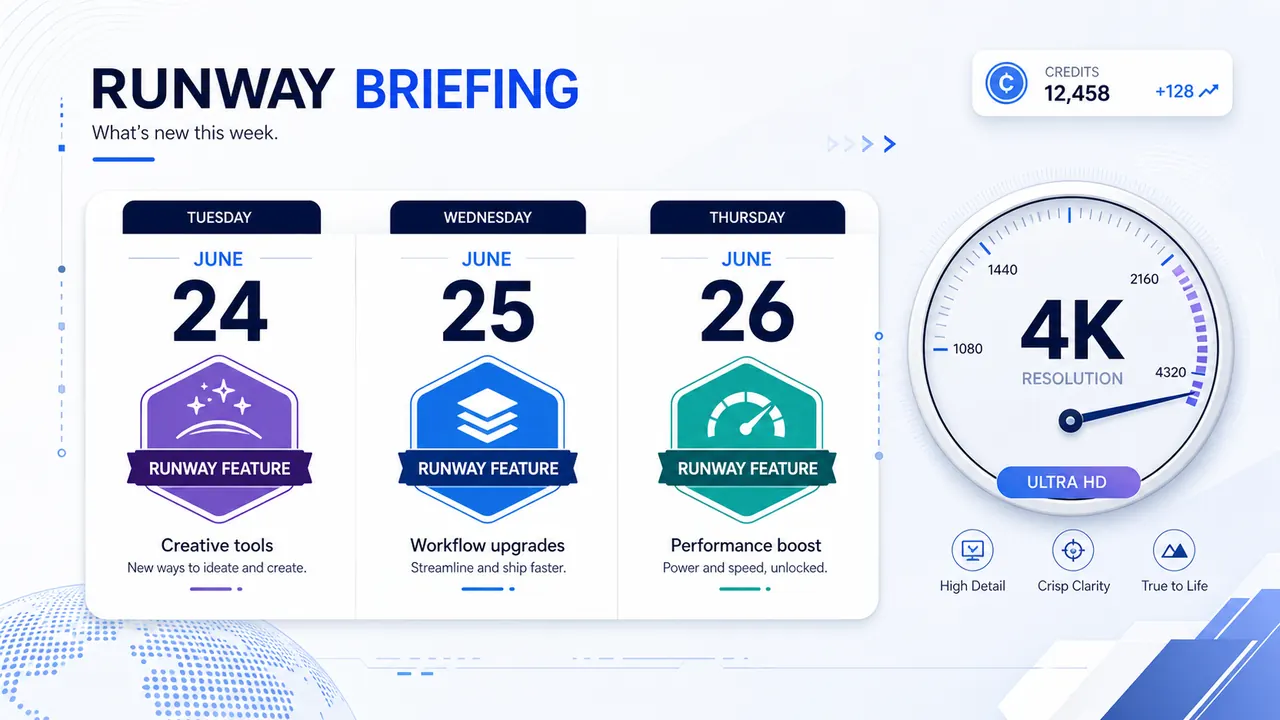
Runway's API saw a rapid-fire June run: Seedance 2.0 4K options on June 24 (150 credits/sec), Agent 2.0 for full campaign generation on June 25, and Seedance 2.0 Mini on June 26 at 16 credits/sec for 4-to-15-second 480p/720p clips with keyframe control, reference images, reference video, and generated audio. Mini is the budget workhorse here; 4K is the premium tier when a client needs delivery resolution.
Kuaishou released Kling 3.0 Turbo on June 17, a speed-optimized model doing 720p–1080p text- and image-to-video, 3-to-15-second clips, up to six-shot multi-prompting, and native audio with lip sync in five languages. Pricing is roughly ¥0.8/sec at 720p and ¥1/sec at 1080p. The Visual Chain-of-Thought layer makes it noticeably better at parsing complex, multi-element prompts than the 2.x line.
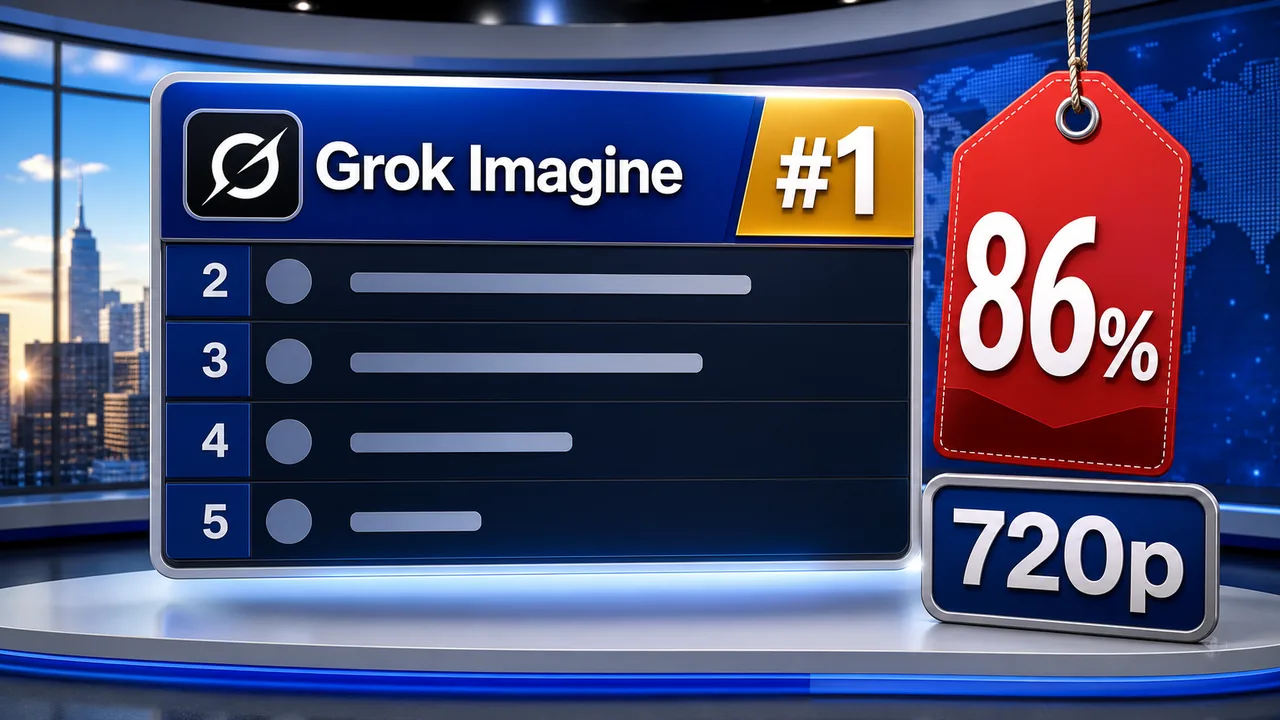
xAI moved Grok Imagine Video 1.5 from preview to full GA on June 16 across the Imagine API, grok.com, and mobile, claiming the top image-to-video slot at $4.20 per minute. It generates same-pass synchronized audio, sound effects, and dialogue with better motion and physics. The catch for production work: a 720p ceiling baked into Aurora's autoregressive design, so it's not a 1080p delivery tool yet.
Two patch releases followed fast: v0.26.1 on June 24 added Seedance 2.0 4K, Grok Video 1080p support, and Alibaba's HappyHorse 1.1 image model, then v0.26.2 on June 25 wired in Seedance 2.0 Mini across text-to-video, first-last-frame, and reference nodes. If you orchestrate API models inside Comfy graphs, your partner-node menu just got a lot deeper.
A community workflow for the LTX-2.3 22B model breaks the single-pass length limit by seeding each new window from the tail frames of the prior one, using GetImageRangeFromBatch into LTXVAddLatentGuide. Audio stays locked with LTXVAudioVideoMask and unified AV latent sampling, and SageAttention plus ChunkFeedForward patches keep VRAM in check. This is the open-source path to coherent long-form without paying per-second API rates.
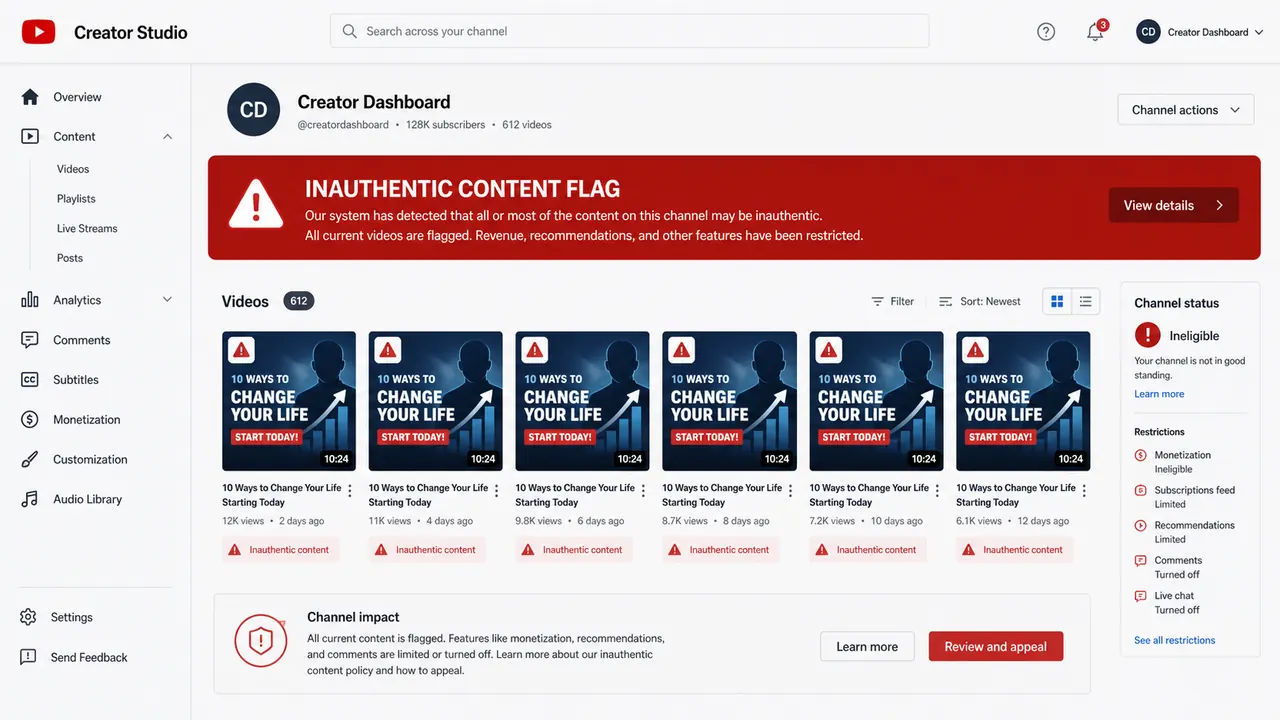
YouTube is now evaluating whole channels rather than individual videos under the renamed inauthentic-content policy, and in January 2026 it pulled 16 channels holding 4.7 billion views and roughly $10M in annual revenue. The line is clear: AI-assisted is fine, templated AI slop is not. If you run faceless AI channels, real scripting, narration, and per-video variation are now survival requirements, not nice-to-haves.
TikTok removed 51,618 synthetic-media videos in the back half of 2025, a 340% jump, and is leaning on automated detection that flags AI content even when creators skip the self-disclosure label. With Meta unifying Instagram and Facebook AI policies in February and YouTube's separate banner rules, labeling is now platform-specific. Build disclosure into your publishing checklist per platform, not once across all of them.