Google's conversational video-generation model is live in YouTube Shorts Remix and YouTube Create at no cost this week, with Gemini AI Plus, Pro, and Ultra subscribers also getting access via the Gemini app and Flow. Flash-tier clips cap at 10 seconds at launch, but you can refine output through plain-language editing and mix text, image, audio, and video as inputs. All output ships with SynthID watermarking baked in. Personal avatar mode is still gated behind a face-scan onboarding flow to prevent deepfakes — that piece is not open to everyone yet, but core generation is free and live now.
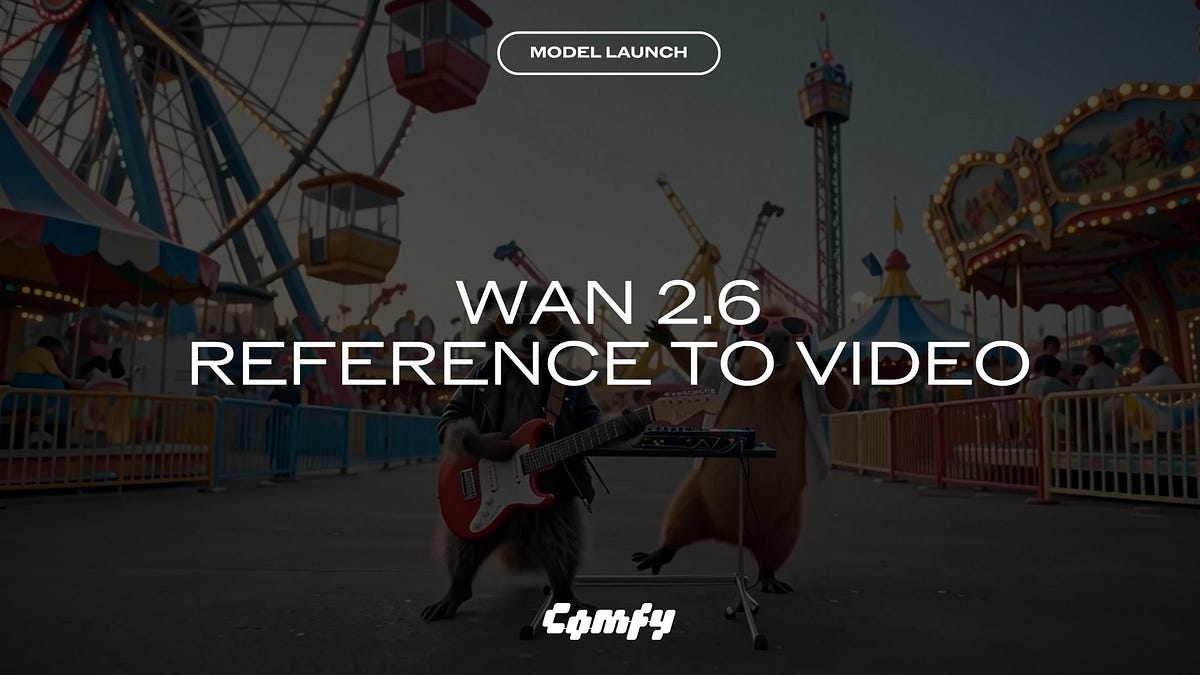
The ComfyUI team published native support for Wan 2.6's reference-to-video mode this week. Drop in one or two reference clips plus a text prompt and the model lifts the camera moves, motion rhythm, and visual style, then outputs a new shot at up to 1080p/24fps with native lip sync. Temporal stability and audio-visual sync are both measurably improved over 2.5. This is the "give the model a clip to copy" workflow that ComfyUI users have been requesting for months.
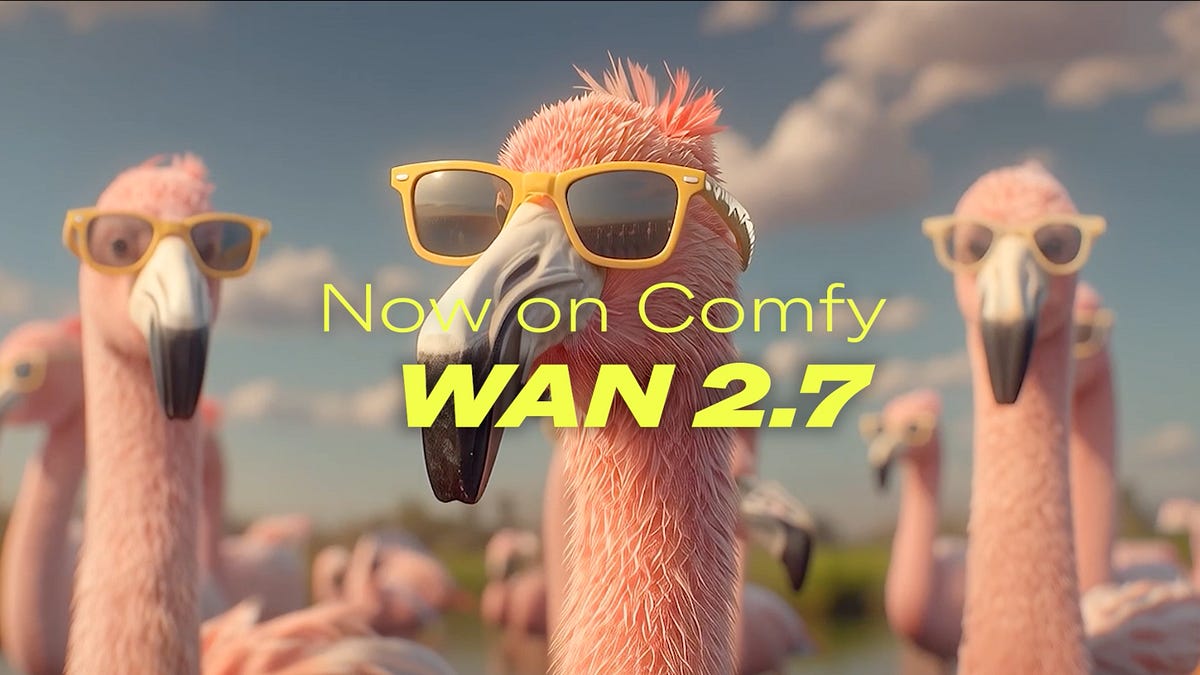
Alibaba's 27 billion-parameter MoE suite is now runnable in ComfyUI. Apache 2.0 license. Four modes in one package: text-to-video, image-to-video, reference-to-video with voice cloning, and instruction-based video editing. The headline feature is first-and-last-frame interpolation — define your opening and closing shots, and the model generates the motion between them. That changes storyboarding logic completely for anyone building long-form sequences.
A new Veo upscaling model in Vertex AI will push any video to 1080p or 4K regardless of whether it came from Veo, another AI model, or a traditional camera. Currently in private preview, rolling to public preview shortly. Practical implication: run a fast, cheap Veo 3.1 Lite generation to test your shot, then upscale for delivery without regenerating from scratch. That cuts both cost and time on iteration-heavy projects.
Meituan shipped version 1.5 of its open-source audio-driven human video generation framework in May, replacing Wav2Vec2 with Whisper-Large for phoneme-level lip sync with noticeably better accuracy. MIT license means clean commercial use. Production-ready temporal stability on long-form clips. For creators building talking-head AI content without commercial platform costs, this is now a serious benchmark competitor.
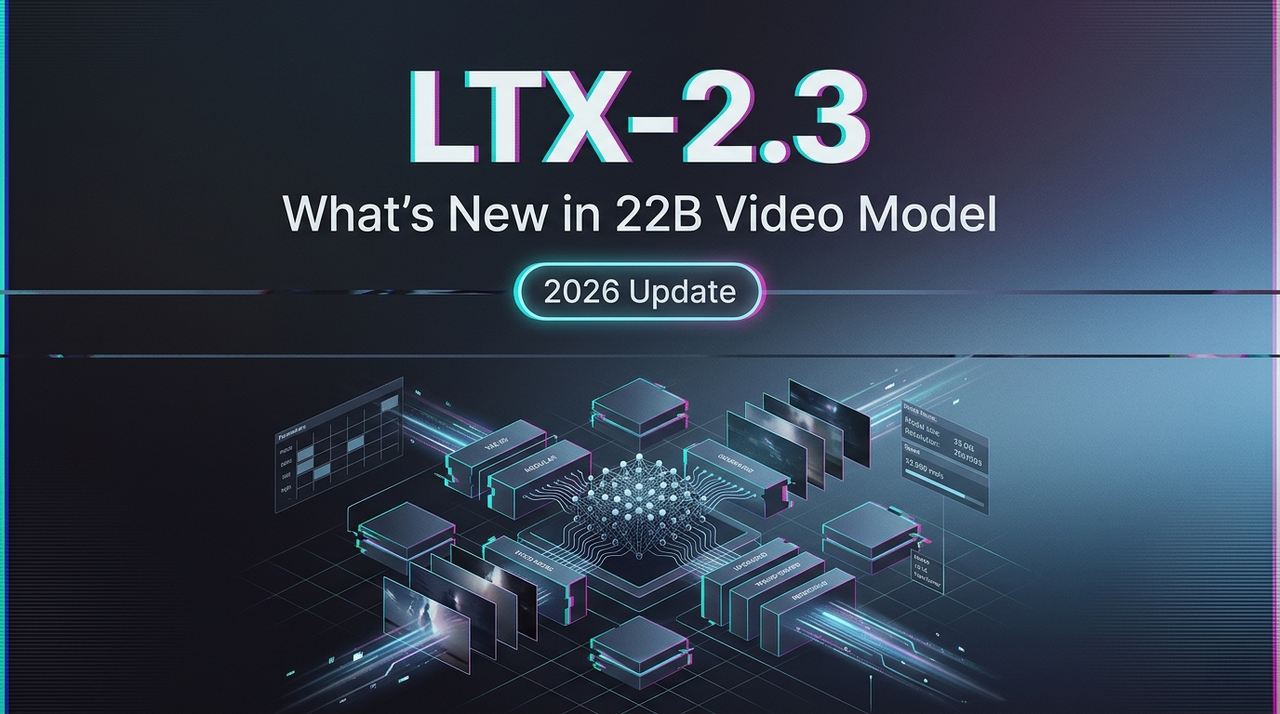
Lightricks' 22B DiT model — released March 5 — is still the most Shorts-optimized open model on the board. Native 9:16 portrait eliminates cropping workflows; generates at 4K/50fps; the text connector is 4x larger than LTX-2 so prompts actually land; HiFi-GAN vocoder cleans up audio. Apache 2.0. If you are building faceless YouTube Shorts or Reels pipelines and have not benchmarked this, the window for excuses is closing.
ComfyUI's Subgraph feature is now live: package any node cluster into a single reusable subgraph node, drop it into any workflow, and share it cleanly. For anyone running multi-model pipelines that scroll off the screen, this is a meaningful workflow management and collaboration upgrade. The same v0.22.0 release also added Stable Audio 3.0 support, HiDream-O1 area conditioning, and LTXV IC-LoRA enhancements.
TikTok's AI content disclosure has evolved from a flag to a full enforcement regime. Four tiers from no AI used to fully synthetic, with graduated label requirements in between. C2PA Content Credentials auto-detect synthetic media even when creators do not self-disclose. Violations now carry account throttling and strikes. Critically, what requires a Tier-4 label on TikTok may require no label at all on Instagram — know where your workflow lands before you post.
Instagram's AI Creator label remains optional today with no auto-detection and no penalties in most markets. EU creators face a hard mandatory disclosure deadline in August under the AI Act. If any portion of your audience is in Europe, the time to build disclosure into your workflow is now, not six weeks from now when everyone is scrambling.