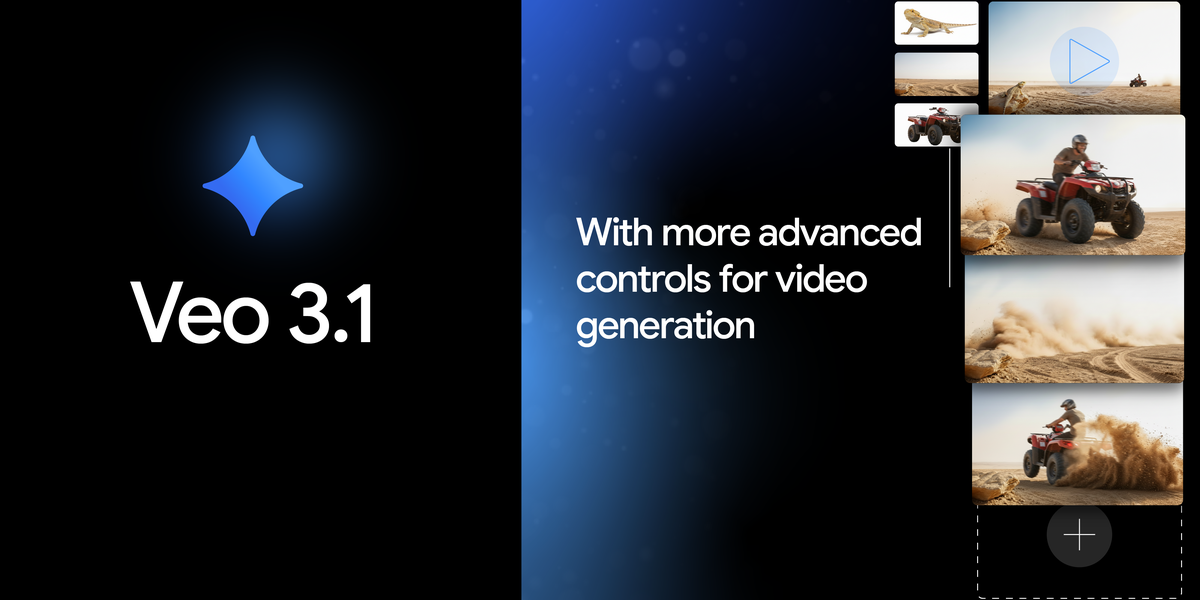
Released June 5 in paid Gemini API preview, Veo 3.1 and Veo 3.1 Fast add native 9:16 vertical output, 1080p HD, richer synchronized audio, and improved cinematic style control. A new Lite pricing tier cuts costs roughly 50% versus Veo 3. Simultaneously, Veo 3 and Veo 3 Fast graduated to stable GA — the whole pipeline is now production-ready at scale.
Gen-4.5, now on all paid Runway plans, adds materially improved physics — objects with believable weight and momentum — on top of Gen-4's 60-second continuous 4K generation and cross-scene character consistency. The public API is open, enabling hybrid pipelines combining Runway with Veo 3 or Seedance. Gen-4.5 currently ranks first on Video Arena benchmarks against Veo 3.1 and Kling 3.0.
Since May 2026, YouTube auto-detects substantial photorealistic AI-generated content and applies disclosure labels even without creator action — undisclosed AI depictions of real people risk strikes. AI content stays YPP-eligible only if it provides original value; templated, easily-repeatable output is being actively demonetized. RPMs hold up well for content with genuine human perspective: AI tutorial-style content earns $8–15 CPM, AI short-film content $2–6.
Alibaba's Wan 3.0 is a 60B-parameter mixture-of-experts diffusion transformer (14B active at inference), targeting native 4K, 30-second single-pass generation — double Kling 3.0's clip length, 50% longer than Sora 2. A 6-shot AI Director mode and session-persistent Identity Lock for character consistency round out the feature set. Open weights under Apache 2.0 are targeting mid-to-late Q2 2026, meaning a ComfyUI integration wave could break any day.
Trending on Hugging Face this week, Motif-Video 2B scores 83.76% on VBench — the highest total score among all open-source video models, outperforming Wan 2.1 14B with a fraction of the compute. It handles text-to-video and image-to-video. A ComfyUI node is already available, making it immediately testable on hardware that was never going to run a 14B model.
Lightricks' LTX-2.3, now widely integrated into ComfyUI, delivers native 1080x1920 output trained on portrait data — not cropped landscape — with 4K at up to 50 FPS, synchronized stereo audio in a single forward pass, and a rebuilt VAE that finally handles hair and edge detail correctly. Free commercial use for companies under $10M annual revenue. The ComfyUI workflow is mature and well-documented.
App Mode surfaces any node graph as a clean single-page UI — just prompts, sliders, and image inputs — without exposing the full graph, making it viable for clients or collaborators. NVIDIA RTX Video Super Resolution is now a native node delivering 2.5x speed and 60% VRAM reduction on RTX 50-series hardware. Stable Audio 3.0 support and LTXV enhancements also landed in this build.
MiniMax's Hailuo 2.3 lands simultaneously on web, mobile, and API with improved complex body physics, near-photorealistic lighting and shadow during dynamic camera moves, and stronger anime, ink-wash, and game-CG style modes. Free daily trial credits are live immediately. Pricing holds at the same level as Hailuo 02.
Meta is testing a profile-level AI Creator badge alongside per-post labels, and is already auto-flagging AI-generated content in the feed as of May 2026. Instagram also expanded original-content protections: accounts reposting more than 10 times in 30 days are excluded from Explore and Feed recommendations entirely. AI content with visible human perspective continues to perform; fully automated output does not.