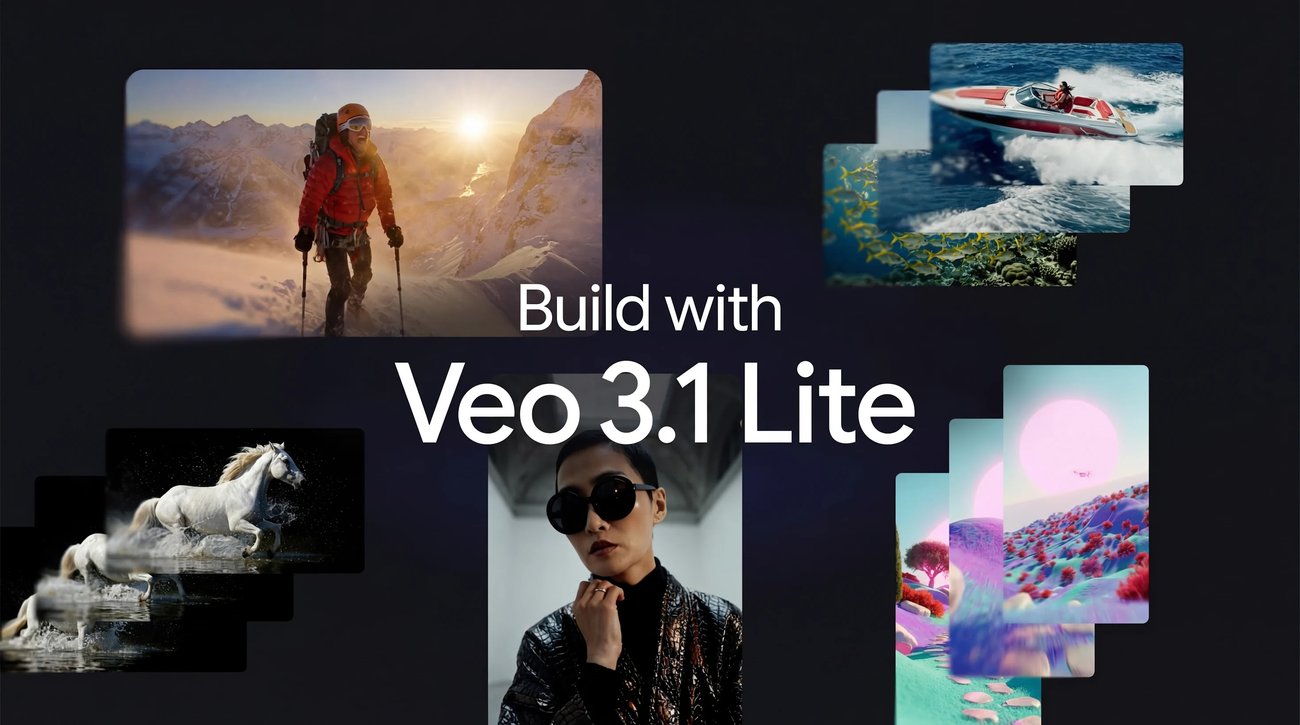
Google's Veo 3.1 Lite is now live in the Gemini API and AI Studio, priced below 50% of Veo 3.1 Fast at identical generation speeds. It covers text-to-video and image-to-video in 16:9 and 9:16 at 720p and 1080p, with 4, 6, and 8-second durations. If you're running API-based pipelines, this is an immediate margin improvement with no quality tradeoff on most commercial work.
MiniMax's Hailuo 02 is sitting at number two globally on Artificial Analysis user evaluations, beating Google Veo 3 in head-to-head comparisons. At 28 cents per 1080p clip — with a free tier for 6-second 768p outputs — it's the most aggressive pricing in the commercial tier right now. For batch work, this pricing rewrites per-project margins.
Lightricks' LTX-2.3 is now running natively in ComfyUI via a production-ready RunComfy workflow, delivering single-pass video-and-audio generation at 22 billion parameters — no post-layering required. New IC-LoRA adapters and camera-control LoRAs enable style and motion stacking on top, and FP8 quantization opens it to 32GB GPU setups. Creators are reporting that prompt wording changes outperform sampler tuning; the TextGenerateLTX2Prompt node auto-converts plain descriptions to structured motion, visual, and audio prompts.
The May 20th ComfyUI 0.22.0 release landed NVFP4 data format support, giving RTX 50 Series users a 2.5x performance boost and 60% VRAM reduction. The update also added Stable Audio 3.0, HiDream-O1 with area conditioning, LTXV IC-LoRA downscale support, and temporal processing improvements for video control workflows. A new App View (prompt plus sliders) lowers the barrier for non-node-graph team members.
ByteDance's Seedance 2.0 — currently number one on the Artificial Analysis text-to-video leaderboard with audio and holding 29% usage share — is now fully available via fal.ai's API at roughly $9.60/month on paid plans. Director's Mode enables manual camera path control (pan, tilt, zoom) across clips up to 15 seconds, with support for 12 simultaneous reference materials. Native lip-synced dialogue and ambient audio are generated in a single pass.
TikTok's four-tier AI labeling system is using C2PA Content Credentials and invisible watermarking to detect and label AI-generated content automatically — no self-disclosure needed. The platform has now labeled over 1.3 billion AI-generated videos this way, and undisclosed AI content risks removal and account restrictions. All ads with AI-generated visuals or audio must carry an explicit disclosure tag in TikTok Ads Manager, triggering a visible label on the post.
Instagram's "AI Creator" label is hitting profile bios and all posts for accounts that regularly produce AI content. Meta's VP of Product confirmed the label carries no algorithmic reach reduction — topical relevance remains the ranking signal. Meta's Imagine AI detection is already auto-applying "Made with AI" labels; EU creators face a hard compliance deadline of August 2, 2026 for AI-assisted content disclosure under EU enforcement.
Shorts remains monetizable for AI content that clears the originality bar, with RPM now at parity with long-form in key US markets. The watch-out: uploading more than 10 structurally similar Shorts per day is drawing algorithmic suppression flags. YPP eligibility threshold remains 1,000 subscribers and 10 million Shorts views in 90 days — quality and variation are the operating rules right now.
Alibaba's Wan 2.7 is in preview, and the lead feature is first-and-last-frame control: specify both clip endpoints and the model generates the motion path between them. Instruction-based video editing via natural language is also confirmed, letting you describe changes to existing clips rather than re-generating. The Wan2.2-T2V-A14B-GGUF 14B quantized model is already trending on Hugging Face and runs on 8-10GB VRAM today — worth testing the 2.2 stack now to be ready for the 2.7 drop.
OpenAI pulled the Sora consumer app on April 26, 2026, after active users fell below 500,000 despite a million downloads in week one. The API remains live but hits end-of-life on September 24, 2026 — four months to migrate any production pipelines. Runway Gen-4.5, Hailuo 02, and Seedance 2.0 are the natural landing spots depending on use case.