Meta has switched on in-app generative video inside its free Edits app: drop a new element on the timeline, pick the AI option, type a clip description, optionally seed it with a camera-roll photo or video, and it renders right where you keep editing. The same June drop added auto-cut silences, extend-track-duration, custom audio import, 150 new fonts, and Meta confirmed a desktop version of Edits is in development. For Reels creators this collapses generate-and-assemble into one free pipeline you can use today.
Google's Omni Flash is now free for anyone 18-plus on YouTube Shorts Remix and the YouTube Create app — no subscription — pushing up to 10-second clips with synced native audio and invisible SynthID watermarking. The headline creator feature is a personal AI Avatar: set up your likeness and voice once, then reuse it across generations without re-uploading references. The catch is the public API still isn't open, so this is a consumer-surface tool for now, not a pipeline node.
At the June 23 Volcano Engine FORCE conference, ByteDance officially unveiled Seedance 2.5, now in global enterprise beta and slated to launch in early July. It outputs single-pass native 30-second video with no stitching and accepts up to 50 full-modal reference materials in one generation for tighter control and editing. ByteDance also bumped the existing Seedance 2.0 to native 4K, with Doubao-family daily token calls passing 180 trillion.
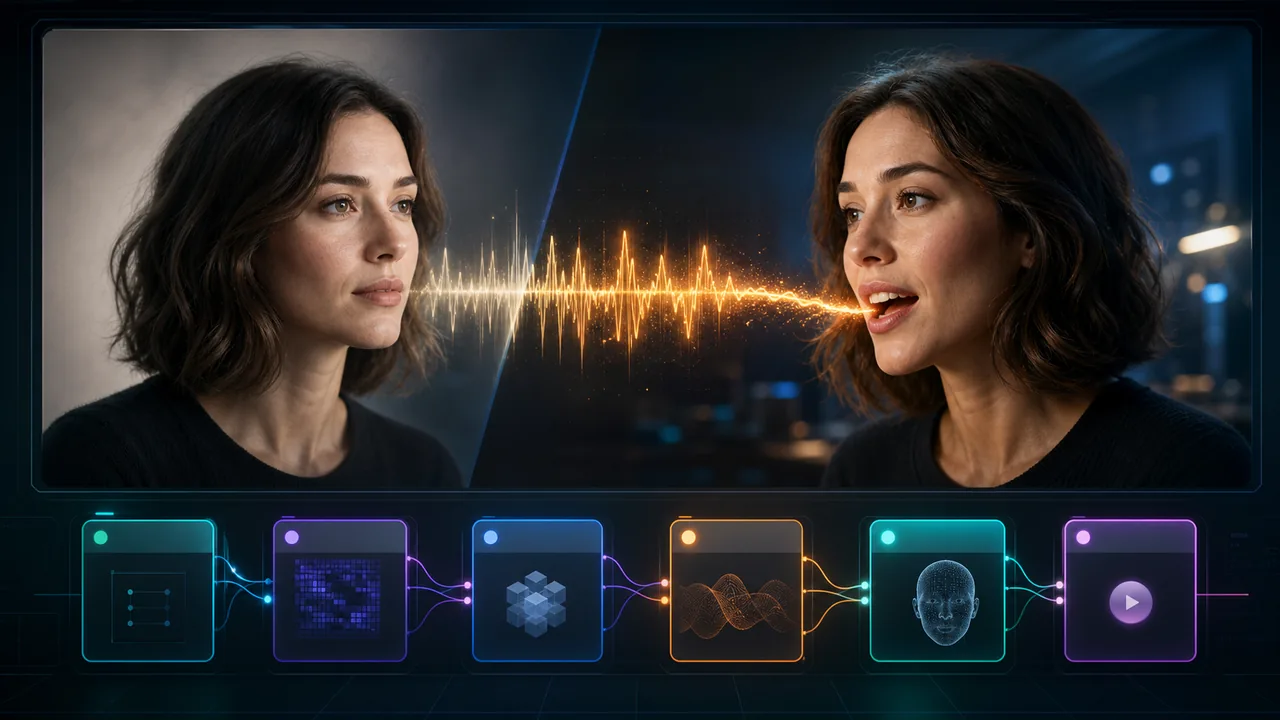
The talking-avatar workflow making the rounds pairs InfiniteTalk's Wan-based I2V diffusion, audio feature encoders, and LoRA refinement to drive realistic lip motion straight from a still image. With the LightX2V LoRA the full render lands in just six steps while holding audio sync and visual fidelity. If you're producing faceless narration or character spots, this is the open-source path to convincing mouths without a cloud bill.
The ComfyUI template pack rolled to v0.1.62, adding Wan 2.2 Fun Camera and Qwen Image Edit workflows, plus integrated support for the Wan 2.2 5B fun inpaint model and a Wan 2.5 image-to-image API node for direct image editing. There are also handling fixes for Qwen2.5-VL prompts when templates are already present. These are drop-in starting points, so camera-motion control and inpaint cleanup get materially less fiddly.
Hailuo 2.3 is now fully integrated across the Hailuo web platform, mobile app, and API in three flavors — 768p-6s, 768p-10s, and 1080p-6s. It sharpens physical action, stylization, and character micro-expressions over Hailuo 02, and it's still one of the fastest models at full quality, often turning standard clips in under 30 seconds. For human-performance and emotive-character shots on a deadline, it's a strong pick.
Pick your benchmark, pick your winner: Arena's I2V board has Grok Imagine Video 1.5 sitting at #1, but Artificial Analysis has Dreamina Seedance 2.0 720p on top in both the with-audio table (Elo 1194) and the no-audio table (Elo 1343), with Grok 1.5 a hair behind. Grok's pitch is still price — roughly $4.20 a minute versus Sora 2 Pro's $30. Translation for creators: test on your own prompts before you commit a render budget to any one model.