ByteDance announced Seedance 2.5 at the Volcano Engine FORCE conference on June 23 and has been in enterprise beta since — public access through Dreamina and Jimeng is expected any day this week. The headline capability no other model has matched: native 30-second single-segment generation with no stitching, scene changes and tempo shifts intact. It also supports up to 50 multimodal reference assets, 3D white-model previz for spatial control, and stronger high-resolution output. API access is scheduled for late July.
YouTube's "inauthentic content" enforcement — which replaced the old repetitive-content rule in July 2025 — has hit its most aggressive wave yet, wiping 16 channels with a combined 35 million subscribers and an estimated $10 million in annual ad revenue. The primary targets: fully automated pipelines with zero human creative input — AI voiceover over stock footage, text-on-screen slideshows, news articles read verbatim. YouTube is explicit: the policy is not a ban on AI, it's a floor for human creative involvement. Channels with AI-assisted production plus genuine editorial voice are unaffected.
ComfyUI version 0.27.0 dropped four days ago, adding int8 convrot model support with meaningful performance gains on Turing-class GPUs and newer, plus a new Seed Node, Advanced Krea 2 Model Merging, and a ConditioningMultiply node. Simultaneously, Wan 2.7 landed in ComfyUI via Partner Nodes with workflow templates for all five task types — outputs up to 1080p and 15 seconds, supporting up to 5 real-person image inputs and a vocal timbre reference.
Runway's API changelog for late June is dense with actionable additions. Seed Audio 1.0 landed June 30 — up to 120 seconds of AI-generated speech and sound effects from text, with optional 30-second audio references, output in WAV, MP3, and Ogg Opus. Six native 4K ratio options went live across text-to-video, image-to-video, and video-to-video endpoints. And notably, Seedance 2.0 Fast appeared on the Runway API on June 5 — meaning Runway is now hosting ByteDance's model alongside its own, an unusual cross-lab integration.
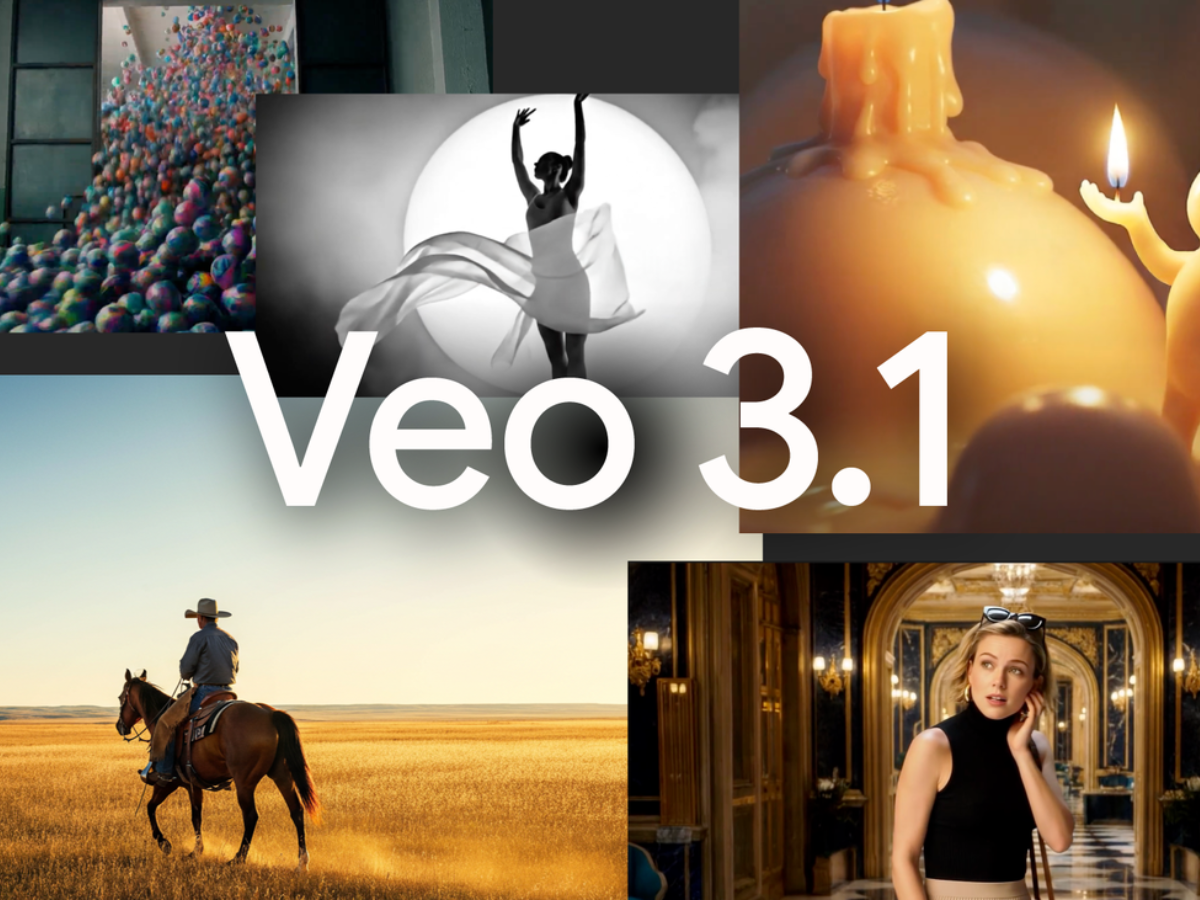
Google's Veo 3.1 is now available to any Google account holder — 10 free video generations per month with native audio generation included. For developers, Veo 3.1 Lite comes in at under half the cost of Veo 3.1 Fast at identical speed, opening high-volume video application builds. Google AI Ultra subscribers unlock Lyria 3 Pro for custom music and AI avatars in Google Vids. All Veo output carries SynthID watermarking.
Disney, Warner Bros., Paramount, Sony, Netflix, SAG-AFTRA, and the MPA all sent cease-and-desist letters to ByteDance over Seedance 2.0, alleging training on copyrighted content without permission. ByteDance responded with content filters blocking recognizable faces and copyrighted characters — but none of the disputes have been resolved in court. The studios' core allegation concerns training data, not just output filtering, and ByteDance has not confirmed whether Seedance 2.5's safeguards address that layer.
TikTok's AI labeling enforcement now uses C2PA Content Credentials to automatically detect synthetic media — no creator self-disclosure required for the platform to flag content. The enforcement tier runs from warning to permanent ban. All realistic AI-generated or significantly AI-altered depictions of people, places, or events require a visible disclosure; AI text tools like scripting and captioning are exempt. Ad placements require a separate "AI Disclosure" tag in TikTok Ads Manager.
Launched June 1 at GTC Taipei, NVIDIA Cosmos 3 is the first fully open omnimodel covering text, image, video, ambient sound, and action generation natively — trained on 20 trillion tokens including 400 million videos. LTX and Runway are both named partners in the Cosmos Coalition. The nano variant supports near-real-time inference; Cosmos 3 Edge for on-device deployment is coming, with implications for live and mobile AI video pipelines.