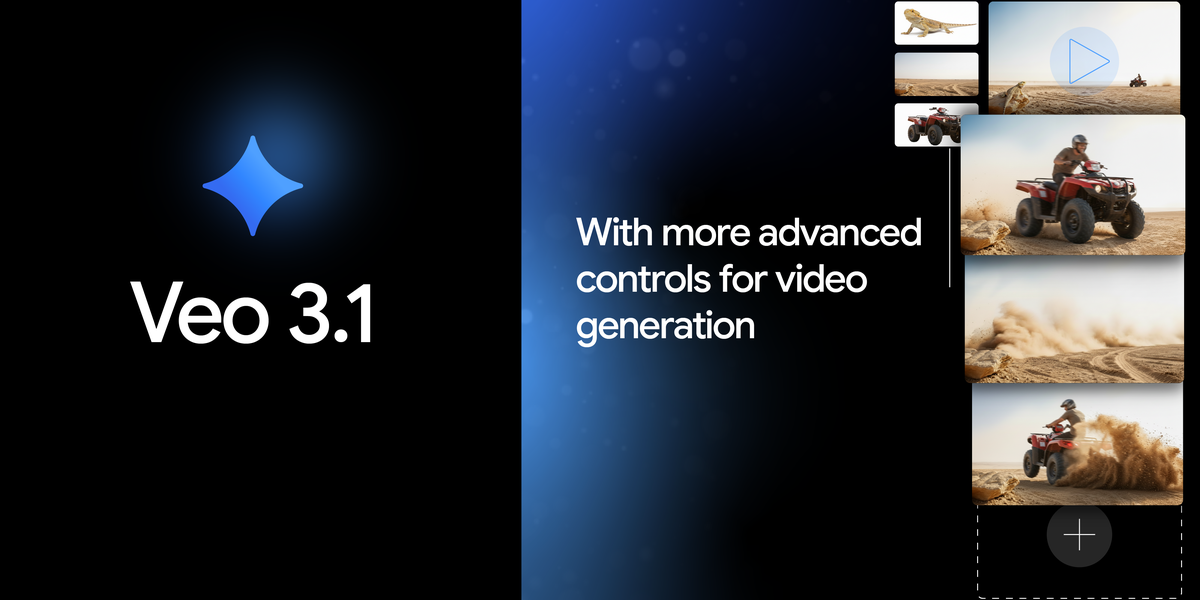
Google pushed Veo 3.1 into the Gemini API with vertical 9:16 output, full 1080p resolution, and across-the-board price reductions. Audio now flows through previously silent features — Ingredients to Video, Frames to Video, and Extend all gained synced sound. Updates also landed in Flow, their AI editor, enabling audio-synced timeline editing.
Released May 20, v0.22.0 ships App Mode — turning any node workflow into a shareable one-click app through ComfyHub — alongside a Seed2.0 node for ByteDance LLM integration and alpha-channel transparent video loading. LTXV downscaled IC-LoRA and temporal downscale ratio controls also arrive for tighter video pacing.
MiniMax just rolled out Hailuo 2.3 with improved dynamic character expression, micro-expression rendering, and four new stylization presets — anime, illustration, ink wash, and game CG — all at the same price as the previous version. It is live now across web, mobile, and Open Platform API.
Wan 2.7 from Alibaba is live on WaveSpeed and fal.ai with first-and-last-frame generation for bookending shots and video-to-video instruction editing. Quantized Wan2.2-T2V-A14B-GGUF weights are trending on Hugging Face for local consumer hardware runners. Wan 3.0 is officially on the roadmap for mid-2026 at 60B parameters, native 4K, and 30-second single-pass generation.
The community is converging on two-agent director pipelines: a Director Agent manages shot lists and camera specs, while a Continuity Agent locks wardrobe, lighting, and identity strings across cuts. Image-to-video has displaced text-to-video as the professional default, and Midjourney V8 plus Wan 2.7 plus LTX-2.3 is the dominant ComfyUI hybrid stack.
Kuaishou's Kling AI turned two on June 6 with 100 million users, 50,000 enterprise customers, and 26 model iterations. Kling 3.0 — shipping since April — claims the world's first native 4K AI video output with multilingual audio. Kling 2.6 Pro also just landed on Artlist for English-language licensed access.
TikTok's built-in AI disclosure toggle uses C2PA Content Credentials for automated detection and critically does not suppress reach when community guidelines are followed. YouTube's Altered or Synthetic Content tag is mandatory for realistic AI-generated people, events, and places — missing it risks YPP status. Meta's unified Made with AI label covers both Instagram and Facebook as of February 2026.
ByteDance's Seedance 2.0 scores 1213 Elo on the Artificial Analysis video leaderboard, topping Veo 3, Kling, and Runway combined. Its unified multimodal architecture handles text, image, audio, and video in one pass with strong physical realism and lip sync. Disney issued a cease-and-desist in February and Paramount Skydance has filed IP infringement claims — flag before any character-adjacent client work.
TikTok's Creator Rewards Program pays $0.40–$1.20 RPM on qualified views — 1 million views nets $400–$1,200 at the 1-minute minimum. YouTube AI channels see $3–$7 RPM; faceless AI channels typically hit monetization in 6–12 months and scale to $500–$5,000/month by year two. One agency case study logged a 340% annual revenue increase after going AI-first, even after cutting per-video rates 30%.
OpenAI shut down the Sora app on April 26, citing compute costs near $1 million per day and user numbers that fell below 500K after peaking at 1 million. The API runs until September 24, 2026 — if you have anything built on it, that is your migration clock. A landmark Disney–OpenAI deal was in progress when the curtain came down.